Jason Rohrer is programmer, writer, musician and game designer, husband, and father - and games are a medium through which he explores life, death, and at least a few of the human foibles in between.
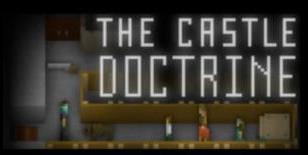
Jason and Cat talk about The Castle Doctrine, at its simplest a home defense and robbery MMO, what he values in game design, and his next project.
Read Part One of the interview here: http://n4g.com/user/blogpos...
CAT: People killing my fake kids in-game, I can’t take it. It triggers a deep-rooted Mama response in me. What are the moral implications of The Castle Doctrine?
JASON: I'm somewhat surprised by how many people are willing to do this in-game. I have never been able to do it myself on the live server against another player. I have, obviously, done it offline during development and testing, but even that was a rather grisly experience.
Yes, you can bury your family deep within you house and pile security around them - that's a kind of mechanical embodiment of that Mama instinct. Hush little children, down for your naps, Mama's gonna wrap you in pit bull traps. But in the end, they are still vulnerable to a determined attacker - and perhaps fortunately, there are enough players who are willing to demonstrate this fact to us.
And here they are, our precious family members, spending their whole lives buried deep in the belly of this fortress. And still vulnerable.
Not allowed to play out in the front yard anymore. And still vulnerable.
http://s2.n4g.com/media/11/...
At this point, very vulnerable. Gonna need a wall...
CAT: For those unfamiliar, “the castle doctrine” is a legal doctrine that covers, essentially, the right to use [deadly] force to protect yourself and others in your home. To that end, the wife can be armed to protect home and hearth. Is this option a reflection of your own views on gun rights? Do you think the player’s stance on gun rights affects their play style, or are we gamers sufficiently divorced from our kill count?
JASON: Yeah, that question is a funny one. So many stridently-anti-gun gamers who spend their free hours pretending to be mass murderers in their fantasy worlds. And Jason Rohrer doesn't make violent trash like that, oh no. He makes games with little pixel hearts and flowers.
I don't drink, but I don't want to stop you from drinking. I don't smoke crack, but I don't want to stop you from smoking it. I don't visit prostitutes or work as a prostitute myself, but I don't want to stop you from visiting prostitutes or working as a prostitute. I don't own a gun, but I don't want to stop you from owning one. I believe in dealing with actions after they happen, not limiting potential actions ahead of time. I don't believe in thought crime. No victim, no crime.
And after some deep thinking on the matter, brought into focus after my family was attacked, I believe in self defense and in the rights of victims trumping the rights of attackers. I'm really glad I don't live in Sweden.
http://s2.n4g.com/media/11/...
CAT: In the Mini Q&A, you said that “Interactivity is the most important aspect” of game design for you (“to the point where I try to excise all non-interactive, pre-authored content from my games”). This reminded me of an interview you had with RPS where you spoke about gendered playable characters and authorship. In the case of The Castle Doctrine, you said you view the game as being from your perspective, and that as a result having a woman as the main character doesn’t make sense. Has your perspective changed, or do you think gender isn’t part of the interactivity equation?
JASON: Well, what I meant by "pre-authored content" was content that has a duration of some kind during which no explicit interaction takes place. I didn't mean the fonts or the graphics or the background music or other authored elements, thematic or otherwise, that fold cleanly into the interactivity.
Passage was a game that was from my perspective, starring me and my wife. Spoken interviews are a funny thing, because blurbs are chosen from live conversation that can give misleading impressions. People got the impression from that RPS interview that "The Castle Doctrine is another game where you get to play as Jason Rohrer, another biographical game." But even on its face, it obviously isn't. I have three boys, not a boy and a girl, not to mention that I was just a kid in 1991, when the game takes place. Also, I don't have a mustache, like the main character does in The Castle Doctrine. But going a bit deeper, the game is about the social construction of manhood reflected back into my impression of the early 1990s, blended with memories of my security-obsessed father and prevalent home security advertisements from that time.
If you got a chance to modify the game Hey Baby, would you put a gender selector at the start of that game and allow people to play the game as a man? I wouldn't.
CAT: When do you think it enriches an experience to sacrifice elements of authorship for interactivity on the gamer’s part, and when is it better to preserve a specific narrative?
JASON: I have the strong urge to tell stories, too - I get it. But I think expressing that urge through games - by inserting bits of story into the middle of a game somehow - is misguided. I also think it's the easy way out. Yeah, we want to make games that are about important, worthwhile things. But let's work on figuring that out directly.
Many people might see The Castle Doctrine as "the video game version" of the movie The Purge (my game came out a few months before The Purge), and I mostly agree with that. On the other hand, it's clearly not a "conversion." Both deal with many of the same themes. Both include a security-obsessed nightmare world, an iconic family, and a protector father. But The Castle Doctrine builds interactivity around these themes in a purely gamic way, while The Purge tells a story containing these themes in a cinematic way.
Suppose you wanted to make a sculpture about similar themes, or a piece of music, or a painting. The idea of cramming "the story" from The Purge into any of those things would be absurd. What, mount a speaker in the base of the sculpture that tells the story? Weave the story into a long folk song, Arlo Guthrie-style? Make a huge, multi-panel painting, like a comic book?
But that is essentially what we do when we try to make a video game version of a particular movie. Or more broadly, it's what we do when we set our designer-hearts on a "specific narrative" in our games.
CAT: Can you tell me more about the balance between interactivity and challenge?
JASON: I've come to see "challenge" as an important ingredient in games, much like "plot" is an important ingredient in films.
Yeah, it's possible to make a bona fide film without plot, but it won't be very good. The plot in a film is what keeps us there, keeps us watching, and keeps us from drifting away toward other mental concerns. Watching a film without plot requires a particular kind of intentional, intense focus on the part of the audience - they have to try. Watching a film with a good plot, on the other hand, is effortless - it becomes almost impossible to look away, and we absorb every second.
Challenge does the same thing for games. Games don't ask us to just watch and pay attention - they also ask us to interact with intention. Without challenge, that interaction lacks focus. If it doesn't matter what I do here, I might as well just flop around randomly through this game. Instead of playing (as in: trying, learning, improving, figuring out), we end up just "playing around." And you can only play around aimlessly for so long before you lose interest.
Even if there is an "aim" but no challenge, something is missing. For example, in a game where a player can walk through a series of rooms at their own pace, up to the end of the game, the player will eventually tire of manipulating the movement controls, even though they know where they're supposed to go. Yet in a challenging game with only one room, they will manipulate those exact same movement controls tirelessly, for hours.
Thus, we get the sometimes infuriating and seemingly silly question from players, "What's the point of this?" But it's not a silly question at all.
CAT: Talk about your new game a bit - title? Where are you in development? What’s the current vision?
JASON: You're the first to hear anything about it. No title yet. I have a design in hand, and I just finished an experimental, AI-driven testing phase. I'm about to actually start writing code to build out the game now.
The only thing concrete that I can say about it is that it's an online two-player strategy game played for real money.
CAT: Thank you, Jason!
Day 16 | Jason Rohrer

Microsoft announced its financial results for Q3 of fiscal year 2026, including an update on its gaming Xbox business and more.


Not looking good. Hopefully Asha Sharma is able to turn Phil’s disaster around.


To me it's still quite remarkable how they can cash-in 5.3bn in revenue in a single quarter, since their hardware is basically dead.

The charity event will be streamed live from Gamescom in August.
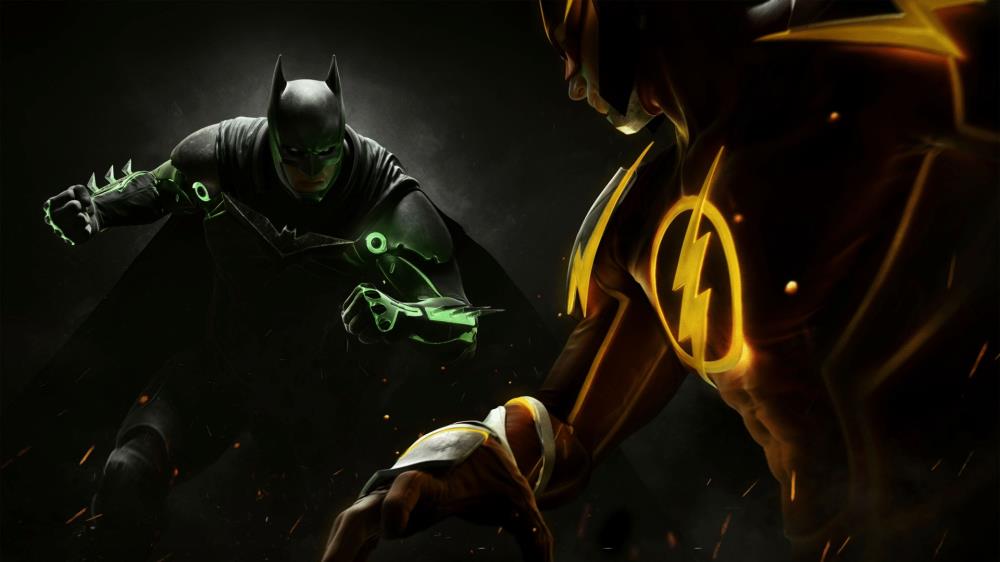
Thanks to the slip-up of an artist working on the title, we now have more evidence that a new Injustice game is in the works.




I like that there are more 8bit style games like lone survivor
I hope there will be templates to make it easier than starting fresh every time you die.
Kinda reminds me of the purge a little bit. The idea of it at least, not the movie cause that's a different story
"Hush little children, down for your naps, Mama's gonna wrap you in pit bull traps."
haha! what an awesome line!
The Purge was the first thing that popped up in my mind too.