Video game development is always about going big with your ideas. Unfortunately, there comes a point when you can go too far with an idea and can create more harm than good. For today's post, we're going to talk about the trap of over-designing your game as a game developer.
Thinking too much out of the Box:
Over-designing is one of those problems that's more on the philosophical side of game analysis and can be hard to talk about. What happens is that the game designer has a situation or challenge that goes against the rules or systems that the player has access to.
This is a problem that doesn't come up as often compared to other issues, but can be a sore spot when it does. One example was in Dead Rising 1. In the game, the final boss removes all the player's options that were taught over the course of the game, and forced them into a fist fight. While the fight was different, the designers essentially broke their game's design to make that fight.
That is the common theme of over-designing: The developers wanted to make something different. That is not bad in of itself, but when it goes against the rules of the game, this presents a problem.
Another point is if the developers are building content that doesn't mesh with the base foundation or core gameplay loop of the design.
We've talked about harmonizing game design multiple times and how it's when everything feels in sync. Over-designing most likely introduces elements that don't properly feel connected to the main gameplay loop and feels tacked on.
Recently I've been playing Zombasite by Soldak Entertainment. The game combines ARPG combat, managing a settlement, managing factions and managing your followers into one experience.
The problem is that the only system that feels fully integrated is the ARPG side. The other systems feel superfluous and get in the way of the ARPG mechanics.
The other systems are just represented by things in the menus and aren't directly impacting what I'm doing in the field. For instance, why should I care when my two party members aren't happy in town, when they're out with me killing monsters? Why does my settlement matter if I'm never spending more than a few minutes there?
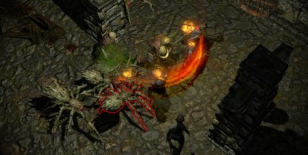
Instead of everything working off of each other to create something greater than the sum of their parts, over-designing leaves the game feeling disjointed and not properly paced. Other times, this can be seen when developers push their core gameplay loop so far that it breaks the experience for the player. A recent example of this for me was finishing up Path of Exile.
The Final Path:
Path of Exile features a wide range of boss fights. A common theme of the bosses is that they have access to one "whammy" attack: Something that will severely punish the player if it hits. Act 1's boss as a rapid fire spell, act 2 has a massive strike and act 3 has blood rain. These fights by themselves are tough, but you can get around those abilities when you know what to look for.
The final act however is different. There are multiple boss fights with powerhouse enemies. Not only do they have the highest stats out of all the enemies in the game up until that point, but they have super attacks. For instance, one boss gets a buff that gives him increased movement and attack speed to the point that he can chase you down and attack you no matter how fast you move.
To understand the problem, you need to know about the player's actions in Path of Exile. Movement is handled isometric-style with no defensive moves like dodge rolling or a block like in Dark Souls. Abilities are all based on what skill gems you have attached to your gear, which in turn defines your build. The base actions of the player are very limited, with the skill gems designed to add diversity.
Here's the big problem with that: As the designer, you have no idea what the build will be of any given player in the game. If you design a boss that can't be fought in melee range, you just screwed every player who has a melee build.
In fact, the final boss relies on bullet-hell style filling the area with damaging effects that were never seen anywhere else in the game. One boss gets a death ray style attack, and if I didn't have a movement-based skill, there were times that I could not get away otherwise.
You may think that's good design: Forcing the player to use their skills creatively, but that's not right. You cannot design challenges that break or go beyond the base mechanics you've implemented for the player. If the player doesn't have the means to dodge attacks, don't design a fight that's all about dodging.
This isn't a case where the player needs to get better or make use of their options; the designer is basically forcing you into a square peg/round hole situation.
With all that said, there is an easy way to avoid over-designing.
Understanding the Baseline:
In past articles, I've talked about the concept of the baseline: The bare minimum of skills or abilities that the player has access to in order to properly play the game and win. The baseline philosophy gives you a measurement of just what you are expecting the player to do and their abilities in-game. By using the baseline, you can then extrapolate and build encounters that are within that baseline.
If something doesn't make sense in regards to your baseline or doesn't enhance it, then you have to get rid of it; this is the basis for harmonizing game design.
The reason why the Souls series is so popular despite the difficulty is that the designers balance everything around a baseline.
From that baseline, they have a reasonably close measure of the player's stats, options and abilities at any given point in the game. They know that they can't design a situation around rapid platforming, because the game mechanics aren't built for that.
You can get creative with situations and go beyond the norm of your game, as evident by the Wolnir fight of Dark Souls 3. The breaking point is when something is not balanced with the player's baseline.
Another example would be completely changing the rules or situation for the final fight in a game. We can see this in games where the final fight is either a different type of gameplay, or features rules or situations never seen anywhere else. A popular example of over designing is the infamous throwing in a stealth section in a 100% action game.
Growing the Game:
Over-designing isn't a problem that happens often, but it can leave a sour note on an otherwise great game. Understanding what the baseline of your game is can help out not just in avoiding over-designing, but improving the balance of your title. Being able to figure out your baseline gives you the option to extend that gameplay without over-designing elements.
Even games with unique gameplay like The World Ends with You work in a "controlled chaos" kind of way. Every system no matter how weird or different it is, all flows back to the core foundation of the game's combat mechanic.
In doing so, the game plays as one cohesive whole where you're eating food for stat bonuses and becoming braver to wear flashier outfits.
Remember, great game design works as a well oiled machine, not a Frankenstein-esque monster stitched together from various genres. Getting the core foundation of your title set is both the hardest and most important part of your game's development and another hallmark of a great game designer.


Microsoft announced its financial results for Q3 of fiscal year 2026, including an update on its gaming Xbox business and more.

Not looking good. Hopefully Asha Sharma is able to turn Phil’s disaster around.


To me it's still quite remarkable how they can cash-in 5.3bn in revenue in a single quarter, since their hardware is basically dead.

The charity event will be streamed live from Gamescom in August.
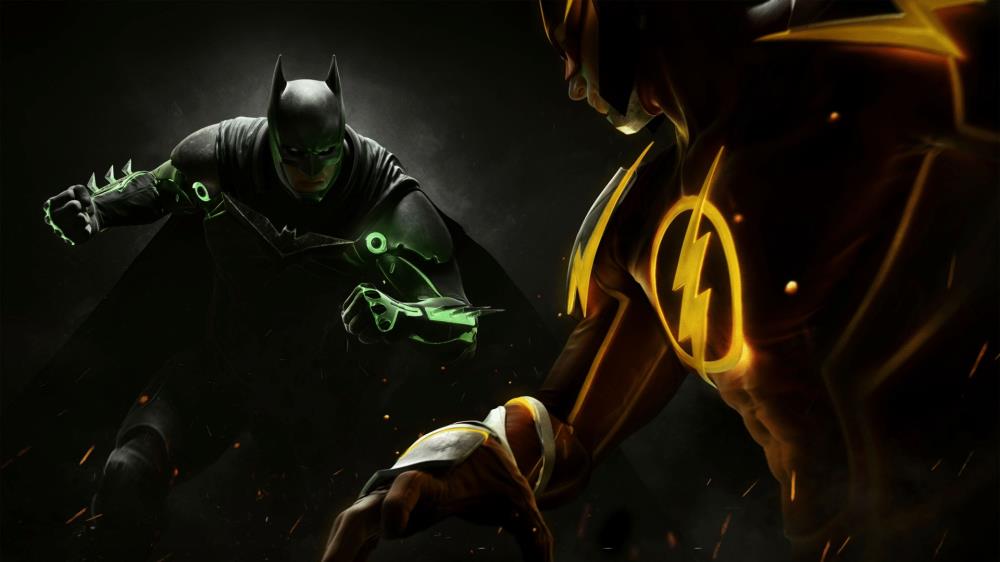
Thanks to the slip-up of an artist working on the title, we now have more evidence that a new Injustice game is in the works.