There are 3 big debates that always seem to come up with video games: Console vs. PC, are games art, and 7-9 review scores. Reviewing games has been a part of the industry since its inception, and everyone has tried to figure out a way to review games. Thinking about it lately, I've come to the point to finally explain why scores don't work with video games.
Objective vs. Subjective:
Video games are like any product: They have subjective and objective parts to them, and so do reviews. No matter how you write a review, there will always be a combination of both in a review.
Some parts of reviews have to be 100% objective: You can't have a complaint in a review that a FPS was bad because you wanted driving sections for instance. With that said, a lot of objective parts of a game review are on the technical side: Are the controls responsive, does the camera system work and so on. You can also objectively point out that there are major bugs or technical issues in a game. If a game literally can't be played, then it's pretty much a 0 out of 10.
Where the subjective part comes in is how the reviewer experiences the game, and this is impossible to quantify. With other products, we can objectively rate them based on the standardized elements that make up the product. It's easy to rate a car on drivability or steering and have a measurement that works across every car.
The objective elements are the standard features of any product, and the ones that every product must get right. If you have a cleaning product that doesn't clean, then anything else about it is a moot point. With video games reviews, we have to turn to the subjective elements to truly rate a game, but this is not without problem.
How would you quantify platforming sections or how well the game handles replayability? The answer is you can't, and why the numerical scale is fundamentally broken.
The Range of Quality:
You hear this from consumers, "Why does every game get a 7-9? Why don't more reviewers use the whole scale?" The reason is that the 7-9 rating is meaningless when it comes to judging the quality of a game and is a safe bet.
For the most part, a game developer doesn't set out to make a bad game. It's horrible business to start with taking broken controls and poor design and try to sell it. There are cases of less than reputable indie devs trying to make a quick buck, but that actually proves my point.
A good game is a good game, just as a bad game is a bad game. This is why many reviewers either use the high end of the scale (7-9) or the low end (1-4), because the difference is that polarizing. No one would give a game like BMX XXX a 9 out of 10, just as no one would give Dark Souls a 1 out of 10. Either one of those scores for the respective games would ruin anyone who would call themselves a game reviewer.
I know someone is about to say that both those games are completely different and you can't compare them objectively, and THAT'S THE POINT. When we start trying to quantify games, the whole thing just falls apart.
The numerical rating system is just a posturing system for game reviewers or sites.
If 7-9 means that you like a game, how do you quantify that down into a number? More specifically: How do you measure how much you like a video game? Do we come up with new words? "This game is good, this one is gooder and this one is goodest."
Any attempt at assigning a quantifiable number to a game doesn't work, as there is only one measurement that a reviewer can use, "Did they like it: Yes or No?"
Thumbs Up or Down?
Trying to rationalize the numerical system just leads to more problems. Some sites say that a 7 out of 10 game is a good game with issues, but then what makes an 8 out of 10 game? Are there still issues? Did you smile more playing one game than the other?
On the flip side: Did a 2 out of 10 game make you feel sadder than a 3 out of 10? Don't get me started on sites that try and use decimals to further inflate their range. Then you have some places that judge a game on uniqueness. You can have a game with never before seen gameplay that is horrible, just as how there are amazing refinements of existing game mechanics. Not only that, but judging a game on uniqueness is a poor judge of quality.
And then we have the big one: What is a 10 out of 10 game? The 10 out of 10 score is the most subjective element there is when it comes to game reviews.
Let's get everyone on the same page about this: There is no perfect video game. Even the best games ever made had some kind of problem with them; you don't even need to nitpick to find them. You can say that a 10 out of 10 game worked on every level, but what are those levels?
You can't tell me that the story moved you, because that's subjective. You can't say that the gameplay was compelling, because that's also subjective. Here's my question to every game reviewer reading this: How would you objectively rate a game a 10 out of 10? The answer of course is obvious: You can't.
If you can't find an objective measurement to numerically rate something, then the system is inherently flawed. Another wrench in the works are sites that have multiple game reviewers. This further confuses your system, as one person's seven is another's eight and so on.
This is the subtle genius of the classic Siskel and Ebert Thumbs Up and Thumbs Down rating system. It removes any preconceptions of objectiveness with a review and focuses on the reviewer's opinion. You can like a movie but find enough flaws not to recommend it; just as you can hate a movie, but find that there are enough good parts to it.
No Scoring:
When I started Game-Wisdom, I knew from the start that I didn't want to open up the can of worms of numerical ratings for games. Today, I realize that numerical scoring is just pointless for any accurate measurement of a video game. There are just too many abstract and subjective elements of a video game to be able to accurately assign a numerical value on a review.
One last topic that I know someone will mention: That video game scores are used to measure bonuses for developers and studios. In my opinion, we have a case of a broken system used for a broken practice that has made things worse for everyone all around.
For people who are trying to fight against corruption in the Game Industry, that makes up a sizable part of it.
At this point you can pretty much guess that Game-Wisdom won't be appearing on Metacritic any time soon. I would urge sites to not use game reviews, but at this point, I know that's not going to happen. Some sites use it as a boost to their popularity or reputation, while others are just a part of the system. Maybe I'll try to usher in a new rating system. Henceforth, all game reviews will be in the form of an interpretative dance.
For more on the matter, stay tuned to the Game-Wisdom YouTube Channel for my new video supplemental series: A Critical Thought.
Microsoft announced its financial results for Q3 of fiscal year 2026, including an update on its gaming Xbox business and more.


Not looking good. Hopefully Asha Sharma is able to turn Phil’s disaster around.


To me it's still quite remarkable how they can cash-in 5.3bn in revenue in a single quarter, since their hardware is basically dead.


The charity event will be streamed live from Gamescom in August.
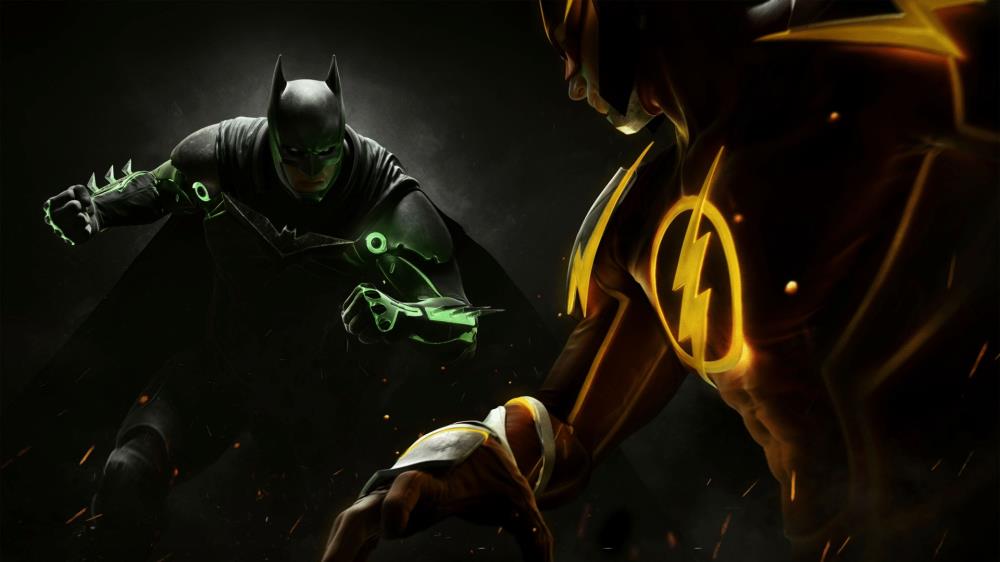
Thanks to the slip-up of an artist working on the title, we now have more evidence that a new Injustice game is in the works.




I was agreeing up until the uniqueness part. If that isn't a factor, then a clone gets just as much praise as the original. It gets praised for copying.
This is probably around the 50th time i made this comment on N4g ; A score number does not really tell much about a video game , the actual words typed in the review actually tells a lot about the video game from the reviewer .
As far a bonus for developers for good review scores goes; What if a triple A game recieves high scores from critics but the video game loses millions of dollars, do the developers still get a bonus ? I guess that may vary between different publishers and studios . Nice blog !