The ongoing issue about defining what is or isn’t a video game is one discussion I’ve been compelled to typically avoid in the past. It was only a few months ago while reviewing Proteus that I bothered to actually dedicate any effort on the topic—which may have been ill-fitting and detracted from the review altogether as I look back. And while anyone who may have seen that particular piece will notice some points made there are harmonious or even replicated here, I don’t retain that same indifference regarding the subject anymore. Because of acquiring a different outlook of its reprecussions it's now a much more compelling aspect to examine.
The subject of what makes a game…a game at all has been a talking point whenever the caste of minimalist art games or certain narrative-focused ones show up: Dear Esther, Gone Home, The Stanley Parable, Proteus, and TellTale's games being among the most popular. These are a few critically-acclaimed titles that can be found to be a subject of derision by a decently-sized group of the gaming community since they’re “not really games,” according to them.
“I certainly found value from the interactive experience, but I’m not sure I’d call said experience a ‘game.’”
The problem with this sort of attitude is it brings to bear the fallibility in finding a TRUE definition of a game altogether. It’s such a multivalent word that it can be too broad or too limiting of what’s intended to be discussed. If I were to say the key characteristic to identifying a game is in just the interactive systems then I’ve made it open-ended enough to include flipping through the menus on a DVD/Blu-Ray movie or even legislative processes, which sounds incredibly silly. But if I were to limit the definition of games to interactive systems that MUST have some kind of mechanic or system to master then a lot of games not intended to be traditionally enjoyable in that way are cut out too. Like the use of other contentious words, such as “art” (funny, considering games’ uphill battle for that too) or the difference in “loving” someone or something, “game” is just one of those terms that can vary in meaning. That isn’t to suggest there’s now no reason to ever bother defining games whatsoever, only to say that its context matters. It’s a word that implies a different meaning when an ESPN sportscaster uses it on live TV or a gentle-hearted n4g member uses it when reviewing a new title he’s been playing. [On that note: I wonder why Eiffel hasn’t reviewed anything for a while.]
Even with that considered, it’s not tough to see people graph a title’s inherent ‘game-y’ qualities and treat the results as an absolute determiner. While these aren’t the only arguments brought up about this, these seem to be the most popular ones that are also susceptible to some very stretched logic.
The most-used methodology would probably be the win state, lose state, red state, blue state reasoning. Depending on which gaming personalities you follow, then the need for a failure state of some kind is voiced as being a requirement or said experience is culled from being considered a videogame. But really, it would behoove those with such determinations to examine all games closer. What's so accomplished about a fail state if it has hardly any impact whatsoever? Take some coin-op ports that have unlimited continues for example. Those games’ fail states are typically just minor stumbling blocks that you can recover from in mere seconds to transition right back to where you left off as if nothing happened. If such an inclusion like that is some great divide between that and something like Proteus’ game systems not employing any kind of fail state, I have to wonder just how arbitrary the line is between game and non-game already.
Win states are the other side of that coin brought up often as well. Even in my Proteus review, a comment was left bringing up the need for an objective in order for it to be really considered an actual game. Similarly, the aspect that’s the most interesting to me is how some really hold to that need of having a formal win state despite many examples of games challenging that idea. For example: the MMO genre. Granted, there are epic quests to embark on and PVP that will end the same way any online FPS does: you either captured the most flags or not; but what I’m trying to infer is the lack of any sort of final bell-ringing victory to the game as a whole for you, the player. From the moment the servers were put up to the moment they’ll be shut down, there really won’t be any ‘winner’ to World of Warcraft, Guild Wars, etc. as far as the game’s systems are concerned. In fact, the closest to having one that comes to mind would be The Old Republic’s main storyline from level one to fifty that does award an end credit scene when you’ve completed your class campaign; BUT EVEN THEN, the credit sequence ends with something like “there’s still battles to be fought.” Has SW:TOR gained some greater game-y credibility for this over other MMO’s with this sort of a structure?
A similar question can be raised about the glut of simulation games or games crafted around the player’s creative expression like Minecraft. Come to think of it, some post-release content in Minecraft is a good example to examine. There weren’t any end-game goals in Minecraft’s game systems before The Ender Dragon update showed up, just the ones players made. So, did this addition transform what was once not a game into an actual game? And if that’s the case, what’s been gained from making that distinction?
The point is that these various states, objectives, or what have you do provide context for a game’s systems but play can still occur without them.
For all of this focus on win states, it’s rather funny that VGA’s Game of the Decade (2000’s) would be Half-Life 2, considering that there really isn’t a final win-state so far as the game’s systems and over-arching story is concerned. Note: SPOILER WARNING for the rest of the paragraph. When looking at what’s understood during the finale, there really is nothing gained or lost from controlling Freeman to finish the game or just remain at the train station in the beginning. Now, there are still implied win-states with progressing in that you get more story bits and new toys to play with whereas remaining at the beginning would be considered playing the game wrong.
Now compare HL2 with the recent VGA Game of the Year winner (2012), TellTale’s The Walking Dead, which is often pegged as “more of an interactive comic book” despite having so much in common. Both it and HL2 operate as linear, narrative-driven titles with the obvious fail states of your character dying and the game’s systems enabling a friendlier checkpoint system to get you through the game’s story it’s trying to tell. With that considered, I can’t see why something like HL2 will be labeled a game without so much as anyone batting an eye but then something like The Wolf Among Us or The Walking Dead stumble into this ‘eh…it’s a bit tough to call them actual games’ territory. While I also do understand the “comic book” explanation for TellTale’s titles can also be used as an inncuous method of describing its looks and mechanics, it’s still fair to point this out because others obviously carry a different intention when stating that.
The typical response to that previously-stated comparison is also the other focal point regarding this topic altogether: gameplay depth. The reason TellTale’s titles won’t get the same credit is because they don’t emphasize the system's interactions underlying play. The same attitude that can be seen for titles like Dear Esther—which even I acted a bit wishy-washy over what to label it at the time too: it’s not a game because all you do is walk around and pass an invisible wall to receive text dump connected with a good voice-over narration. This point is a bit tougher to narrow down when it comes to other game examples because this qualification is so ill-defined. Compared to fail states and win states, how exactly can one quantify a game’s depth and prominence of mechanics to determine when it’s reached the appropriate limit?
It’s that sort of question that brings me back to a great scene in Dead Poet’s Society where the students are told to rip out the introduction in their poetry books. Scroll down to the bottom of the blog to see the link under (1). Push the Left Mouse Button to select that link and view the video. While that example isn’t one-hundred percent parallel with game depth, I do believe that sort of non-conformist enthusiasm does respond well with how odd this “scientific” measurement of emphasized mechanics actually is. Let me put it this way: just like it can be for a painter to put a very small black square in the middle of a blank canvas or music composers can use long moments of silence between notes, game designers can focus more on intensity or passivity. Just because you’re only passively engaged in the game right now or that game is minimalist in its design doesn’t mean you’re not involved in playing. No one would deem an outfielder as not playing defense when the pitcher’s relegated ninety-five percent of the defensive plays to strikeouts or that curling is not a sport/game based on the fact that a non-active role takes up the majority of time.
Minimal as it may be, interaction is still the core tenet behind these walking simulators or interactive comic books. Just because designers’ languor on the quiet narrative moments doesn’t mean those thrilling action scenes are any less intense; it arguably punctuates them even more so if handled properly. Those art games like Proteus have limited mechanics by artists’ choice. In Proteus, there’s control given to explore an island and take in the 8-bit scenery that morphs into different venues and synthesized sounds over time. This isn’t to suggest some sort of apology of how I felt and graded it, but I can at least try to understand the artists’ intentions. Whether I may still find the gameplay disabling or challenge its artistic aspirations as being routine at this point, that doesn’t mean I’m now going to say it’s somehow not a game. It’d be akin to disregarding songs for not using enough notes; dislike it I may, that doesn’t mean it’s not a song.
Before rattling this topic in my head for thrice the length as during my Proteus review (one minute), I was admittedly apathetic over this whole issue; even going on to ask “why people care so much?” towards the end of that rant. Now, that same question is boomeranged back to me. "What’s in a name? That which we call a game by any other name would play just as sweet…ly," one may say. Considering that was my previous viewpoint, I can empathize with those wondering why it’s anything to spare any thought over. The reason it’s a stance that’s buckled for me since is in now believing this isn’t only a debate on semantics but instead one on gaming culture.
While I wouldn't consider every intention disingenious (some across social media are in fact very genuine), the fact remains the title of non-game/game-errant has been often handwaved for quite some years as a smokescreen to casually dismiss new experiences. The thing to remember is context matters. And when legions of forum-goers, metacritic users, and more rush to declare any sort of medium-challenging title as a non-game, it’s more than a mere suggestion of what they think fits an essentialist viewpoint of what makes a game but in actuality a myopic determination of what they only want out of games. It pushes those norm-challengers to the margins of only being considered atypical, interactive...stuff stripped of the title 'game' and alluded to not be considered in that broader cultural dialogue.
Another wider problem this brings up is in stifling the scope games can reach altogether. Determining something like The Stanely Parable isn’t a game also implicates TSP’s experience isn’t compatible WITH games. “Sure, it’s an interesting deconstruction on games and whatnot…but doing that within a walking simulator? No, real games don’t do that.” Analogue: A Hate Story, Animal Crossing, and more getting that same sort of treatment puts these artificial barriers that act as a way to both keep the things unwanted out but also curtails the new possibilities that can be reached. ‘Game’ may never reach a clear-cut definition everyone agrees upon, but in understanding the vibrancy the medium’s capable of containing I just don’t think we should set those limits so easily.
Link(s):
1. http://www.youtube.com/watc...
Microsoft announced its financial results for Q3 of fiscal year 2026, including an update on its gaming Xbox business and more.


Not looking good. Hopefully Asha Sharma is able to turn Phil’s disaster around.


To me it's still quite remarkable how they can cash-in 5.3bn in revenue in a single quarter, since their hardware is basically dead.

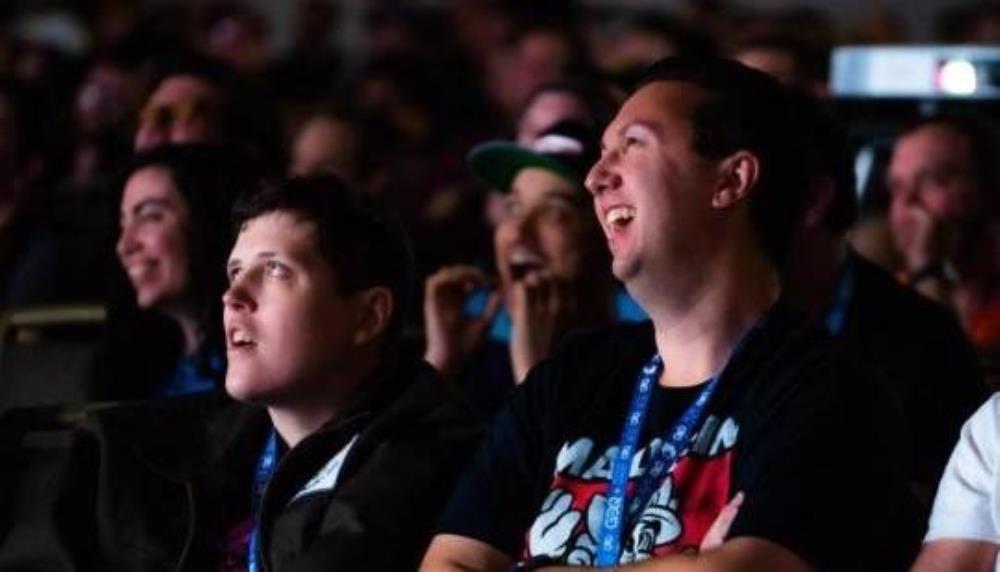
The charity event will be streamed live from Gamescom in August.
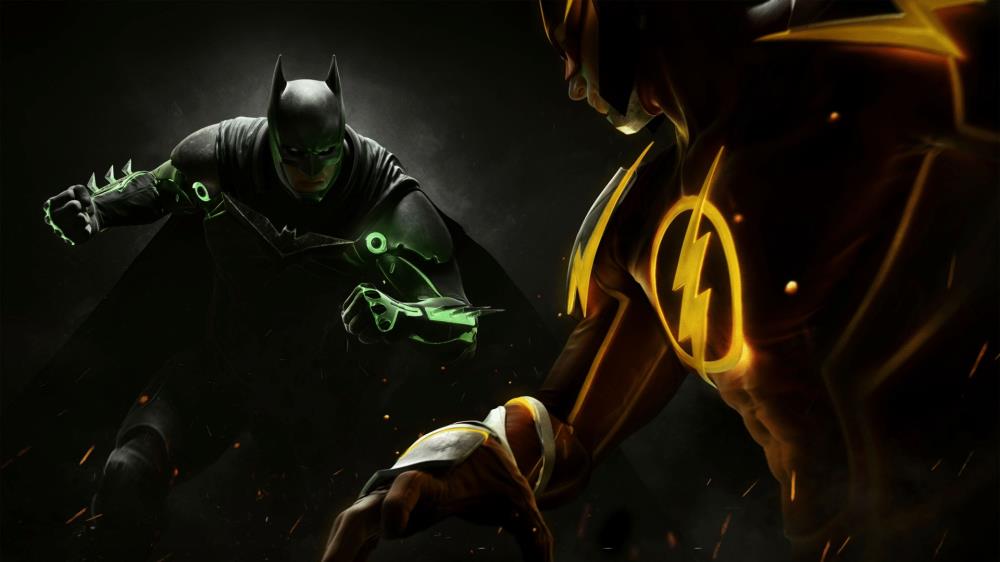
Thanks to the slip-up of an artist working on the title, we now have more evidence that a new Injustice game is in the works.




Hope everyone enjoyed the blog. Feel free to leave your comments and/or questions below.
Those darn E3 talks distracted me far too much yesterday (went to bed late too) so submission is quite old already. Oh well. Hope the wannabe-MGS instructions in part of the blog don't come off as condescending or anything. Just goofing off. :P