
At some point during the month of July 2013, almost one year ago, Tony Key, Ubisoft’s VP of sales and marketing made a bold statement concerning game development. "We won't even start if we don't think we can build a franchise out of it," Key told A-List Daily. "There's no more fire and forget - it's too expensive." It was confirmation of a philosophy that many had observed to have taken hold at the larger publishers.
This year, we have seen the attempts to launch the next gen franchises in the form of Watchdogs and Destiny. Many have raised eyebrows at the money being spent on these titles with one question seemingly on everyone’s lips. Instead of spending all that money on one game, wouldn’t it be better to spend it on a few smaller games? Surprisingly, contrary to that seemingly reasonable logic, the answer, according to the book “Blockbusters” by Anita Elberse, is no.
One of the early proponents of the Blockbuster strategy was Alan Horn when he headed Warner Bros. During his tenure, he chose to single out four or five so-called “tent-pole” or “event” films. These were thought to have the broadest appeal and they supported those movies with a disproportionately large chunk of their total production and marketing budge. It meant that the survival and profitability of the entire company rested on a few titles.
Many movie heads will tell you that when a movie releases on a Friday, they usually get a call later that night, telling them whether they have a hit movie or a disaster. It’s that simple and brutal in the movie industry. There are a few sleeper hits like “My Big Fat Greek Weeding”, but these are exceptions to the rule.
To up the ante on the hyperbole, the profitability of a Major Hollywood studio depends on what happens on 5 days of the year. If movies don’t open big, they never make it big. That’s a scary notion no matter who you are. So, the question remains, as to why someone would adopt this seemingly-insane strategy. The price of movie tickets are the same no matter the production costs. Why spend all this money on a few titles?
The average moviegoer in the US only sees five or six movies a year. They will never go out to see all 25 movies that Warner alone puts out each year. The idea was that movies with greater production value should be more appealing to prospective moviegoers. These blockbuster bets are aimed at mass audiences, the idea being that everyone will see at least one of the movies that Warner makes each year.
Essentially, it’s a battle for attention, and massive spending on a few titles will guarantee that. People also have a likeness for “winners.” If I’m going to see one movie this month, it’s going to be the big budget spectacle that all my other friends are likely to see. In that way, I don’t feel left out during the ensuing conversations. What can I say? We can’t all be hipsters.
Enough movie talk for now. Let’s get back to gaming. These lessons learnt in the movie industry have definitely made their way to our favorite pastime. We have seen the big three in gaming third party publishing – EA, Activision and Ubisoft- adopt a strategy that parrots this blockbuster philosophy. The quote by Ubisoft at the beginning basically confirms this sentiment. They are no longer interested in those games that lack mass appeal. We never saw a 3D platformer by Ubisoft for the 7th generation consoles (still waiting on Beyond Good and Evil 2) and we saw Activision adopt a two-tiered strategy of well-made and well-marketed Mega-franchises (COD and Skylanders) and absolute trash (007 Legends).
If I’m a casual gamer – “casual” in the sense that I don’t game regularly - and I want to be in some of the gaming conversations around me, I’m going to pick the Call of Duty Games, Need for Speed and the Grand Theft Autos. I’m going to pick winners. Game Publishers and Developers are trying to pick those winners for you, and save some money in the process.
The average gamer (not you) will not even buy 6 games a year. Not at full retail anyway. Activision can make 12 smaller games a year and see all of them ignored by the average consumer if they are not enough of a spectacle. Hence, these companies are not trying to have a full retail game every month, or even every other month for that matter. They have decided to release 4-5 huge games each year with mass appeal. It’s the reason why shooters and open world sandbox games have taken over the gaming landscape and will continue to do so for quite some time.
I was bewildered by the list of things to do in Assassins Creed 3. Some activities I loved, while there were others that I never bothered with. It’s essentially buffet-styled gaming, where the goal is to have “something for everyone.” The problem with this approach that is often, you get content that seems to be shoe-horned in to the point that it potentially ruins the product, much like the love stories in the Transformer movies. The advantage in our medium, is that we are not always forced to experience it. No Ubisoft, I don’t want to run around looking for 100 feathers in trees.
Now hold on, Warner Bros makes 25 movies a year, not 4 or 5. If Blockbusters are so great, then why even bother with smaller projects? Well, a number of reasons come to mind. Firstly, it’s a way to test talent. You may have an actor/artist that does great work, but that alone is not enough. Can he work well with others? Can he deal with the stress of “crunch time”? Smaller projects can be a good way to evaluate and build new talent.
Yet another reason is the lure of the Passion project. Actors and game developers all have ideas that they would love to see come to life that may not have mass appeal. Let’s say I want to make a 3D platforming game that is not simply designed to sell toys. Of the “Big Three” Ubisoft seems the most likely to take that risk and at the very worst, I may end up working on the stellar Rayman 2D franchise. By approving smaller passion projects, you attract talent that may compromise on the things that you want in the hope of working on the things that they want. With Child of light and Valiant Hearts, Ubisoft, unlike its competitors, seem to have an appreciation of the value of the smaller niche project.
It’s also a chance to test the market for a particular genre. Again Child of Light comes to mind. Could this be an early test to gauge the interest in a Westernized take on the JRPG genre? There are a lot of folks that have lost faith in Square-Enix recently. Could we soon see a full retail 3D installment of that franchise? Time – and sales - will tell.
That is not to say that Activision and EA are in any way suffering for talent. So why have they succeeded without smaller AA or bite-sized games? Well, unlike the movie industry, where franchise fatigue usually sees a trilogy and then a reboot some years later, gaming has seen many franchises that have been annualized without any significant or worrisome level of fatigue. Call of Duty, Assassins Creed and Fifa all seem to continue year after year at consistent levels. So, instead of one studio making a franchise title every 3 years, they can have 3 studios working on a single franchise with a game released every year.
In fact, with the sport-like mentality of modern shooters, many don’t want significant change between installments. They want the rules to stay the same and only for the arena and resolution to be changed every so often. They will continue with Call of Duty because of its popularity and the fact that the rules stay the same. Here, familiarity breeds skill, not contempt.
Still, there are limits to everything, and we may be seeing some signs of discontent amongst the gaming public. That discontent has been personified in the form of Kickstarter, where gamers have flocked to gain some respite from the monotony that is modern AAA gaming. The large studios are leaving open niches for smaller developers to exploit and prosper. Those smaller developers won’t stay small forever. Their hunger and nimbleness may see them soon divert attention and money away from the larger publishers and developers. Hell, the cynic in me thinks that this is the reason why Ubisoft has decided to make smaller niche games. There is definitely a demand. They may also be hedging their bets, in that, should one of their major blockbuster franchises fail, one of their smaller titles could hopefully rise and fill the gap.
It’s apparent that Gaming Developers have taken the blockbuster strategy to heart, however, some of the nuances – like the need for smaller titles – may have eluded them and some may be precariously positioned should one of their major earners fail.
Microsoft announced its financial results for Q3 of fiscal year 2026, including an update on its gaming Xbox business and more.


Not looking good. Hopefully Asha Sharma is able to turn Phil’s disaster around.


To me it's still quite remarkable how they can cash-in 5.3bn in revenue in a single quarter, since their hardware is basically dead.

The charity event will be streamed live from Gamescom in August.
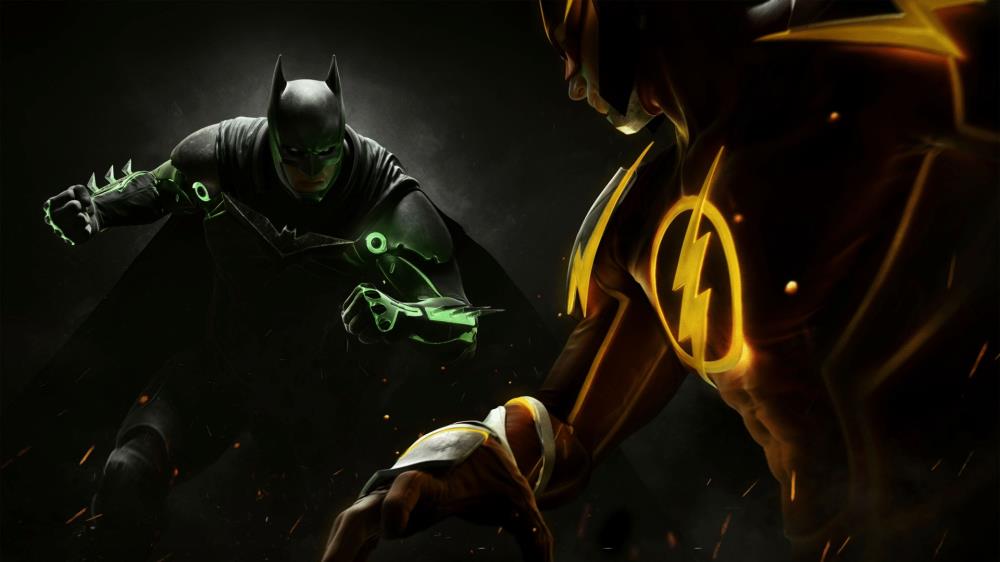
Thanks to the slip-up of an artist working on the title, we now have more evidence that a new Injustice game is in the works.




Excellent take on things in the industry. It should be really interesting in the this current gen to see if the tides switch. Sony and MS have provided new opportunities with their courting of indies. Stream and its bevvy of indies and the many kickstarters have opened up a veritable Pandora's Box of gaming ideas that are ripe with possibilities. I think many of these AAA publishers are either going to have to try to "hedge their bets" and take some more risky chances with lesser budgeted IP OR they will more than likely take more chances with indie developers and try to take a bite out of the pie by offering publishing deals. Either way, my hope is that gamers of all kinds (both traditional and "casual") will take more chances on games in general. Sure, play the big budget games. But, also don't skip the smaller indie games because of some misconceived notion that they are any less of a game. Games, in any form, are meant to be fun. If it IS fun...then play it...have fun...share the fun with others...and hope that they play it! Regardless of what the publishers want, ultimately it is us gamers that will direct where this industry goes through our purchasing power.
Great blog. I have been wondering about this lately.
This could be one of my fav blogs to have read for this month. I definately like the insight on the Hollywood side provided in the beginning.
I have to wonder if these companies' leaders are sometimes daft enough to see just how long the ridiculous budget, 7-to-8 figures put towards marketing, etc. can actually hold.
Great insight. Great blog. Its only a matter of time before we see a John Carter in gaming though. I just hope people dont lose their jobs when it happens.