
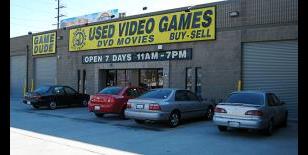
Are used games a friend or an enemy to the industry? For that matter, what are they to you?
At first glance, the issue wouldn't seem like a relevant topic for the next gaming generation following players' apparent victory in favor of used game support for next-gen consoles. Scores of gamers reveled in Microsoft's astounding 180 on their previous used game restrictions for the X-Box One and the PS4 earned the respect of millions through its hands-off policies towards used games sales, if the overwhelmingly positive response to its humorous E3 video reveal was any indication. All the while, the topic still won't seem to die in my mind.
One say that used games' status on next-gen systems may not be a permanent one for this next-generation for sure. Microsoft may have reversed their DRM restrictions for the X-Box One, but in light of Change.org's very own fan petition just last year to restore the One's original policies, it's obvious that the fan community is still divided on the subject. The petition further reminds us that the X-Box One's used game tech is one that's embedded in the system and only reversible or re-reversible via on-line patches. As we all know too well, patches can be like tech band-aids just as easily removed as they are applied to systems. If the X-Box One were indeed to cave into these fans' requests, the smoking gun that it is to used games could very well go off again at the expense of the used games market.
The most concise point to make in revisiting the used games controversy is the bottom line of who wins and loses from existence of used games. That question is a more complicated one than I thought originally before writing this blog and the sides of the used game battle are perhaps not as clear or obviously beneficial to gamers as you might think.
It might seem that the front-lines of the used game battlefield have to deal with players vs. companies. Looking more closely at the matter, it very much has to deal with companies vs. companies, or namely game developers vs. the used game store. Unless you're one of the select few that sell your old games yourself at garage sales or on E-Bay, you probably rely on store-chains like EB Games or Gamestop to buy and sell your used games. If you're in the latter group, you're a part only one of many more players that are reliant on a game or game related company for a middle-man when involved with game purchases.
The primary antagonists against used games are, of course, game developers. It's a known fact in the industry that they don't earn a cent past a game's initial sale and once that game copy leaves the hands of its original buyer (you), it immediately loses profitability for them. Used games most definitely hurt their business portfolios and its only natural that they seek out and crush whatever fails to aid them as a whole, whether out of purely pragmatic purposes of survival or the greed we perceive them to be. Nevertheless, they're the only people from whom games emanate from and it's either their choices that dictate what we have on the market to play.
Used games stores are most often seen as the video-game player's best friend. If you frequent them as much as me, you're as familiar as I am with the ample amount of rewards they provide to a hard-core player bent on playing near everything they see. If you're like me, you no doubt play on a limited budget and appreciate the much more affordable prices and wider selection of both newer and older/rarer games. If it wasn't for stores like Gamestop, I might've never picked up the Ratchet and Clank series for the first time or even noticed Beyond Good and Evil on its used game shelf and might've missed out on something I would've never otherwise seen in a new releases line. At the same time, used game stores are . Due to the corporate connections of this site, I don't mean to ruthlessly hound Gamestop exclusively, but if you've experience the same dilemma I've had with stores like them, then you know the dilemmas of selling games rather than buying them. Quite often you feel short-changed when selling back a huge stack of games and only receiving a few bucks in cash for them. Places like Gamestop have the right to charge whatever they want, but it's important to keep in mind their profit motive as well as developers.
The relevant question to be asked is "Which helps ME the most?" That answer might sound simple based on the afore mentioned factors, but it might not when you consider what each has to do with industry as a whole.
It's easy to think of profits for game developers getting sent straight to the fat cats upstairs, but it's equally as true that at least some of it goes to the products themselves. The damage used games inflict on developers can lead to watered down development cycles and content and in light of so many triple A studio demises from THQ to Irrational, developers are wiling to take far fewer risks in favor of retaining overall company success. Fewer of them are willing to touch controversial topics or go the extra mile to challenge a genre's roots and if not for used games, it's interesting to consider how far would they go. With more sales in their pocket from new releases, would they make bigger, better projects? Are we attached to a dinosaur when we could be supporting the future?
Used-game store chains, meanwhile, thrive on an industry of annual release cycles and cheap prices for sometimes cheaply made games. Games like Call of Duty and Assassin's Creed are series that they live to resell as fast as they hit store shelves as new. If not for them, you might not have old classics to buy back or for the first time, but your new games might be undeniably cheaper. Healthier game companies would have less reason to charge more for their games. They inevitably keep the industry hampered, in some ways, through a factory system of quickie production. Games companies are forced to churn out games faster but not necessarily better for the sake of quicker, lower sales figures. We get more games that way, but does it result in us getting more duds each year than not?
The truth of the argument boils down to the need for quantity or quality in the game industry. We inherently want more games cheaper as consumers but what about daring, bigger games?
One aspect with the debate has to deal with the constant struggle against inevitability. Used-games, especially hard-copies, are certainly not going away today, or tomorrow, or even next year. Yet their lifespan will be challenged again come the generation after next, whether that be by E3 2019 or even sooner. Our world is all going digital and the technological expansions are limiting our need to hold onto tradition. Maybe that's what bothers me and others. We hate change, to lose that old sense of familiarity we have in our habits. Is it for the best in used games' case? For the first time in this 31/31, I don't know the final answer to the dilemma, but what I do know is that, whatever direction we head in, there is such a thing about democratic process. We've already seen what players want in their games and their voices on-line decided Sony and did with used games this next-gen. As long as those voices are heard, gaming might move on when it's good and ready. That's all we can ask for at the end of the day as consumers, isn't it? Respect from our producers.
Microsoft announced its financial results for Q3 of fiscal year 2026, including an update on its gaming Xbox business and more.


Not looking good. Hopefully Asha Sharma is able to turn Phil’s disaster around.


To me it's still quite remarkable how they can cash-in 5.3bn in revenue in a single quarter, since their hardware is basically dead.

The charity event will be streamed live from Gamescom in August.
Thanks to the slip-up of an artist working on the title, we now have more evidence that a new Injustice game is in the works.




Used games are good and bad, depends on who you ask
True
I think used games are an important part of the whole cycle. Removing them wouldn't prove to be beneficial for anyone other than the devs/pubs.
There is no carrot being dangled to suggest games would be cheaper if used games didn't exist. Activision (fine example) produce games that are effectively billion dollar franchises. They wouldn't sell these for any less than they already do, because they already sell incredibly well.
But to be fair, games are the same price now as they were when I went out to buy my first Megadrive game in 1991...£40. Prices crept up a bit with the N64 but have been about £40 for 22 years, that's not bad compared to inflation eh!?
Used games don't hurt their bottom line. Removing them will not help either. Many gamers became fans of a specific game or franchise as a result of buying a game that may be used or even playing an ill-gotten copy.
It's a form of advertising, except it's free on the business side. It's no different from word of mouth. If your game is so great, people playing them will tell their friends about it and it snowballs from there. Demon's Souls is an example. This game is on my mind because we're looking at the launch day of Dark Souls II. I am pretty sure many that have purchased Demon's Souls preowned at GameSpot or Ebay love the game and became part of the growing cult-status Souls community, like I did.
I have to question why you would blame used games for for the demise of THQ and Irrational.
THQ, a publisher, not a dev, went under due to releasing too many failed products. They failed well before the used game market hit them. They over-extended themselves, and eventually the parent company had to cut them loose, leading to a sell-off.
Irrational games voluntarily closed down. Every one of their games sold well. However, they spent an exhorbitant amount of money on Bioshock Infinite, and likely didn't recoup it all, or had very little profit. In the end, there was absolutely no evidence that sales were drastically hurt due to used games, and BI itself sold quite well.
I'm not saying there aren't some studios that have been hurt by used game sales, but when you have studios closing down when they sell millions of copies, which is enough to recoup development costs, one has to look elsewhere to find where they ended up not being profitable. It seems many can't accept the fact that the game just didn't do well due to being sub par, or that it lacked the huge marketing budgets(which can be a double edged sword towards profitability), or the game just couldn't find it's target audience. The latter of these is usually the most common, as not every game can generate the hype of a Titanfall, Gran Turismo, Uncharted, etc. In this case it comes down to lackluster marketing, and that happens well before the used game market effects sales.
I understand that you are trying to look at both sides of the issue, but to date, not a single example of a game dev being shut down can be proven to be caused by used games. In the case of poor game sales, they are poor at release, when used copies of the game are simply not as available.
Publishers want to restrict used game sales so they can squeak out that last little bit of revenue, which is reasonable, but by doing so they gain too much control of the market. In addition, this mentality is simply short-sighted, and it's my belief that in the long run it would have a negative impact on future sales of a franchise. In addition it negatively impacts new game sales, as many many people trade in games to buy new ones. Some 80% of the trade ins at GameStop are used to repurchase new games. That's a huge chunk of change to take out of the new game market.
Sadly, the thought that devs would take more risks if used games were no longer allowed is simply fallacy. There is absolutely nothing stopping devs/pubs from doing that now. The fact is that risks are too great, as if the games won't sell in the first two months with used games being available, they aren't likely to sell without them. It's also worth mentioning that the devs out there that take more risks are often rewarded. Risk can lead to great rewards, but the cookie cutter attitude is so prevalent because those games sell millions of copies so there is no risk.