

There's a terrible yet wonderful irony between the realms of the niche and the mainstream.
In my last post, I argued for the importance of allowing one's game to keep its identity in the face of appealing to a larger audience. I realize, though, that what's good for the fans may not be so good for a company. However, I believe that companies like Capcom can completely miss the point in totally ironic ways when it comes to what gamers want. Allow me to express my viewpoint:
Firstly, regarding my original post, someone presented a game that represented a niche game done right; a game that, in the face of stepping into the ring of the American-gaming-success-story of the Call of Duty-size gaming market, did not compromise.That game is Yakuza 3, an old-school Japanese brawler. When you play a game like Yakuza 3, you may notice the shear size of the game: to call Yakuza 3 a big game would be an understatement (there's an entire golf game in there. A golf game. In a brawler). As an American gamer, you may also question how SEGA could throw so many resources into a game that's over-flowing with content yet somehow be content with the fact that you've never heard of it. that is simply business sense when you look at how well Yakuza 2 did in America, but that doesn't really answer the question. The reason why Yakuza is allowed to be such a niche product in America is because it's the complete opposite in Japan. Sega must be fine with this series as a Japanese success, otherwise you'd see them making desperate attempts to mass-market and outsource their game in America. I wouldn't want to see Sega aim for the American mainstream because they'd probably assume that the game would have to change in some way... even though the reason I love the game is because it DOESN'T try to appeal to me at all. That's the irony of it.
Let's imagine, for a moment, what would happen if Sega got super greedy (like, for no reason). Let's say they shoved their Japanese game into the face of the America mainstream through a mass-marketing push. The result would probably be akin to the poor handling of the Lost Planet series.
When you look at how only a niche size fan base continues to support a game like Lost Planet 2 in the States, it leads me to assume that the only reason Lost Planet 2 did as well as it did over here was due to the huge marketing push towards the mainstream gaming audience (the same audience who'll get suckered into buying any huge game if the marketing campaign is loud enough). Regardless, The mainstream has ultimately decided that it will not support Lost planet 2 as a mainstream game. Capcom's bright idea? Completely scrap the game as it was and out-source. I believe the problem wasn't in Lost Planet trying to appeal to the west, but in it trying to blend in with the big western shooters instead of advertising the clear differences that made the game stand out. Had the game had a smaller budget, and better emphasized its quirks as a Japanese game instead of relying on the causal shooter fans to save it, it would probably still have a bigger following today.
I'm not saying Capcom should focus entirely on moderate success with smaller games; They can do whatever they want, as long as it doesn't betray the loyalty of hardcore fans and customers overall. Oh, Capcom, you've done terrible things. It would appear that for some reason, Capcom is having trouble balancing the two worlds of hardcore and causal, or the niche and the mainstream. I'm not against Capcom taking shots at the mainstream gamer, I'm against them using my favorite games as the ammunition.
"Looking at the marketing data [for survival horror games]... the market is small, compared to the number of units Call of Duty and all those action games sell". A survival horror Resident Evil doesn't seem like it'd be able to sell those kind of numbers."
-Masachika Kwata
I don't remember exactly how I responded to this quote by the RE: Revelation's producer, regarding the explanation for Resident Evil's push towards action. However, I do remember a big "DUH!" in one of my sentences, followed by a series of face-palms so loud and frequent that you'd swear I was giving the man a standing ovation. This was Capcom admitting that they were targeting a much bigger audience with the Resident Evil series, an audience that was irrelevant to what the series was all about. I wouldn't mind them experimenting with action-focused RE games, the PROBLEM is that I'm not seeing any legitimate survival horror titles from the series post-RE4. Revelations was close, but even that was apparently designed to "take it a step further [in action]". Really, Capcom. A 3DS game.
What made Resident Evil a more niche experience, to put it simply, was the lack of accessibility in gameplay, and online social/competitive features that a lot of mainstream and causal gamers today come to expect. Resident Evil was a survival horror game that didn't just line up clever jump scares for the player, it also allowed you to completely ruin your own progression through the game, which made it far scarier. Honestly, a giant, mutant spider dropping from the ceiling right in front of you is scary enough... it's even scarier when you realize you've been playing the game for 3 straight hours without saving. Resident Evil was slow, tense, and for the hardcore but it had as much mainstream support as it could possibly need after Shinji Mikami's brilliant revival with RE4. Capcoms' problem with Resident Evil as a survival horror game isn't that it doesn't have appeal or that it isn't successful, it's that that isn't enough. Yes, it's like the kid who doesn't care that he has plenty of friends at his own table who like him for who he is; that's nothing compared to the friends he could be having at the popular kids' table.
Capcom's idea of getting the attention of Call of Duty players was by fundamentally changing the way their games look and play. We've even seen the outsourcing of more than a couple IP to non-Japanese developers in an attempt to boost American appeal. For some odd reason, Capcom is convinced that the only way their games can have bigger mainstream appeal is by all but abandoning their hardcore fan bases and offering up their games as sacrifices to the mainstream, causal gamer of the west (oh, and by having absolutely terrible DLC practices, but I'm not going to get into that, we'll be here forever).
This is where we go back to that ironic appeal from earlier.
Have you ever heard of a game called Demon's souls? ...Dark Souls? No, that was the spiritual sequel, I'm talking about From Software's original game, published by SEC. Demon's Souls is a Japanese action role-playing game that was also released in America, its main draw is that it severely punishes the player for even the slightest mistake. The sequel, Dark Souls, was the game that saw more mainstream success. Why is that though? Why did a game thats most memorable tagline "prepare to die" do so well for itself? It's because of the game's difficulty. Yes, the very thing that separates Dark Souls from appealing to the mainstream has proven to be the thing that would gain its interest (or at the very least, its acknowledgement). Whether it was the hardcore gamer focus or word-of-mouth, Namco Bandai was given the marketing tool they needed to push the game higher up to unsuspecting gamers like myself; gamers who didn't even know that Demon's Souls was a thing that ever existed, let alone got a successor.
Now look at the newest iteration "Dark Souls II", a full-fledged sequel that got a pre-rendered reveal trailer at last year's Video Game Awards show on Spike TV. No, not that low-budget, awkward mess we got in 2013, I'm talking about the 2012 televised awards show that celebrities were attending (that's about as mainstream as it gets for a video game). Dark Souls is a game that's clearly on its way up, and regardless of how the series is promising to stick to its guns despite its bigger audience, the game has proven that it didn't need to change at all to reach a wider audience at a time where games like Call of Duty reign supreme.
Although, you could argue that Dark Souls is simply a smaller game, and that it doesn't need to appeal to a Call of Duty-size gaming audience because it doesn't have to make up for the same level of costs as games as big as Resident Evil. Sure, Dark Soul's success doesn't even compare to bigger American games, but it managed to generate mainstream appeal anyway by doing nothing but be itself. And with that mindset of how much money Capcom is throwing at their games in their vain attempt to be like Call of Duty, I'm not surprised why they were so close to financial ruin. A lot of Capcoms' most popular games are hardcore, singe-player-focused experiences that cater to those wanting to challenge themselves (Resident Evil, Devil May Cry, and Mega Man to name a few). If Capcom is putting too much money into these games, expecting a wider audience to play them, then that's their own foolish mistake. Resident Evil was doing just fine thanks to RE4, the only reason RE5 toned down the terror and upped the terrible was because Capcom wanted more from the series than they know they should be getting. I have no problem with a publisher that wants to see their game succeed, but when you start seeing a bloody horror game become an action game; that clearly has more to do with greed than it does respect for the game.
Dark Souls broke into the mainstream thanks to its niche quirks. The very thing that distanced the game from the mainstream turned out to be its greatest marketing asset to gain mainstream appeal. And that's not the only example, it seems as though the industry in general is focusing on games that push away from mainstream experiences right now. Just look at the rise in popularity of independent games, games that huge companies like Sony and Nintendo are investing in on PS4, Wii U and 3DS and have dedicated whole segments of E3 to talk about. For God's sake, an Indie game completely trounced every other reveal at VGX, making them look boring and "safe" by comparison.
At a time where gamers have become jaded of big-name sequel after big-name sequel, and publishers want to wow us with new software for next-gen but are terrified of where they put their precious money: independent, quirky and cost-effective games that would otherwise be enjoyed by hardcore fan bases, look to have ironically become the next big thing. We're looking at a breath of fresh air, my fellow gamers, where the process of being creative and unique may once again become the main driving force in the mainstream. And to think: all it took was the stagnation of mainstream gaming and a dying console generation.
Capcom, you could have been the driving force atop this cusp of change; you were the king of IP (hell, you still are with your backlog of games), you could have given gamers over a dozen small, yet unique experiences (both new and old) at a time where gamers are clamoring for literally anything new and different. You could've taken us back to the days where games were about wonderful worlds, creative design, and hardcore styles of play. Had you been paying attention to the shift, you'd know that just being classic Capcom would've been your greatest money-making asset. Instead, you wanted to be bigger then your britches. You wanted to make more money than you really needed to, so you threw more cash into your games than was ever necessary for them to sell (RE6, anyone?). You've withheld DLC that should've been there to begin with. You've proven throughout the dying years of last generation that you're willing to sacrifice the identity and respect for your IP and throw yourself at the mercy of Call of Duty and "all those action games" to try and lick up whatever table scraps these publishers dropped on the floor. This is why I've lost so much respect for you. Here's hoping that you get your act together in the new generation, although the fact that your highly anticipated game right now is using a free to play module, I won't be holding my breath. At least we're seeing your former developers giving us what you've neglected to for far too long: respect for the IP and respect for the kind of audience that wants to play it.
Microsoft announced its financial results for Q3 of fiscal year 2026, including an update on its gaming Xbox business and more.


Not looking good. Hopefully Asha Sharma is able to turn Phil’s disaster around.


To me it's still quite remarkable how they can cash-in 5.3bn in revenue in a single quarter, since their hardware is basically dead.

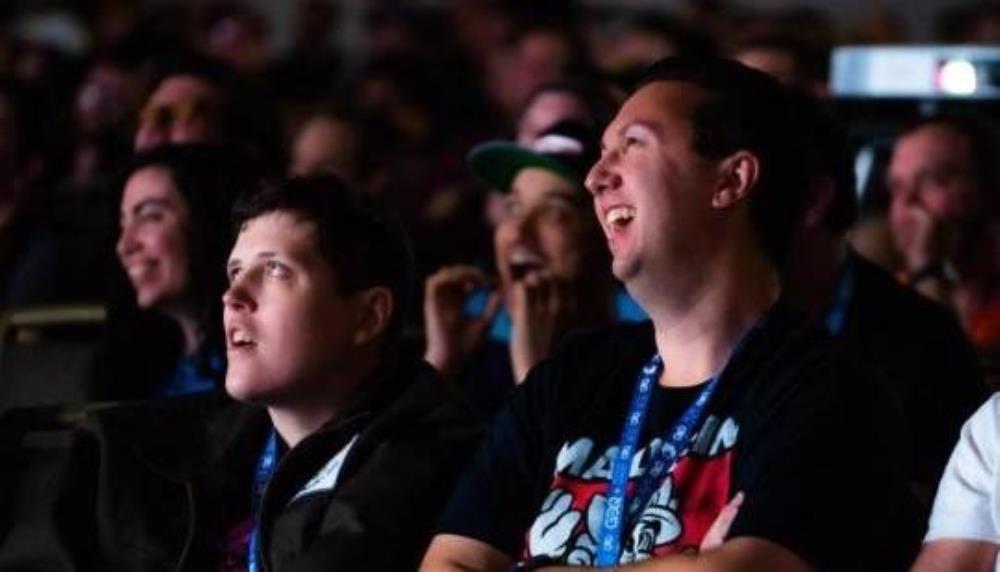
The charity event will be streamed live from Gamescom in August.
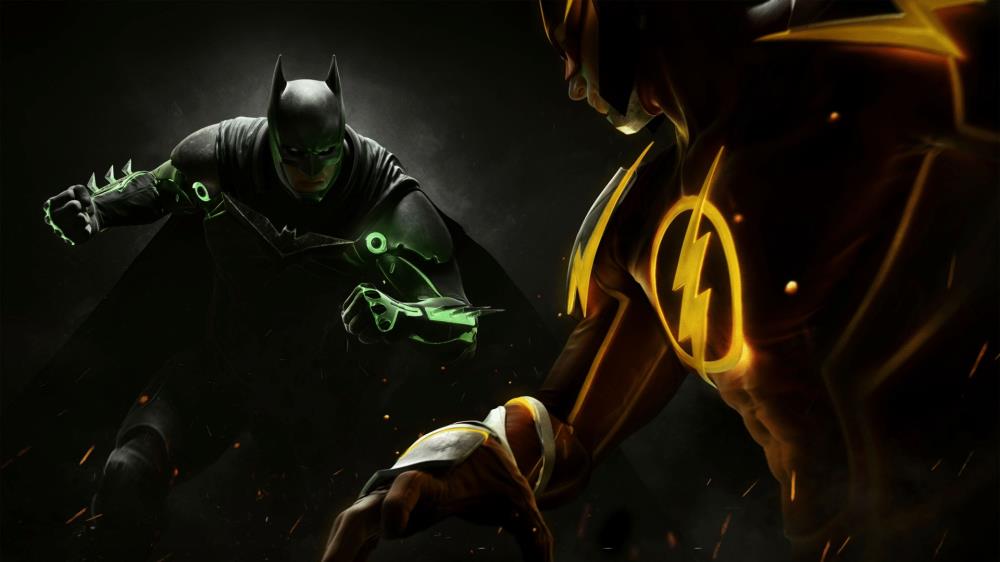
Thanks to the slip-up of an artist working on the title, we now have more evidence that a new Injustice game is in the works.




Good read. Really enjoyed reading this. But i have to disagree about the beginning of the last paragraph. Because Sega deserves the "King of IP" title. Just look at their efforts this entire generation.