
This blog’s been a bit of a journey. It started as a post on game length, pacing and dollar-per-hour value, but I came to a pretty major revelation as I wrote it and decided to flesh that out here.
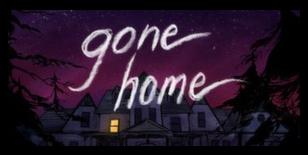
Firstly, let me state that I’m not meaning to badmouth Gone Home here. In fact, I recommend it… as soon as it’s 50% off on Steam. It doesn’t need to meet MY definition of a game. I just thought writing about why it doesn’t would make for good reading. If you need to know what it’s about, you play as a girl who comes home from a year in Europe to an empty house and you explore to find out where everyone has gone and what happened in the last year. You occasionally hear audio of your sister’s diary as you find important items, and the story is really about her for the most part.
As I was saying, I finished Gone Home and couldn’t help feeling duped, despite the great story and atmosphere. First, I thought the reason for it was obvious: the game was short, only about two hours. After all, people complain about ten-dollar DLC being that length, so where the hell does this whole game get off costing twice that? Right? Hey, that's a good subject for a blog that I haven't covered, let's hop to it!
So, I started my writing and got around to drawing comparisons to other games. Metal Gear Rising came to mind first. It was five hours long, but I was willing to buy it for a full $60, even after I had rented and beaten it. It was a good starting point, sure, but not the fairest comparison, unless I had missed j-rock-backed cyber ninja fights in Gone Home. I needed something a bit closer to it. I was one of the people that liked Walking Dead: 400 Days, but that still wasn’t a good comparison, being DLC and having more involving design. Then, I realized I had played something pretty similar a while back and had mostly positive feelings for it: Analogue: A Hate Story. (You can check out my review for Analogue in the “news” of my profile if you’re curious) (oh AND it's sequel, Hate Plus just came out. Why was I not informed of this?!)
Gone Home and Analogue both have the same general structure. They’re frame stories where the player is tasked with finding out what the hell happened and where the hell everyone is. The settings and scale are different: Analogue set on a ruined spaceship that held thousands, and Gone Home in an isolated manor for a family of four. That, and Analogue is almost completely text-based compared to Gone Home’s realized environment. But that’s all superficial.
No, the real difference - the line that Analogue crosses to become a game (to me,) but Gone Home never meets - was that interaction in Analogue was a two-way street. Analogue wanted me to be part of it; it asked me questions, and even challenged my morals. Gone Home let me look around, told me a story, but didn't ask anything of me. Like it didn't need or want a player.
Once I realized that, something snapped (or maybe connected) and I couldn’t just defend a short game like I was trying to. In fact, I may have fallen out of love with Gone Home (at least as what I considered a game.) I scrapped the original article and, well, now you’re reading this.
However “basic” its design may be, Analogue both acknowledged and valued my presence in its world. Sure a lot of it was just reading, but I also had to talk to the ship’s AIs to coax information from them or even just because they wanted to talk. And, just that, just something as simple as dialogue that let me express my thoughts on the story made it more of a game than Gone Home was. By comparison, Gone Home makes me feel almost unwelcome. It just allows me to explore and feeds me narrative when I find an arbitrary item. It has a good story, but one that I had no part in telling or crafting. Find an item, hear a story, go to next room. Sure, Analogue’s a frame story too, but it did give me purpose to be involved and let me have the last say on it near the end. I imagine some players would WANT to do something about what has happened in Gone Home, but the game doesn't care and cuts to credits once its mysteries are revealed.
Games often get compared to movies, (I prefer to think of them as plays, personally) so let’s go with the film analogy. I think a decent game makes you an actor, you get a script and you carry the story out as envisioned by the writer and director. A great game lets you direct. You may still be bound to the script, but you are free to add twists as you see fit and add your own personality to it. (But being an actor in a great production can be way more fun than directing a broken script) A bad game, like the kind where you have to wait for your other squad mates to open a freaking door, can make you feel like an extra, or even an audience member.
And that’s why Gone Home doesn’t even feel like a game. I’m in the audience. I may not even be there. It’s more like I’m the friend of an audience member being told the plot. And maybe that’s enough for some people, but not for me. Not when a game avoids the point of the medium. It's not that Gone Home isn't interesting, it's that it's not interested in me.
So, yes, I consider what’s basically a visual novel to be more of a game than Gone Home. Again, I’m not telling you not to play or enjoy that; I just thought I would share my thoughts. But I am going to reserve the right to slap silly anyone who turns their nose up at visual novels but praises Gone Home and the like as “an evolution in game story-telling” when it’s really a “different kind of story-telling that may or may not count as a game.”
Thanks for reading! That’s enough introspection, subtlety and character growth for one day. Saints Row IV’s out! Time to kill aliens with sex toys and dubstep!
Microsoft announced its financial results for Q3 of fiscal year 2026, including an update on its gaming Xbox business and more.


Not looking good. Hopefully Asha Sharma is able to turn Phil’s disaster around.


To me it's still quite remarkable how they can cash-in 5.3bn in revenue in a single quarter, since their hardware is basically dead.

The charity event will be streamed live from Gamescom in August.

Thanks to the slip-up of an artist working on the title, we now have more evidence that a new Injustice game is in the works.




You make some great points I just played through,
it was fine, good story which hasn't been done
before up to this point with games, saying that, I don't know if this
really constitutes a game, its more of an interactive storybook.
Hard to recommend it at this price considering it can be beat in 1 minute but once it drops it should be experienced.
I went into Gone Home not knowing what to expect whatsoever, at the beginning I kinda expected it to turn to some kind of survival spooky house game, with puzzles like the very first thing you do in the game, figure out how to get into the house. Once that is accomplished it never uses that again. As soon as you enter the house you are guided through a very linear story.
I think 'Video game' cannot be descriptive of this type of experience, it needs a new moniker.
There is more gameplay in Portals 1st couple of puzzles then in the entire 2 hours it takes to finish Gone Home.
Just because I'm saying this doesn't mean I'm degrading Gone Home, I just don't think its a very good 'Game' because I view games trough the lense of gameplay.
Gone Home has barely more gameplay then this
http://www.3dlabz.com/3d-in...
I actually enjoyed it for the story it was telling though so I would recommend it once it drops price considerably.
Anyways that's all just my opinion.Good blog.
If this game bothered you for being short and not very interactive, play Thirty Flights of Loving.
You will pull your hair out. I sure did.
Umm is this like Dear Esther which offered a great story and atmosphere but lacked gameplay mechanics except for walking. If so then maybe I will wait for the price to come down.
Although this examination does come off as interesting and...heartfelt (if that works here)--and has now tempted me to try out Gone Home (already bought) and this Analogue series (never heard of until now), I have to admit the whole game/non-game debate in general is getting rather irritating when I see why people care so much about deciphering a term's definition that varies from person to person.
From what you may call a two-way street could be even more thoroughly combed over for anyone else to posit that any involvement with an environment would be enough to meet that definition. As disabling of a game as it may be, Dear Esther still demanded me to interact with a given user interface in order to move from looking out to the ocean to searching an empty house.
When it comes to this debate, I wonder if the likes of DE, GH, etc. would get these non-game labels if they had some sort of fail state or the glimmers of direct interaction in the story as you said. Then, I also wonder just how arbitrary these prerequisites actually are. Even though I enjoyed chewing your blog over and thinking on it, what's presented feels rather similar to the No true Scotsman fallacy.
Rather then deciding to stamp what is/isn't a videogame, it'd be easier to examine its falterings AS one.