Kickstarter operates on a very simple premise – give me the money I need so that I can make the product that you want. The product that no one else wants to make. It was gaming that catapulted Kickstarter into the limelight. A legendary developer by the name of Tim Schaffer wanted to make an old-school point and click adventure game that nobody supposedly wanted to fund. So, he asked his fans, via kickstarter, to pre-order the game in advance. Waaaay in advance. They were to be the investors with no input or rewards other than a finished product. But this was Tim, so the game was almost guaranteed to be good. The game was also guaranteed to be late and over-budget, but most people figured that part out much later.
From here, Kickstarter exploded. It entered the sphere of gaming at a time when a lot of gamers were growing tired of the monotony of AAA gaming. It was perfect timing. Developers had become very risk-averse in an industry where development costs kept growing. They made shooters and sandbox games and little else. Platformers and Adventure games were scarce. So, when Tim revealed his grand plan, everyone was excited. Now we, the gamers, had a very direct say in the type of games that could be green lit. No longer would we be held hostage by developers, accountants and the other suits. By the people, for the people – or something like that. So, when Tim revealed his grand plan, everyone was excited and bought in. The game turned out great, but the entire process went anything other than “according to plan.” Gamers got a good taste of what developers go through when dealing with creative talent.
At the end of the day, gamers got more than they bargained for with Brooked Age, in both good and bad ways. The game was great and larger in scope that what was promised – good on Tim Schaffer. They did, however, have to contend with a highly altered timeline – not so good on Tim. Still, with so many games not shipping, it all still turned out quite well. Failures and incomplete projects were to be expected in a scheme like this, and we have had our fair share. The way kickstarter operates practically guarantees this. Let me explain.
With Kickstarter, its all or nothing in terms of funding. You get what you ask for, more than what you ask for, but not less. If you ask for 4 million and then get 2million, you don’t have the opportunity to say “I can scale back a few things and work with that.” No, instead you get nothing. The result of this is that more ambitious projects can fall by the wayside. Star citizen may now be better funded than the actual space program, but they didn’t ask for $40 million upfront. They started with a humble goal of $2 million and got to 70 million via stretch goals. Many have tried this tactic. Set an easily attainable initial goal, and then try to get what you really need via stretch goals. Setting a reasonable goal at least ensured you a start for the project. From there, stretch goals or further investment by third parties would hopefully see you home to your actual target. Figuring out a reasonable starting goal becomes a bit of a conundrum. Some ask for too little and never get the additional funding they needed. Others asked for too much upfront and never got off the ground. Even Broken Age had to find third party investors to be completed despite getting funding to a tune of 10 times what was initially asked for. So, if publishers would not initially fund Tim Schaffer’s game at the start, why did they step in afterwards? To answer that question brings us to the new use for Kickstarter – Marketing.
Broken Age received a lot of attention – both good and bad. The campaign and gamers served to promote the game heavily. Investors looked at the game in progress as well as all the free attention/marketing that came with it and saw it as a safe bet. . Marketing is usually a large part of a game’s cost. The Witcher 3 allegedly spent more on marketing than on the actual game. http://www.forbes.com/sites... they had gone to kickstarter for funding, they would have gotten a large chunk of cash from the already large fan base for the series, but more importantly, gamers, via word-of-mouth advertising, would have promoted the game for them.
More recently, we saw ex Rare developers pitch a game, Yooka-Laylee - A 3D Platformer in the style of the old Banjo Kazooie games. They asked for 2 million dollars. That’s not what they were really after though. They wanted a community response. They needed to prove to investors that this was viable. They also needed the free marketing that came with the community getting behind an open world 3d platformer, which nobody, not even Nintendo, seems to want to make. The money may help get the project started, but it certainly won’t get it to the finish line. For context, Notch, creator of Minecraft, loved a game which is adored by everyone that played it – Psychonauts. At one point in time, there was some sort of exchange between him and Tim Schaffer about funding a sequel. The figure Tim came up with was in the vicinity of $40 million. Notch would never again be found in the vicinity of Psychonauts 2 talks. So, 2 million is a drop in the proverbial bucket. It does, however, build equity for the project. It can improve funding chances by investors. It can get the project started whilst they sort out all the red tape with investors.
I’m not against any of this. If these are the maneuvers necessary to bring me platformers and Shenmue 3, then so be it. However, others have rightly raised concerns about this new strategy. There are those who legitimately need Kickstarter to entirely fund their game. Games that no investor would go near in spite of initial funding. The danger here lies in comparative shopping by backers. If someone sees a 2 million dollar campaign result in an open-world 3d platformer, then they are unlikely to look favorably on a simple 2-D indie game asking for 4 million. The danger here is that true developer independence, one of the things that made kickstarter so attractive in the first place, may be lost in the process. We may see game-makers look to Kickstarter to start a project and then, once again, have to put themselves under the yoke of investors to see it completed. This will affect the types of games we get and the amount of risk and innovation that is attempted. Hopefully, the funding and gaming community is educated enough to understand these maneuvers and appreciate the difference between a marketing project and a funding project.
Microsoft announced its financial results for Q3 of fiscal year 2026, including an update on its gaming Xbox business and more.


Not looking good. Hopefully Asha Sharma is able to turn Phil’s disaster around.


To me it's still quite remarkable how they can cash-in 5.3bn in revenue in a single quarter, since their hardware is basically dead.

The charity event will be streamed live from Gamescom in August.
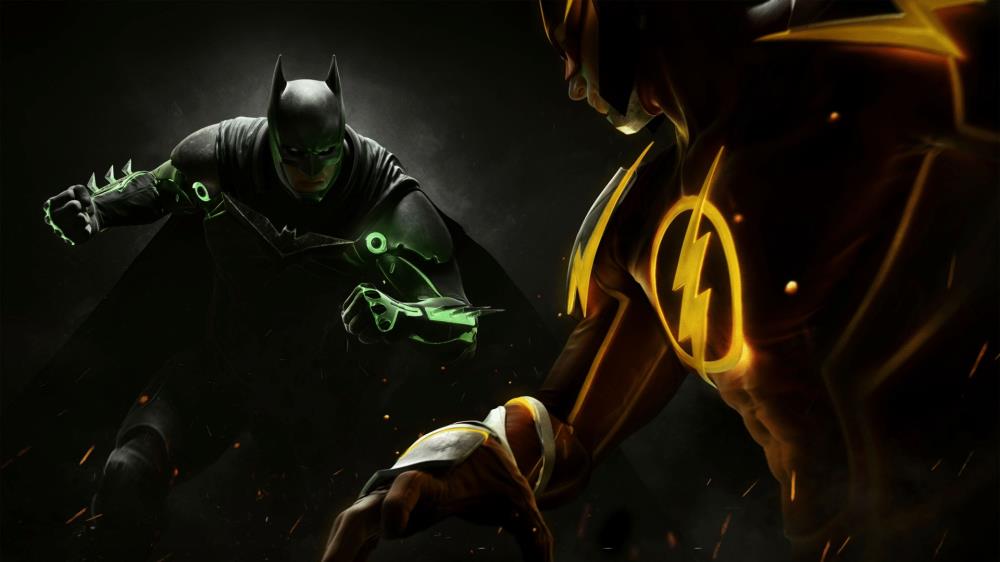
Thanks to the slip-up of an artist working on the title, we now have more evidence that a new Injustice game is in the works.




has any other kickstarter project had a major company like sony help fund it? to me it just sounds like a conflict of interest. i also wrote a blog that has some relevance to this discussion a few months ago.
http://n4g.com/user/blogpos...
My worries are that this will be yet ANOTHER thing to slippery slope and screw over the consumer in the games industry. I fear that companies will see this as successful and start kickstarting everything. Doesn't succeed? "Well too bad, no game for you and no skin off our bones. Clearly you all didn't want the game bad enough to give us 2 million dollars for a product that isn't finished". And not only not finished, but being funded by the consumers, over the corporations who have millions. This could easily slippery slope in an overall worse gaming industry than ever before. Quality dropping because the budgets are minuscule and developers require X amount of dollars.
The only surefire solution here would be for Kickstarter to establish certain standards of transparency from creators, and that's assuming KS would be able to enforce them. As it is now, all people can do is put their faith into creators and look out for signs of credibility and competency (or otherwise). It's a free and open crowdfunding platform so those things are going to vary.
I don't think it's that bad right now honestly, despite all the huffing and puffing about the system people do when a project gets in a rut or completely falls through. If there weren't several successful projects coming out of Kickstarter I'd say otherwise, but it's given us Shovel Knight, Freedom Planet, Wasteland 2, Pillars of Eternity, even Broken Age, etc. Ultimately, we're gonna have to take the bad with the good of crowdfunding.
As far as Shenmue 3, I think it's important to consider that the Kickstarter page is pretty barebones and amateur to begin with, even putting aside the funding confusion, compared to a lot of other campaigns that have aired on the site. That noted, I'm not entirely sure the lack of transparency and detail is completely intentional.