Up until the 7th generation of consoles, there was an established pattern to launching consoles. At launch, you would target the upmarket segment of the gaming crowd, known more commonly in gaming circles as the “hardcore gamer”. This is the group that will spend north of $400 to get a console and games at launch. As time passed, and production costs declined, the console could be sold at cheaper prices until it hit the “sweet spot” for the downmarket crowd, also known as the “casual gamer”. This was usually at about $200 dollars, and would see an explosion in sales. With all console makers using the same basic strategy, Sony dominated with the PS1 and PS2 due to a number of other factors (not important right now).
With their audience dwindling, Nintendo decided to change their approach for the 7th generation of consoles. They embarked on a disruption strategy or disruptive innovation. Breaking with convention, Nintendo decided to target the downmarket at launch with a cheap console ($250 Wii) and consumer-friendly hardware and control design. With a $150 launch price, the DS was also put on a similar path, although that was pretty much in keeping with previous handheld releases. The strategy worked incredibly well on both fronts and they made money hand over fist. I wonder where that expression comes from. Sony and Microsoft were left upmarket, only managing to slowly move downmarket as the popularity of the Wii waned.
A downstream strategy starts out very well. You get early sales momentum and consumer mindshare, which then translates into terrific software support, all of which translates into financial success. The problem comes later on when your technology becomes outdated earlier than that of your competitor, which can result in your audience moving on to said competitor when their prices decline. That means that they stop buying your software. Also, the upmarket audience may never be satisfactorily impressed with your product. A downmarket-first approach means that the lifecycle of your console can be short and you must be ready for that. Nintendo was not. They took far too long to follow-up on their Wii success. That was understandable though, as it was a new strategy in the console space. Hindsight is 20/20.
As Nintendo prepared (slowly) for their next round of consoles, I expected them to repeat this strategy of targeting the downmarket upfront. However, they had other ideas. First off, they released their new handheld, the 3DS, at a whopping $250. I will never know why they chose to design something that cost that much, but they did. The response was not good – no surprise to be honest. With a standstill in sales and a competitor (Vita) set to enter the market, they undertook a massive price cut, the likes of which had never really been seen in recent times. It saw a recovery of sorts. The 3DS dwarfs its direct competitor, the Vita, with consummate ease, but pales when compared with its predecessor. The 3ds has sold 27 million less units when compared to the DS over a similar period. Despite the price cut, despite a new 2ds model at $130, the move to the downmarket consumer has not been smooth.
Many point to a growth in the mobile sector as a major factor, where a second hand tablet and a few free games are proving to be a much better alternative for kids as far as parents are concerned. Perhaps this was a factor in Nintendo moving upmarket with the 3ds in the first place. Maybe they thought that 3D would draw that hardcore crowd and that they could replace the consumers lost to mobile. The PSP had launched at a price of $250 and went on to sell over 80 million units, so surely there was a market for handhelds there right? Whatever the rationale, things did not go as planned. Still, with about 45 million units sold, Nintendo will certainly live to fight another day in the handheld space.
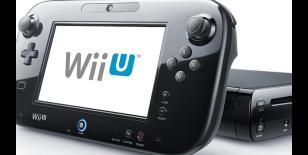
Of course the major worry for Nintendo fans is that of the WiiU, the butt of many jokes of late. With over 7 million consoles sold, it now sits in second place in the console race between the PS4 and the Xbox One. Despite its position, the worry is that with a lack of momentum and third party support, the console will die a slow death. I do agree that Nintendo is precariously positioned, but at the same time, they have some room for recovery.
It was a surprise to see Nintendo launch a $350 console after the success of the Wii. Minus the tablet controller, they could have launched the WiiU at the same price. Why they saw the need for a tablet controller is not really important anymore. The point is that its inclusion saw them launch upmarket in terms of pricing, but not in terms of hardware power or feature set. The upmarket audience was not impressed and the downmarket audience has not returned due to a combination of pricing, competition from mobile, poor marketing, poor name choice and lackluster software lineup early on. The fact that they did little with the tablet in terms of gameplay did not help the situation any.
The upmarket is being adequately served by Sony and Microsoft, by both their last and current generation consoles. When they were forced upmarket by Nintendo last generation, they became very adept at serving this audience in terms of hardware, software and infrastructure. There is no room here for a $300 underpowered console with a handful of exclusives and poorer online infrastructure. Not anymore.
They have 2 options: a new console or a move downmarket. A new console will alienate the few fans they have left and we all saw what happened to Sega after they abandoned the Saturn. A new console won’t solve all of their other problems either. The downmarket move needs to happen and soon. A slew of releases are slated for early 2015 and with them, significant momentum will be gained by both Sony and Microsoft. The upmarket is a lost cause now. They need to move to secure what they had last generation. There is still some time left. A price drop to $250 in not going to happen anytime soon for the PS4 or XB1. However, the question still remains as to why the casuals will buy the WiiU at $300 instead of say, a PS3/Xbox 360. Both are cheaper and have incredible game libraries and features. A more powerful WiiU at the same price point could sway a few consumers though. They need to start building momentum now because nobody in talking about the WiiU. It’s going to be a long road back. Simply staying $100 less than PS4/XB1 and hoping for the best is not going to work out. A $100 price difference may not be as important to a hardcore gamer as it would be to a casual gamer. Both groups value consoles very differently. They need to approach the “impulse buy” price point that attracts the downmarket.
First, they need to ditch the tablet. Not possible? That’s what people told me when I suggested they ditch 3D when the 3DS was struggling. They did that with the 2DS and they can certainly do this. It’s either that or they take a BIG loss on the console. They need to at least hit $250 soon to start building momentum and mindshare. The second thing they need to do is ditch the name. Those who already own the WiiU should understand that there is no need to upgrade when the re-branding takes place. Wii 2 with the gamepad optional? Why not? Hell, if they are really smart they can replace the gamepad with the “New 3DS” with its extra analog stick and buttons. A rebranding to Wii 2 with a $200 price tag and the current software lineup could work wonders. A Wii 2 (same WiiU, different name) bundled with the new 3DS (as the "tablet") for $400 would get my money for sure. A lack of 3rd party support never stopped them before, but now may be the time to spend some more of that 7th generation cash on further acquisitions. They already made some good moves with Bayonetta 2 and Hyrule Warriors. They need to continue in that vein. Third party is probably gone for good now on the home console.
Nintendo is not out of the game yet, but if they keep pissing about upmarket in the console space, they may find momentum and mindshare firmly in favor of their competitors soon. If that happens, it’s going to be a long wait till their next chance at console relevance. Downmarket is where Nintendo thrives, and while they may see it as less prestigious, it sure as hell is a lot more profitable.
Microsoft announced its financial results for Q3 of fiscal year 2026, including an update on its gaming Xbox business and more.


Not looking good. Hopefully Asha Sharma is able to turn Phil’s disaster around.


To me it's still quite remarkable how they can cash-in 5.3bn in revenue in a single quarter, since their hardware is basically dead.


The charity event will be streamed live from Gamescom in August.
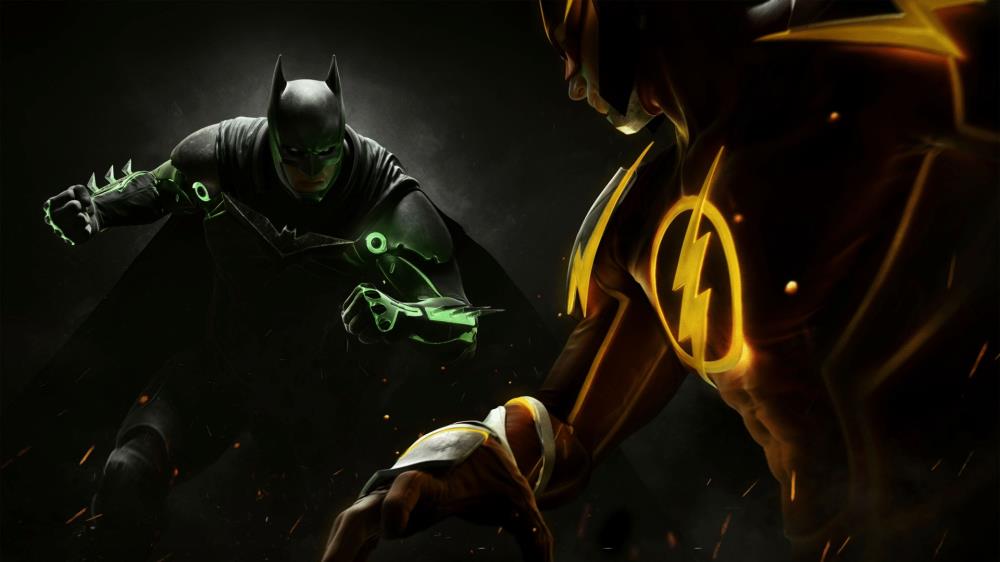
Thanks to the slip-up of an artist working on the title, we now have more evidence that a new Injustice game is in the works.




If the Wii U tablet was removed from a particular Wii U sku the console could be sold much cheaper. However the tablet is more apart of the Wii U console than say the kinect on the XB1. Even though I don't own a Wii U (but want one) I believe the tablet and pro controller should be bundled with every console to give gamers more options.
At this point; I really wonder why people think that Nintendo releasing a more powerful system will ensure success. They tried that already, and (at least up until the PS4); power has not caused any system to win the "war". In fact, it's the weak(est) systems of the generation that end up selling the most. Going as far back as the 3rd-gen up until now, that has been the case.
That's not gonna sway the third-parties. They've already gotten used to having their pockets filled with the money they gain from cutting deals with Sony and MS. Believe you me, that exclusive content you see going to multiplatform games, whether timed or permanent - costs Sony and MS a fortune. You never hear how much; but of course if it's enough to get these developers/publishers to happily declare it - it must be a good sum.
Nintendo has already stated that they don't plan to pay for third-party multiplatform titles. They'd be losing more than they gain. Although, they've certainly secured a few exclusives (LC: Undercover, Bayonetta 2, Sonic Lost World, Sonic Boom, Devil's Third, etc.)
Removing the Gamepad would also do more harm than good. The XBOX One's Kinect was the only real leverage it had to set itself a part from PS4. Even after removing it, things still haven't improved enough for them to celebrate. The very same thing could happen with Wii U. They're already selling it for just a few dollars more than a good PS3 bundle; so they'd REALLY be selling at a loss if they lower it any further.
The Gamepad is more of an ID card to the U than the Kinect was to the One. Quite a few games have used it quite well though, and after experiencing it, I really can't imagine going back to no-screen controllers. It's too convenient, at least for me, personally.
The best thing Nintendo can do now is pull up their socks and advertise this thing to the ground. They have quite the line-up ahead of them, and if the Gamecube proved anything; their best ideas seem to be generated when they're pushed into a corner
its gnna be funny when xbox never catches the wiiu they need a standard controller gamecube hopefully i think thats one of the main issues