
In the fairly recent past, getting a new game at launch was not a guarantee. If there was a large heavily publicized game on the horizon, you had to pre-order to ensure that you got a copy at launch or face scalper fees if you could not wait for the “re-up”. This was bad for a number of reasons. As a gamer, you bought the game on faith or based on early impressions (trailers/Demos/Magazine previews). Games could be delayed which meant that someone had your money for months for no good reason. Predictably, this approach often lead to disappointment.
These pre-orders were valuable to publishers though. They gave an indication as to the effectiveness of the marketing thus far and served as a gauge concerning demand for the game and hence could determine how many copies of the game would be produced and sent to retailers. This allowed them to avoid the need to bury their mistakes in New Mexico. It would also determine how much money would be spent to further market and promote the game. If they spent a lot of money advertising but with no real response, the plug could be pulled on further marketing efforts - known to us gamers as "Sending it out to die."
The system, of course, never worked ideally, often resulting in shortages at launch which many publishers saw as lost income if they could not re-supply the retailers before interest in the game dwindled or before another title captured the imagination of the gaming audience. This lead them to make improvements in the production and distribution channels and over time, launch shortages slowly became less severe and less frequent. This was good news for all concerned. Except for the scalpers of course.
Then, along came digital distribution. For the first time, you could be assured of getting some version of a game without worry. At first, this made things even better as the ability to release broadly was made easy, and on the surface, everything seemed perfect. A lot of books have been written about the frustrations that surround trying to predict consumer behavior. In this case, we have a situation where there was too much of a good thing. With the new-found confidence in game availability, gamers no longer had to worry about getting the game at launch.
The result was that the pre-orders gradually declined, thus effectively killing the feedback loop that publishers depended upon to determine how to promote a title. It became increasingly difficult for them to determine if their marketing was effective, and trying to get an idea as to the projected response to the title became almost impossible. This also made it difficult to convince retailers to stock large quantities on the title in question. The worry is understandable. Take GTA 5 for example. It was recently announced that it sold 34 million copies. What’s even more surprising is that it sold 29 million in the first month. If a game does not open big in its first month, it’s a real problem. There are exceptions, but no-one can build a business model based on those. So publishers are understandably perplexed as the window for making money can be very small. How perplexed are they? Well, EA showed concept art for games at E3 and i just can’t help but think that part of that was to get early reactions.
The pre-order decline has led publishers to change tactics, one of which we now experience as “long lead times”. In this case, I’m going to define Game Lead Time as the time between official announcement of a title and release. We are seeing lead times of up to 2 years in some instances, during which we are exposed to increased frequency and intensity of marketing efforts to the point that many gamers now complain of overexposure to a game before launch. “Exposure fatigue” if you like. I hate to break it to you, but things are only going to get worse.
Let’s use the much derided Watchdogs as an example. When Edward Snowden started to make the news with the whole NSA spying on us thing, Ubisoft saw a golden chance to market a new IP they had in development. The game, early in development, was shown and the public responded with enthusiasm. There were some downsides in the long - term though. The game was shown so early that initially, the projected/ estimated graphical quality first advertised could not be achieved, much to the disappointment of the gaming public. The game looks great, but promises were made. Well, that’s the way we saw it anyway. Another downside was the aforementioned exposure fatigue previously mentioned where everyone got tired of hearing about Watchdogs.
So, how did this all turn out? It turned out brilliantly as a matter of fact. The game broke sales records for the UK and Ubisoft itself. When the game was first revealed, everyone talked about it due to the nature of the subject matter. When it was delayed we talked about it. When they showed gameplay we talked about it. When we got tired of waiting and tired of trailers, we talked about it. When it underperformed graphically …..yep, we talked about it. It fact we talked about it to both gamers and non-gamers, which is exactly what Ubisoft wanted. The long lead time meant that they had an effective advertising campaign as well as widespread word-of-mouth advertising. It now potentially illustrates a change in the way games may now be marketed to us.
Without the feedback of pre-orders, Publishers are now moving towards the monsoon method. Extended monsoon method. By having a long lead time, they are hoping to maximize exposure to the game by an extended period of consistent marketing to ensure that much of the general public becomes aware of the product. Gamers may suffer fatigue, but few core gamers will skip a good game because of enthusiastic marketing.
Long lead times are all well and good, but they still don’t provide any real data. For that, we have other tactics. Here we can use Destiny as an example. Activision has been advertising that game for ages. If you watched any basketball this year, you must be sick of those ads. Yet, in spite of all that advertising, they still worried. So recently, to get some solid numbers about consumer interest, they had a Beta for those who pre-ordered the game. It was successful in not only in getting feedback, but it proved to be the best advertisement they could ever do. Betas are great, provided the game is great. They knew what they had and were confident. They saw widespread interest and no doubt breathed a sigh of relief. A lot of people who planned to cancel that pre-order did not bother, leading Activision to declare Destiny as the most pre-ordered game in history when the beta was complete.
There are less savory tactics though. One which seems to be rampant is early access. Here payment is taken for time with an unfinished game. Publishers love this of course, as they get feedback as to what gamers want from the title, gauge the level of public interest, obtain funding during the lifespan of the project, get free beta testing and free advertising (if things are going well). Personally, I want a finished product instead of getting burnt out on a game before it is even finished. However, it is good for those interested in seeing how a game evolves over time – Our future game devs I guess.
This early access may seem innocuous in an age where kickstarter has people paying for games before any concept art is even made. Hell, in some cases, the concept isn’t even finished. However, it can still lend itself to widespread abuse. Valve has had to step in on numerous occasions to deal with the complaints of gamers who feel as though they are being misled or cheated. This is understandable in a case where decisions are made based on feedback received. There will be those who feel that they are not being well served by those changes. If the response is not great during early access, some developers may scale back their planned efforts in an attempt to limit their losses – leading many to decry a game that has not delivered on its early aspirations. Of course, there are the plain old crooks who will promise one thing and attempt to deliver another. Early access without a means of cancellation and refund is not something that I'm particularly interested in.
Another unsavory tactic being used by developers is that of pre-order bonuses. What initially began as innocent add-on items that encouraged gamers to commit early has now evolved into unsavory acts that threaten to lock customers out of parts of the game. A recent example was that of Alien Isolation where Sega eventually backtracked from what appeared to be an attempt to offer DLC exclusively to those who pre-ordered. It is now being offered free to those brave enough to pre-order the game before reviews are out, and that is pretty fair I guess. The rest of us will have to pay for the DLC.
Activision is trying out a new type of pre-order bonus in the form of early release for the upcoming Call of Duty. Yep, if you pre-order, you can get the game a day earlier that everyone else. Its called the "Day Zero" edition. This might seem trivial, but there are a lot of fans of that series for whom one day would be a big incentive. A leg up on the competition. It will be interesting to see how that sort of incentive evolves and develops.
In closing, the worries and concerns of publishers and retailers are understandable, but we as a community must make a conscious effort to reward the tactics that are fair and in our favor.

Microsoft announced its financial results for Q3 of fiscal year 2026, including an update on its gaming Xbox business and more.

Not looking good. Hopefully Asha Sharma is able to turn Phil’s disaster around.


To me it's still quite remarkable how they can cash-in 5.3bn in revenue in a single quarter, since their hardware is basically dead.

The charity event will be streamed live from Gamescom in August.
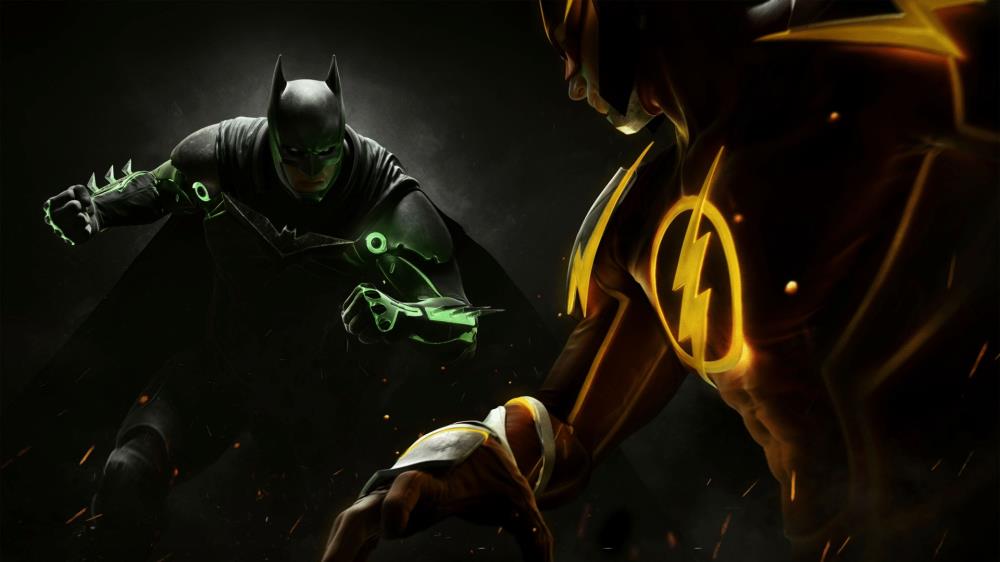
Thanks to the slip-up of an artist working on the title, we now have more evidence that a new Injustice game is in the works.