
It has become increasingly common to see a review embargo for games that expires upon release of the title. There are a number of reasons for this. The most obvious to one with a sufficiently suspicious or cynical mind is that the publisher knows the game is subpar and will be reviewed poorly. In this case, the benefit is that the consumer will purchase/fail to cancel pre-order, before seeing the review.
However, there are less unwholesome reasons for this practice. By establishing a late deadline, it prevents a reviewer from being influenced by their peers. An early negative review may cause others to second-guess their review and hence by forcing everyone to publish at the same time, each person is more likely to have an unadulterated opinion.
This practice has created a problem though. Take the recent South Park release as an example. One could see a live stream of the game before the embargo had lifted. The result was that I could see the game for myself before I could read about someone’s subjective experience with it. The result was that I was convinced to buy it without ever reading a review, something which, to be honest, I have never done before.
Writing a game review is a punishing experience. You SHOULD complete the title, make notes during the experience, collect those thoughts and then spend days writing and correcting a review that pisses off the person scrolling to the end to glean the numerical score at the end. For a website, it’s also a costly endeavor to have someone spend such a large chuck of time on one short piece. Worse yet is the fact that the numerically-minded consumer may never visit your site and instead visit an aggregator site such as Metacritic. The end result is a lot of effort for little or no gain.
Another issue with reviews is that they must remain spoiler-free. The result is a person trying to describe an experience without describing the game in detail. This leads to the use of vague language that can later be interpreted by the end-user as an attempt to obscure what the game is about or mislead the consumer as to quality.
The problems don’t end there though. A lot of people have grown very mistrustful of game reviews and for very good reasons. Getting an early copy of a game means having a relationship with the publisher, and for some titles/publishers, it means that any score far above/below the community consensus is met with anything ranging from sarcasm to death threats. The maxim “games are opinions” has been put forth but is undermined by incidents like GTA 4 receiving rave reviews (98 on metacritic) despite the game having obvious and significant flaws which led to a much lower user score. No reviewer in their right mind is going to piss off Rockstar.
At the other end of the spectrum are developers like David Cage or Peter Molyneux, who are easy to dislike due to their personalities and who represent no real threat. It is very easy to get that review wrong and not even have to shrug at the consequences. The point is that not everyone gets the benefit of the doubt or a fair shake.
At the end of the day, a review represents a massive amount of effort for something that is far more likely to do harm than good. What then is the other option?
We could already be seeing the future in the form of the Livestream/Let’s play video. This is an opportunity to show the gamer what you like or dislike without the likelihood of being accused as biased. The nature of the exercise means that spoilers are expected, but can be meted out at the discretion of the viewer. You can turn away anytime you think you’ve seen enough.
The exercise potentially promises less work, more transparency and less animosity. You don’t need to write a review, speak in euphemisms or assign a score. You simply have to show the gamer what you think the problems are, and they can decide if they agree of not or if it matters to them or not. Depending on the website, they may not have to wait for embargoes to lift if they can get an early retail copy and may further instill user confidence in the independence of the opinion presented if the site does not have to depend on the publisher.
It’s not a perfect solution though. Some games are uneven in quality, and a person can walk away with a much skewed impression of game quality based solely on a few minutes of gameplay. Also watching someone play is OBVIOUSLY not the same as playing the game yourself. Also, there are those who prefer a COMPLETELY spoiler-free experience and hence only look at numbers instead of reading reviews.
TL;DR – Reviews are expensive and time-consuming and are either ignored or generate hate. It could be much more profitable, transparent and unbiased to do a let’s play video instead.
Microsoft announced its financial results for Q3 of fiscal year 2026, including an update on its gaming Xbox business and more.


Not looking good. Hopefully Asha Sharma is able to turn Phil’s disaster around.


To me it's still quite remarkable how they can cash-in 5.3bn in revenue in a single quarter, since their hardware is basically dead.

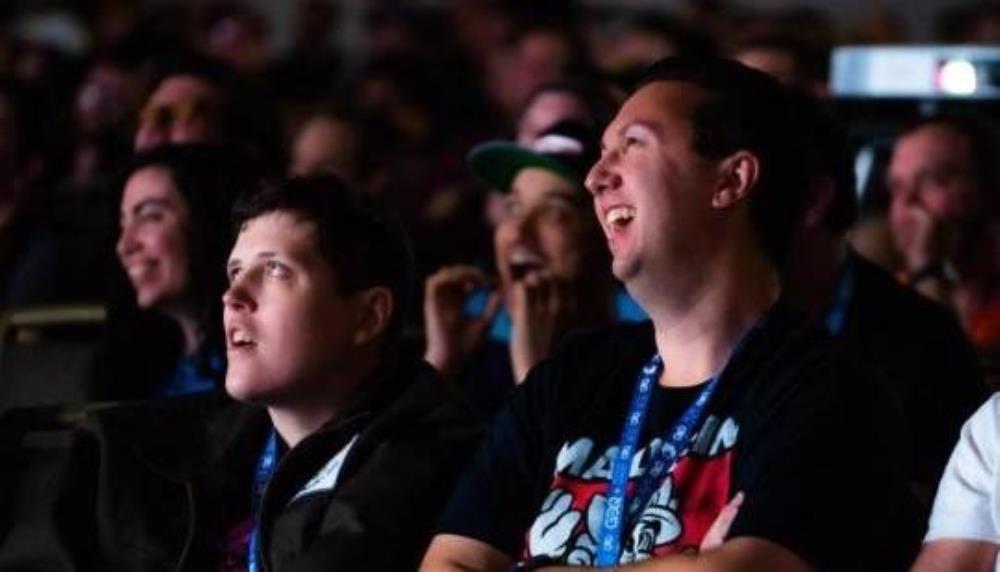
The charity event will be streamed live from Gamescom in August.
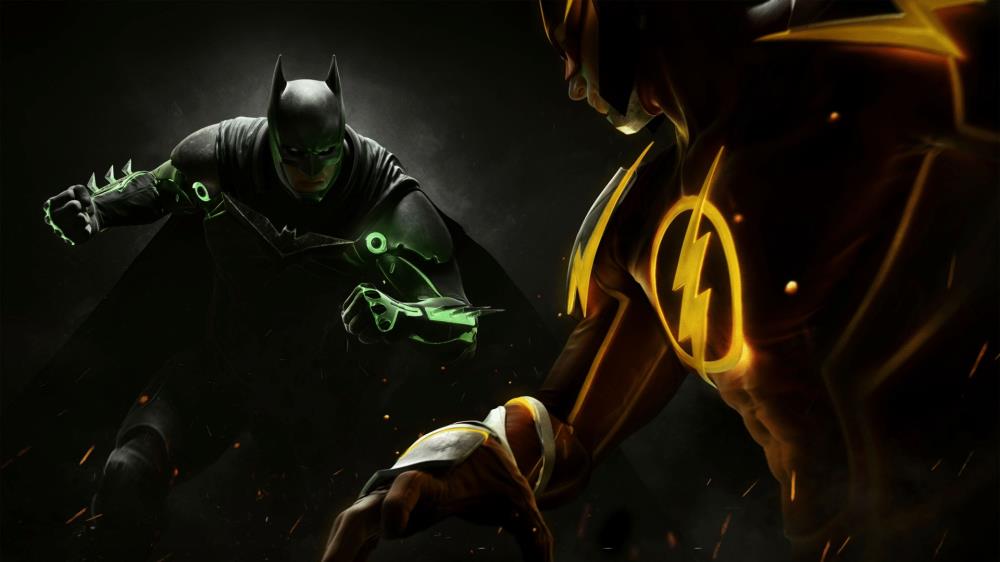
Thanks to the slip-up of an artist working on the title, we now have more evidence that a new Injustice game is in the works.




I've bought games from watching lets plays before, it is very nice to check out the first half or quarter of a game to set if it's worth it and although I haven't done the streaming stuff I can completely see that being another great way to gauge a game. Hopefully text reviewers don't go away but rather the worst of the bunch are weeded out and we get left with quality reviewers and day one streamers.
It could be more profitable, transparent and unbiased to do a let’s play video, but I don't have the hours in the day to rely on them to make my gaming purchases so reviews from people I trust will have to suffice. Besides, I don't want to spoil a game for myself too much, and text reviews on the whole don't do that as much as a lets play does.
Text reviews are here to stay, you won't see them going away I'm afraid, and I'm glad for that. People like to read about others opinions, that's not going to change any time soon. Let's play videos are great, but I prefer watching them after I've been playing something, not before.
People complain a lot about reviews, but you just need to find a few sites or reviewers that tend to think the way you do.
Some reviewers are crap, and some are great. It's that simple really.
I'm finding it increasingly difficult to trust reviews these days, and as has already been said find it much better to watch let's plays.
If I recall correctly, I found what Total Biscuit had to say in this video very interesting (from 4:00 minutes) http://www.youtube.com/watc...
I just cannot trust reviewers at all in this day and age.
There really are backhanded deals made and there are people who really want to focus more on getting hits than anything else.
I don't know these people personally and I don't know how they really feel. I also don't feel like hunting down their history of reviews to determine if they're a hypocrite, if they are actually into these type of games, etc.
In the end, as I have said multiple times on various articles, trust the people you know and have similar tastes to you. Don't trust reviewers. Don't click their reviews. Pay no mind to them. All you're doing is promoting their voice, and 9 out of 10 times it's one written with money in mind and not heart and spirit.
While I understand where you're coming from, this article also seems to work off the assumption that every reviewer played a significant amount in the first place. Furthermore, there is no guarantee that the extra effort will be worth it and I've known more reviewers that review the situation.
Let me explain. After you've spent some time in the industry and played a game before anyone else, you can start to guesstimate what the game will score. At first glance I thought Tearaway was a fantastic game (something I would score a 9), but after getting the platinum (according to PSNProfiles I was the first to do it), I didn't feel there was enough content to justify the price and lowered the score. Now, I figured the game would average a 9 and according to Metacritic it has an 87 (9 for user), so I wasn't off by much. I ended up giving it one of the lowest scores (bottom 7% or so) and was widely criticized by people for my review.
The funny thing is that if I didn't bother putting in the extra time, it probably would have got that 9/10 and people would be praising my review. It was only because I decided to do things right, did I run into problems. However, I could devote a whole blog post to my feelings about Tearaway and the game community (the amount of people that defend that game for being worth $40 dollars versus the amount of people that pan Zeroes for being $20 - $40 for roughly as much content is sort of comical).
Anyway, in my experience a lot of reviews are based off a small precent of the game and work off biases and side factors. Most small sites don't want to be labeled the "flame bait" review site (even if their scores are legitimate) and most big sites are perfectly alright doing whatever their corporate masters say. However, I largely blame the community for these problems, not the weak minded people.
When it comes to the community, we often see "token" stances like Tearaway vs Ground Zeroes. People often told me that Tearaways experience was worth the money, where as others say Ground Zeroes is 2 hours and thats not acceptable in my book period. Because people aren't setting universal standards and most people will simply agree with a score, they've created a reality where there really isn't any monitoring to prevent this stuff.