
First of all, Nintendo’s position as maker of handheld machines has been relatively stable. My post is not in reference to handheld buyers at all. My post is to argue that Nintendo need no longer spend money on making the major TV consoles.
The history of Nintendo as a major console maker (NES, SNES, N64, Gamecube, Wii, WiiU) has, original Wii aside, been one of diminishing sales.
The NES sold approx 61 million.
The SNES , 49 million. (20% less than NES)
The N64, 32 million (35% less than SNES)
The Gamecube, 21 million (35% less than N64)
The Wii, 101 million
The WiiU, 6 million so far. (13.65- 16.8 million consoles maximum to be sold?)
I’m not in the business of analysing how many were sold during the ‘launch period’ as opposed to later on. But if we imagine that the original Wii was an anomaly in the general trend, and if we imagine that the WiiU ends up selling between 20-35% less than the Gamecube did, then the WiiU might sell 13.65- 16.8 million consoles if allowed to be sold for the usual 5-6 year period.
Of course , if the Wii is discontinued after a lesser period e.g. 4 years, it might get closer to Dreamcast-like sales of 10 million. Yet the Dreamcast would have achieved those sales in less than half the time that the WiiU did (and following far fewer sales of its previous console, the Saturn, which got 9.5 million sales).
Or are there many dozens of millions of people, not big videogame players traditionally, just waiting for the right price to upgrade from owning a Wii to a WiiU? Past history suggests that it would very unlikely that so many would be holding out on the grounds of cost. Have many more bought one second hand? Or are they playing mobile phone games instead?
So what could have caused Nintendo’s sales to potentially diminish each generation?
NES- SNES. Not a massive drop in sales but a recognition that the Megadrive was seen as better competition against the SNES than the Master System was against the NES. Even though Nintendo won both battles, Sega sold more Megadrives in the UK. In some places, Sega had become cooler than Nintendo. Plus better home computers such as the Commodore Amiga meant than some didn’t need a console at all to have the smoothest graphics.
SNES-N64. The Playstation 1 was the major competition. Plus the N64 was significantly more expensive than the PS1 and the PS1 had different kinds of franchises – fewer toy-town like ones. Crash Bandicoot, for instance, was like being reintroduced to Sonic again.
N64-Gamecube. The Playstation 2 was the major competition. The Gamecube was so reasonably priced that it might have sold more if it wasn’t for the fact that , at that very time, having your first DVD player in your bedroom courtesy of you console, was a nice extra. Plus Nintendo were sometimes still convincing as innovators and sometimes not. They still had far more sequels to N64 games than they did new franchises of their own. And even Resident Evil 4 , regarded so highly as an action game of its time (e.g. boss battles) at least, sold fewer than 2 million copies on Gamecube. The ‘mature-rated game’ buyers frequently had PS2 and Xboxes.
Gamecube-Wii. There was obviously a huge increase in sales here. But I am speculating that, like me, those Gamecube owners who did not upgrade to a Wii here would have included those who had once looked to Nintendo for subtle forms of technological innovation, who tended to support the sales underdog (such as the Dreamcast) and who liked a feeling of overall quality. The Wii was physically so low key, its controller plasticky feeling, its Miis so child’s drawing-like ‘meh’ arguably. And its games- pretending to cook? Who was conceiving these games? Fisher Price? Rare were now working with Microsoft. And not being in HD might have been the final nail for these people. If Nintendo had launched what became the WiiU INSTEAD of the original Wii, I think that sales of their current console would be greater.
Nintendo, feeling a bit burnt saleswise from the N64 and Gamecube compared to the generations before, took the path of least profit harm. They brought along close to 100 million new followers, people who didn’t care for HD or whether their games looked like NES era ones.
Wii-WiiU. And then many of the 100 million saw such similar games on mobile phones and probably moved on to playing those instead if they were not a bit bored of gaming altogether. The WiiU’s handheld controller was not necessary for them as a point of interest if they were already using a DS or a mobile phone and is a distraction to some.
The solution
Nintendo arguably make strange decisions like not putting Luigis Mansion 2 on WiiU where it might have attracted back some of the old Gamecube core.
Their franchises often look the same – same graphics style. They clearly love this like Disney loves Mickey Mouse. Yet even Disney doesn’t have Mickey Mouse in most of its entertainment. I suggest that people do like Nintendo games, however conservative those games might stay, but they don’t like Nintendo consoles enough to pay several hundred pounds for one.
I suggest that Nintendo spend the rest of this generation releasing their games on PS4 and Xbox One. But I also suggest that Nintendo retain the control of when those games are available on those consoles so that it does not jeapordise Nintendo coming back as a major console maker at some point in the future if they so wish. In other words I suggest that they sell their games by long term rental. They could do this as a one off subscription if they wish. Why not call it ‘Nintendoland’ after the game. So you pay a big one off fee and you get access to a certain number of Nintendo games for a very long period of time. Or you pay a smaller fee to rent one game for the same period of time. No doubt they would like to sell some of their very old games if this is a model they chose to adopt. However I’d most be hoping to play their newer games.
So it’s not quite ‘doing a Sega’. Nintendo would still be making their handheld consoles.
Hopefully Sony and.or Microsoft might even pay Nintendo for the privilege of having their games on their console, plus allowing Nintendo to set the price that buyers are charged.
And there would come a time when the subscriptions would come to an end Nintendo might decide to make them non-renewable. So they then have a generation of PS4 and Xbox One owners who either once owned a Nintendo console or have never owned one who are now familiar with Nintendo games again and want to keep playing them.
The ball is then back in Nintendo’s court as to whether they wish to release a new console – perhaps even with another party’s help.
Sales suggest that people have a very conservative idea about Nintendo, that things don't really ever change enough for their consoles to be quite worth the money that they ask for them. It's like the opposite of the Dreamcast effect (where Sega was perceived as becoming a niche company, Nintendo are regarded as lazily popular) yet with the same sales woe.
I think that the only time that many people want to see that same old line up of all the Nintendo characters looking so pleased with themselves is if it's in the exotic company on PS4 and Xbox One. Nintendo are becoming like the equivalent of a smiley face sticker- you'd only get the console if you were a kid. Don't get me wrong - ZombiU looks lovely. But am I necessarily going to sacrifice playing The Order 1886 to play it? Even though they're in the same kind of genre, no I'm not, not at the high price that the WiiU is. And all the third party games in the world won't be worth imagining that many people would prefer never to have a PS4 or Xbox One this gen. You have to lower your price- get rid of that handheld screen to do so if you have to. Or go third party on a download rental basis.
Whatever you do, there is something inherently conservative about what you do as a major console maker that doesn't appeal to enough people who, appealed to in the right way, could have remained loyalists like even Sega (cool, cool Sega) enjoyed.
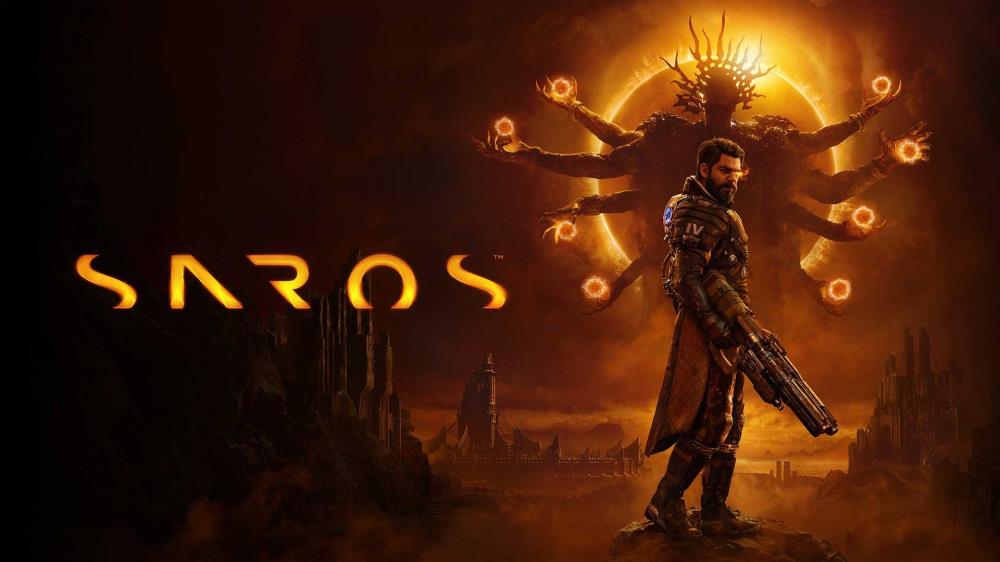
Housemarque refines Returnal with Saros, delivering a punishing sci-fi shooter that’s hard to put down.
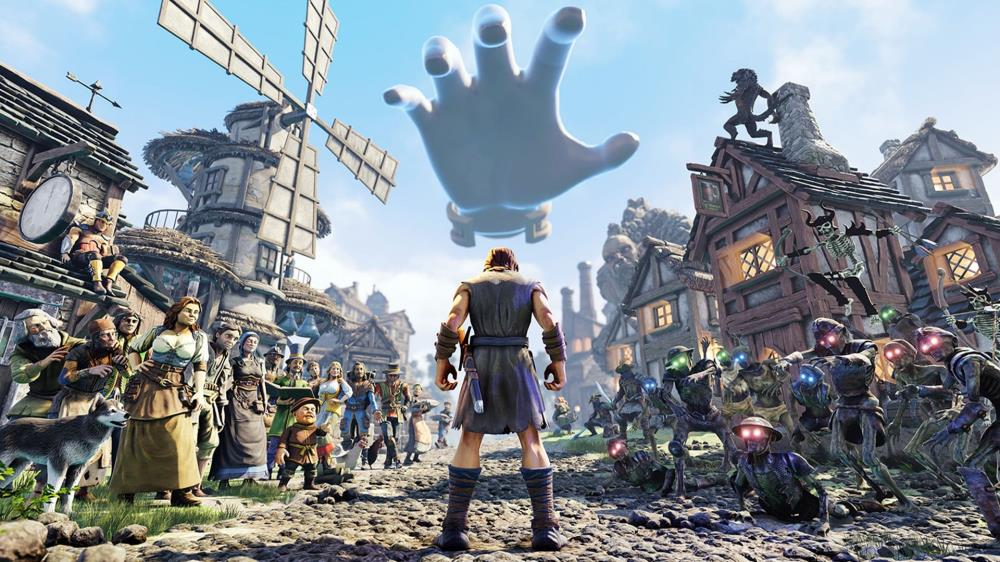
Masters of Albion appears to be a culmination of Molyneux’s career but will this be a redemption arc for the developer?
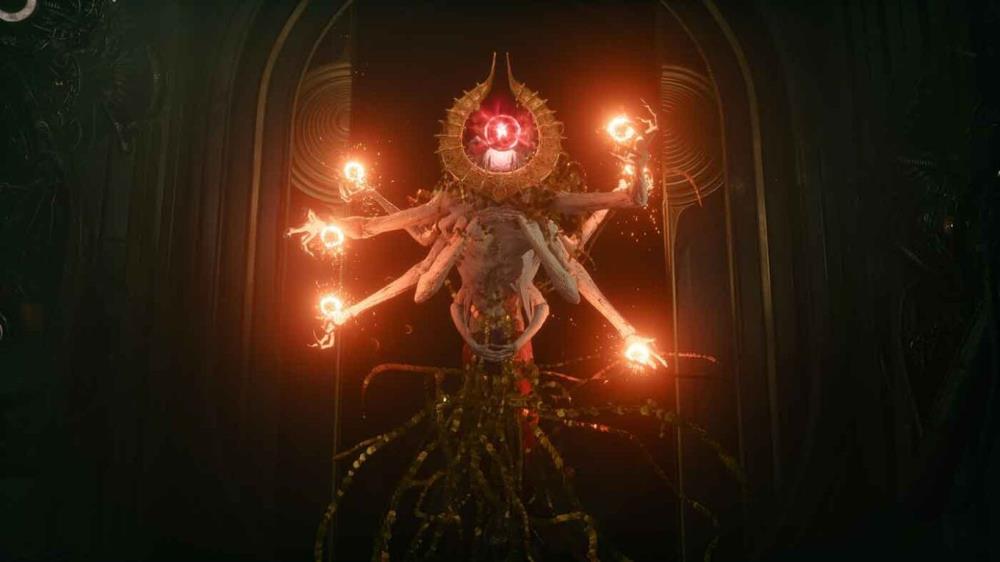
Press Start: "Saros is an utterly sizzling romp through a sci-fi cosmic horror show that showcases Housemarque’s pedigree for spectacular, arcade action. Not only is Saros a user-friendly evolution of Returnal's core systems, which were already near-perfection, but it’s an exceptional, technical showpiece for a console that makes faultless performance seem magical. If Returnal was a reason to invest in next-gen, Saros pays that belief off again in what is currently a one-horse race for Game of the Year."





This whole thing is BS. It's all based on how core Nintendo fans YOU think owned the Wii. You pulled the magical 15 million number out of nowhere.
You having a laugh aren't ya...
Because if Nintendo went third party suddenly everyone who doesn't usually buy their games would magically buy them...
Not to mention that the games would take a hit on quality because they're no longer developing on technology they know inside and out.
Well with success of there handhelds why can't they sell a powerful handheld that u can play the games on tv(it would be a hybrid of handheld/console).
I don't even know where to start with this. You come out with gobbledegook math without even taking into account the different trends that occurred during the times when the consoles released. The NES for instance released in a time where the only clear rivals to Nintendo was the home computer market of Commodore 64 and the rest of the personal computer market. Nintendo were the only horse in town for the longest time until the Sega Mega Drive decided to make it's appearance and Nintendo had to upgrade.
The sales of the SNES is lower because of the increased competition from other video game manufacturers trying to latch onto Nintendo's coattails which dovetailed into the N64 sales which are lower because of the prohibitive cost of the console, games and the 3rd parties abandoning ship. The Gamecube sales are lower again because the gaming consumer had changed and the 3rd parties again refused to support the Gamecube while the Wii was a success because it got families and children interested in gaming.
The Wii U isn't selling because gamers have absolutely no idea what it means to be a gamer anymore. Gamers today have absolutely no idea what they want and are now only obsessed with screen resolution interested with "cutting edge graphics" but without any real evolution in terms of gameplay. The example of the Super Mario games show how different styles of gameplay can enhance and introduce new ideas that haven't been previously explored as the evolution from Super Mario 64 to 3D Land shows how self-evident this home truth really is.
I could really go on but I'll just leave it at that. Enjoy the Order 1866 which will no doubt turn out to be another generic, pointless shooter with shiny graphics with little actual game innovation.