
Ah, moral choices. We all know them. Usually, in videogames, they're represented as "Good" and "Evil" choices, which fill up one of the two meters for said representations of your choices, and affects the ending/game itself.
However, in the first paragraph of this blog post, I already mentioned a FATAL flaw on these choices- the representation of "Good" and "Evil".
I personally don't consider everything to be "Good" and "Bad". In life, everything is just right in the middle spot. We do certain things because we have to- we don't follow such simple idealisms as being a bad or a good guy. Which is why games absolutely fail at presenting moral choices for you to pick- and why said choices lack emotion -almost- all the time.
Let's grab inFamous for example- without a doubt, a marvelous game. But my only problem with it is how the choices were so transparent- so obvious and so heartless, I just did a "Good" and a "Bad" playthrough of the game. I just couldn't help how shallow these choices felt; how everything lacked a certain human spark, you could say. At the end of the day, the moral system encompassed itself into "hurr i evil" and "hurr i gud".
Another example could be done- now with Mass Effect. It's the same shit. There's two completly two-dimensional choices throughout the whole goddamn game. It makes said choices feel shallow, lack emotion, and overall kill a great deal of immersion the game could have had. Hell, even two choices that seem completly deep and emotional, as well as hopeless overall, are reduced to "Paragon" and "Renegade" points. I won't spoil these for you, but goddamn, it's pathetic.
Honestly, it feels like our society is based on these thoughts; there are "Good" and "Bad" people, even when the world in front of ourselves says otherwise.
Gentlemen, we're all assholes in our lives, even when we don't like to think about ourselves as ones. We also make good descicions and do a few great deeds just to feel better about ourselves. There's no "Good". There's no "Evil". There's just a gray morality that becomes more and more apparent in our daily lives, and that, precisely, is what's lacking in alot of videogames.
Oh- but there's a few great videogames that do so otherwise.
As an example, I could showcase the "Shin Megami Tensei" series.
Y'see, these games usually revolve towards the bases of the end of the world itself, about religions, Gods and Demons. But no, the Gods and Angels aren't "Good" and the Demons aren't "Evil". Yes, you DO pick a side (Although the best path for ANY SMT game is Neutral), but it doesn't makes you seem like you're the best guy ever if you pick the "Law" (Angels and Gods) path or a complete senseless asshole if you pick the "Chaos" (Demons) path.
No- in fact, both paths are awful. Both Angels and Demons are complete selfish assholes, religious groups are usually crazy as fuck; self-lying/convincing circlejerks, and the endings involve either complete madness to the root of nature itself or brainwashed people that lose their freedoms for eternity.
And, see, this is how it should be. Another great example would be The Witcher, for reasons I won't spoil.
We're humans. We're not completly good, we're not completly bad.
There's no evil- there's no good- there's just something in the middle for all of us.
And that is how videogames should present moral choices to us- no good and no evil- just something in between. Some already do; but there's an astonishing majority that doesn't, sadly. And I would like to ask them to stop doing that shallow bullshit.
Microsoft announced its financial results for Q3 of fiscal year 2026, including an update on its gaming Xbox business and more.


Not looking good. Hopefully Asha Sharma is able to turn Phil’s disaster around.


To me it's still quite remarkable how they can cash-in 5.3bn in revenue in a single quarter, since their hardware is basically dead.

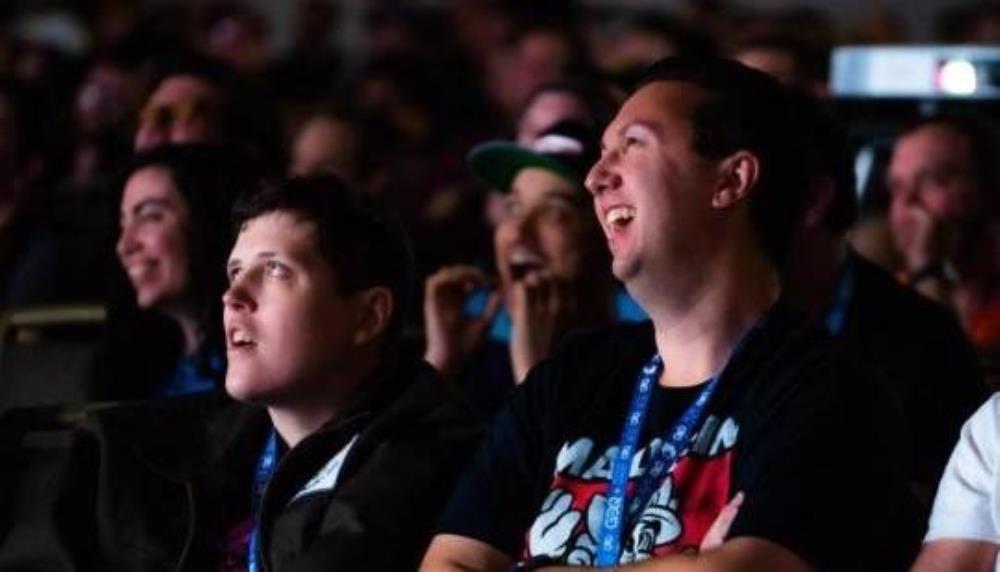
The charity event will be streamed live from Gamescom in August.
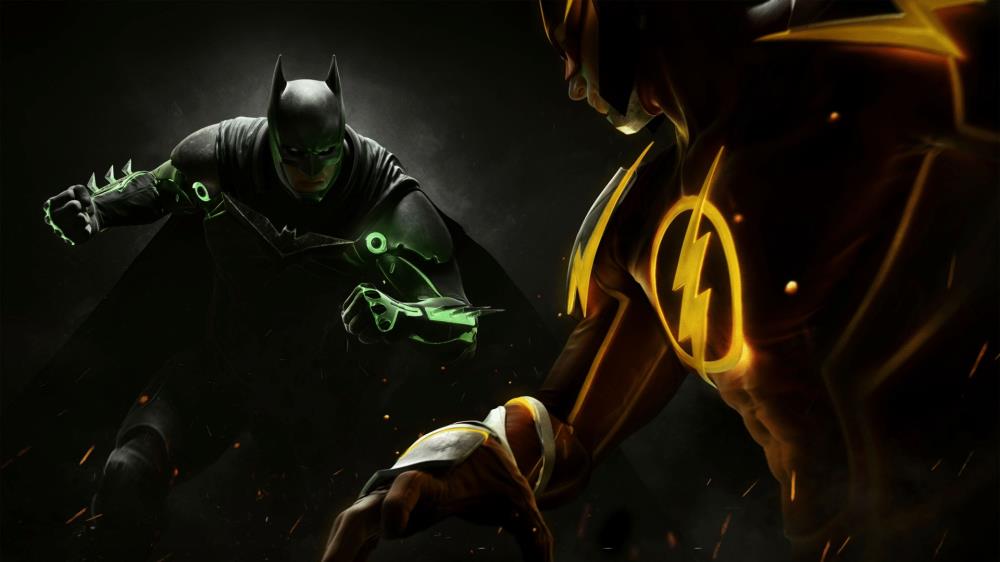
Thanks to the slip-up of an artist working on the title, we now have more evidence that a new Injustice game is in the works.




Morality in video games: The annoying thing that makes me have to play twice through a game to get the "complete experience".
It's Touma's teacher... the thumbnail.
To Aru no Majutsu no Index is a good example of the insane amount of right and wrong which is completely dependent on a person's, culture's, or religion's perspective. Index and Railgun manga have deeper stories though. Wish i could read the novels.
Funny you mention The Witcher, I just bought it on Steam. Really looking forward to it.
My problem with Mass Effect is this: being a renegade should just be about playing by your own rules and getting as much power for yourself, but to actually "be" a renegade, you also have to be an uncaring, racist dick.
A good game to mention is Heavy Rain. Yes, the choices rarely have as much impact as they should, but it doesn't label your characters "good" or "evil," you make a choice and suffer the consequences. Simple as that, the way it should be. The "Shark Trial" is an excellent example.
Fable III is the absolute worst when it comes to this. When you become king, you have to raise a certain amount of money or a crap-ton of people are gonna die. But raising all that money means being kind of a dick as king. It's silly because you're considered a "good" person for keeping your promises, even when they cost millions of lives, and "evil" if you don't to save them. I love hard choices like that, but having them be labeled defeats the purpose.
I think the problem is that it's too polarised. Good or bad. Games don't reward the person who plays the choices and comes out neutral, the game usually expects you to be a villain or a hero.
Mass Effect 2 had one stand out part where there is a stunning choice where there was no right answer, I won't spoil it, but the choices both had pros and cons, to the point the game totally shifted out of the normal "paragon/renegade" choice pattern and had to explain the consequences of the decisions to you before you made the choice. To me, that's how ALL decisions should be treated, but obviously ried to the narrative better than a pop up box explaining "OMFG THESE CHOICES ARE NOT RENEGADE OR PARAGON TIME TO THINK ABOUT IT!!!" and, ultimately, nothing really felt affected by the choice.
Classic mythology is much the same.
"Gods" are always selfish, and hardly any different from "demons", in an astounding number of ways. That includes modern day ones... the ones that will send you to the bad place for not worshipping their greatness and generally being scared of their awesome power. There's a reason gods and demons are portrayed in child-like fashion in the vast majority of myths and legends. Those stories are meant to teach children the meanings of "right" and "wrong" with respect to living in a society as humans do. They teach by offering an example.
"Gods" act childlike, because they represent the apathy of nature and the natural world to us, as humans -- we're just not "special" in the eyes of nature, nature does what nature does, and that's that. "Demons" represent a descent of human morality into something that is anti-social behavior. Gods, thus, are immortal, and ever present. Demons are destroyed eventually, by their own mistakes, and the self-destructive nature of their behavior. There are special gods that represent human society, and what human society thrives on, and these gods are the ones that are pleased by "good" (i.e. good social) behavior.
Some modern religions have the.. err "touch of man", as it were. Their texts are tainted by the zealots who modified them over the years to serve their own purposes. I guess you could say that many modern religious texts are, at least in part, the "work of the bad guy" (whatever bad guy that might be), in that regard. Everything is pretty gray without a discerning eye, in the end.
I agree that video games, for adults, should not be special, when it comes to morality. They reflect the same ideas ever other media does, and that religion has over the ages. Video games for children, on the other hand, might be better off painting the black and white morality portraits that they always have. The idea of the darker and lighter shades of gray derive from the knowledge of "black" and "white", as it were.
The knowledge that the world, itself, is cast in shades of gray, always comes with time.