
I’m no great fan of kickstarter. I see in it great potential for the exploitation of a young passionate audience. It’s basically an extreme pro-order with no guarantee of actually receiving the product you want or any product for that matter. Still, many people love kickstarter for very good reasons. It is a good way to see a project realized that may ordinarily not be approved by “the suits” in our industry. However, a smart consumer should balance passion with some form of risk assessment. Kickstarter basically sees you, the gamer, undertake all the risks of an investor without any of the benefits. One person on this site called it “The Wet Dream of Capitalism”, and in some ways that’s comically accurate. You pay before any work is actually done and have no guarantees of quality. You don’t own part of any company and until crowd investing is made legal, you never will. The most you can hope for is a good product in the end. So, I want to point out some of the lessons that could be learned from the successes and failures of kickstarter thus far, in an effort to help guide decision making going forward.
The Occulus Rift is one of the great hardware successes of kickstarter. It was started by Palmer Lucky, a young man with an immense passion for VR headsets. He has one of the largest known collections of said headsets. His goal was to make a headset of his own. His project managed to capture the imagination and attention of the gaming public and press. The community was impressed and his project took off, far exceeding his initial funding goals. Several rounds of funding followed, but nobody noticed or cared until the big 2 billion dollar investment by Facebook. That’s when everyone lost their minds and complained that they were duped and that they were owed part of the deal or felt betrayed somehow. Here’s the thing, hardware development is expensive. Really expensive. The technology, ergonomics, modeling, third party support, marketing, manufacture, salaries and shipping all accumulate a list of expenses that can lead to huge cost overruns. To make a successful product means that they would have to make significant profit on the hardware. This could lead to very slow adoption of the technology and eventual failure. The lack of adequate investment capital could see a larger competitor with more experience in designing and manufacturing hardware to beat them to market. Companies like Samsung and Sony can do in months what would have taken Occulus Rift years to achieve if they were to build slowly using sales alone. Cash makes you more nimble. In fact, Samsung have churned out their version in record time but are stumped by a lack of software support or hardware specs to make their project attractive to consumers. Without the funding of a major corporation, Occulus Rift would have seen its vision adopted and implemented by a more resource laden company. Sony already has years of experience in making head-mounted sets an no doubt have a wealth of experience with ergonomics, screens and audio already. They have motion tracking experience with the PSMove. Occulus Rift has to build and they have to build fast. They need a lot of money for that.
On the topic of crappy hardware, we have the Ouya. It attracted almost 9 million dollars in funding to produce an android based microconsole. First, many people (as of May 2014) have not received items that they have paid for according to the comments left on the Kickstarter page. This is probably because the company is short on funding. It is very easy to underestimate the expenses associated with hardware production. Many who have received their console had complaints. One of the biggest complaints was that of the controller. Now, this entire project had 9 million dollars to spend. It was reported that Microsoft spent close to $100 million dollars on the controller for the Xbox One. Microsoft probably spent more on analog sticks than the OUYA did on their entire console. Thankfully, you can use the far superior Xbox and PlayStation controllers with the OUYA. To be fair, the backers of this project should have had far more conservative expectations.
Here’s the lesson with hardware projects – they are really expensive. Inexperienced hardware developers will severely underestimate the costs involved, and thus, the final build quality may not be what you were expecting. If they have no experience with hardware, the quality can be severely lacking. Palmer Lucky had experience making finished and functional headsets, albeit on a small scale. He could make it himself with parts from third parties. He could take the project from start to finish. He did manage to deliver his product to his backers, and his customers were pleased. The OUYA team had experience on teams associated with successful products, but not in all the roles needed to bring a project to market. Unlike Lucky, they could not design and manufacture themselves. They would rely heavily on other partners who we knew nothing about in terms of expertise. The result is that they delivered something disappointing.
If someone is pitching hardware, ask key questions. Ask if there is a design. Where will it be manufactured? Have you ever shipped a product before? Who is involved and can I see their CV? Do you have a business plan? What are your projected expenditures? Kickstarter sees you as a Bank. Start behaving like one. Ask questions to determine how well prepared they are and to ascertain expertise and competence. If someone can show you a finished functional product like the Occulus Rift, then fine. But if all they have is “a dream”, then you may want to think twice.
On the topic of game software, one great success of Kickstarter, and a personal favorite of mine, is that of Wasteland 2. This was pitched as a sequel to Wasteland by inXile entertainment, who housed many of the team members that worked on the original game that was considered one of the greatest PC games of all time. Included as team leader was Brian Fargo who Executive Produced both Wasteland and Fallout. Here we have an experienced team making a game in a genre that they had actual experience in. The project went well – which is no guarantee even with such an auspicious start. They delivered with only a delay of 1 month, which, by kickstarter standards, is “on time”. The game was well received and has a 9/10 on Steam as well as an 8/10 on Metacritic. Again, the lesson here is to know who is involved and their past credentials. This won’t eliminate all risk, but it will reduce it.
Of course, the trainwrecks of Kickstarter get far more attention. Not quite fitting the bill of being a trainwreck is the project that brought Kickstarter into the gaming consciousness. Tim Schaffer is a legendary game maker. He made 2 of my favorite games of all time in the form of Psychonauts and Grim Fandango. And also the Monkey Island games. And Day of the Tentacle. Okay so that’s more than 2, sue me. It physically pains me to write negative things about Tim. Seriously, my fingers are cramping up. However, he also has a reputation of being overly ambitious, overbudget and late with his projects. When his project got more than 10 times his initial request, we all thought we would be safe from all that. We were wrong. History repeated itself, as it often does. Broken age is a fine game, but it was not without the historical problems of the developer. We all got a taste of what it’s like doing business with Tim. For once I can empathize with Publishers. Fund a Tim Schaffer project, and you know what you are getting yourself into - a great game - at some undeterminable point in the future.
Further along the trainwreck path is Yogventures, a game pitched by a youtube channel “Yogscast”, who are famous for their Minecraft videos. There were numerous red flags with this project from the very start. First, they wrote on their kickstarter “Yogscast aren’t going to be doing any actual coding! We aren't programmers or artists but luckily we have close friends at Winterkewl Games who are.” First, the people asking you for money had no experience in game publishing or games development. They knew nothing John Snow. Second the developer selected (Winterkewl) had never shipped a game. Inexperience all-round. Predictably, it all ended in tears, with backers getting an unrelated game as a consolation prize. As with the Hardware section, inexperience is a sign to walk away unless you are walking in eyes wide open. If you accept that this could be money down the toilet, then no problem. If not, walk away. Or run.
One of the most interesting projects (to me) in development is Star Citizen. This project has accumulated over 50 million in investment and all eyes are on it. This is the first example of crowd funding on AAA level of scale. Its success may entice the community into the funding of projects of similar scale and may really change game publishing as we know it. You could expect similar types of projects in the future. Its failure could really sour the community on crowdfunding for years to come.
Its important to ask questions when dealing with Kickstarter. Ask the questions that a bank would ask. Ask about experience. Ask about a business plan. Research the members. Ask about credentials. Ask about prototypes for hardware. Ask about the expected frequency of updates for the project. If updates from the developer are late not forthcoming, begin complaining to Kickstarter immediately. Ask for refunds early. If as a consumer, you do not respect yourself, don’t expect your client to do so when they get their grubby hand on your cash. If you want to give an unknown creator a shot at glory, that is commendable, but go into it expecting failure and invest accordingly. Known developers with a track record and experience will always be a safer bet. You will never eliminate the risks of investment, but like a wise investor, you can minimize them with information and education.
Microsoft announced its financial results for Q3 of fiscal year 2026, including an update on its gaming Xbox business and more.


Not looking good. Hopefully Asha Sharma is able to turn Phil’s disaster around.


To me it's still quite remarkable how they can cash-in 5.3bn in revenue in a single quarter, since their hardware is basically dead.

The charity event will be streamed live from Gamescom in August.
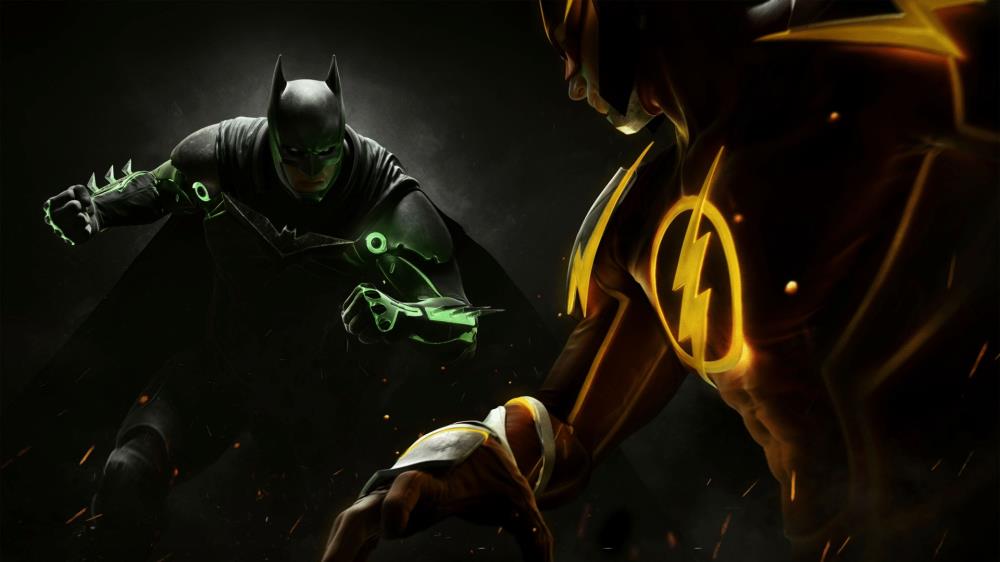
Thanks to the slip-up of an artist working on the title, we now have more evidence that a new Injustice game is in the works.




Ok, very well done especially the part that as gamers need to learn to respect ourselves as consumers and not allow corporations or game developers roll over us. Which gamers tend to do. Yes, kickstarter is about us being the publisher/ marketer for game developers. ......
My only real issue is seeing a company raise funds, work on the project then sell it off.
You can argue the fact that they own the IP and are free to do what they like with it. Difference is out in the real world, investors get their money back with interest whereas on Kickstarter us peasants fund the project only to see a big fish step in and swallow up the little fish, making the little fish very rich in the process.
The product plan is then potentially completely different to the original idea which just makes me wonder why did I bother in the first place?
Now THIS is what being a games journalist SHOULD be about. Not saying it never is just that more often than not you don't get this level caliber of writing. From one journalist to another bravo!
I haven't written any reviews in years and have never written for my own site but if I did have a site and I was looking for writers I would be asking you to apply right now. Hopefully those with sites who actually are looking for writers get the message. If you ever find yourself applying for a site to be a writer they usually ask you to cite 3 things you have written. Though it is the only thing you have typed that I have read thus far I would use this as one to cite personally.
Solid post - I really like the parallels to investments, minimizing risk. I've been burned by a few, or at least burned in my eyes. I would say the same applies to Early Access titles, overall good write up that makes your feelings clear, and gets across a good message.