So there have been some minor uproars over game review scores lately that have gotten enough attention to rise above the usual internet static. First was Hydrophobia's developer pitching a fit over it receiving some less than glowing evaluations. Then the developer of the new Castlevania: Lords of Shadow title took issue with IGN delivering it a score of 7.5, which equates to "good" on their rating scale.
Since I personally reviewed one of these games, and I'm tentatively slated to review the other, it got me thinking about review scores in general as a sliding scale. It seems as of late, things have gone a bit awry.
Remember when you were in elementary school and the class was divided up by groups according to their reading skill? Each group had a specific color to go along with their workbooks. Children in the "Advanced" group set the gold-standard, readers in the "Average" group were told that they were "good", but were secretly spurned and tracked for being sub-par readers which translated to "good enough". Kids in the "Remedial" group had parents that were related to one another.
The video game industry appears to have reached a point where it is so cut-throat and competitive, that less than stellar review scores for games now equate to a title being forgettable or outright bad. This is only reinforced by the above incidents where developers speak out against a score that is considered in the upper echelon of the sites review scale, but not the very top.
It would be easy to just blame developers and PR people for "not delivering on promises", but the gaming journalism industry is largely at fault too. We (yes I'm lumping myself in there) sit and hype games based on pure speculation, creating a buzz months before there is even a tangible product to evaluate. This in turn creates a readership with very high expectations. I'm not telling anyone they should have to settle. Don't ever settle. Stay hungry, like Twisted Sister told you to. However, I think this behavior from us actually creates an almost self-destructive environment.
In a world where only the top scores mean something is worthwhile, a few docked points garner a title being widely ignored, and a low score yielding a possible phone call or email from an angry company, a new precedent is set. Reviewers most likely give much higher scores simply because their frame of reference is skewed, or because they don't want to deal with the backlash from the occasional low score. So then what's even the point of having numbers below 4 or 8 on the scale at all?
I think as the holiday game season comes upon us we will only see more of this as the top titles compete among cash strapped consumers. There are always winners and losers in a competitive industry, but a combination of the journalist hype machine, and impertinent developers reacting to imperfect scores for their works are creating a culture where we can't separate "median" from "mediocre".
So what do you think? Are review scores a flawed system? Or is any game labeled simply "ok" not worth your time and hard earned money?
Microsoft announced its financial results for Q3 of fiscal year 2026, including an update on its gaming Xbox business and more.


Not looking good. Hopefully Asha Sharma is able to turn Phil’s disaster around.


To me it's still quite remarkable how they can cash-in 5.3bn in revenue in a single quarter, since their hardware is basically dead.


The charity event will be streamed live from Gamescom in August.
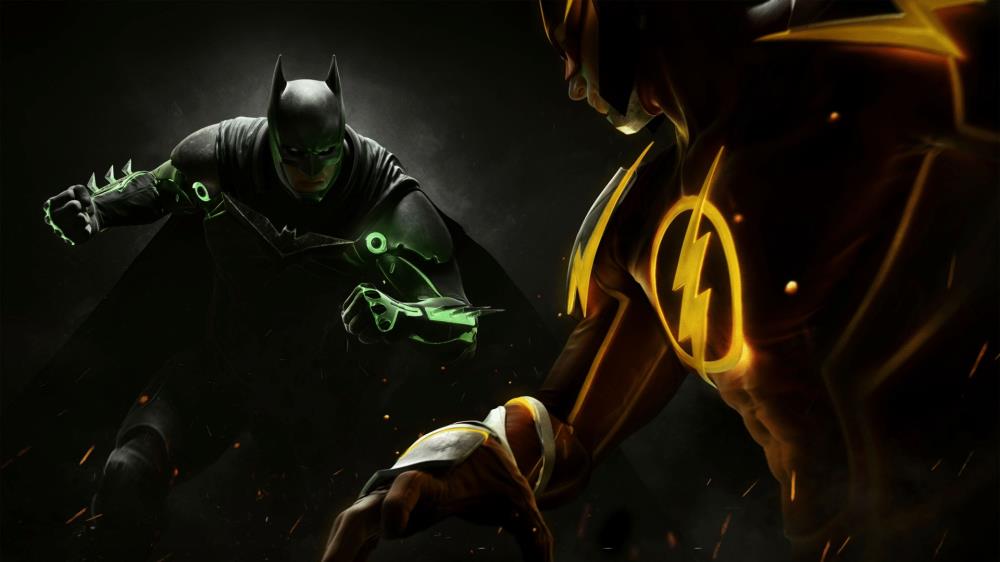
Thanks to the slip-up of an artist working on the title, we now have more evidence that a new Injustice game is in the works.




Review scores are definitely contained in a flawed system, it's been getting out of control in particularly over the past 5 years or so, but personally I don't pay much attention to review scores to make a fuss over them. I'd feel more sorry for people that depend on them because like you say, anything now realistically lower than 7.5/8 is pretty much thought of as one of the worst games of the year, or a game to forget, and it's those that have been putting out reviews with constant 10/10 or 95+ scores over and over again to games that don't deserve it. Sure I don't think I could name any title that deserves a full 10/10 because I've never played a game that has pleased me to the full in every single possible aspect and that has had not a single problem or fault.
Blame the review sites for handing out so many 9's and 10's over the years that it diminished the value of the other scores.
I came up with a system whereby there was no upper limit on the score you could give a game. This would allow you to compare different games, but also account for the general increase in quality as time goes by (in terms of production values, refined gameplay etc. from generation to generation). I called it "out of infinity" but nobody really payed any attention to it.
I am not sure if most people could even cope with the (rather sensible, in my mind) system of not having an upper limit - one game could be rated 100, and a better game comes out (maybe a sequel), and it's rated 110. The comments on my blog were generally confused as though people did not understand the concept.
I really do think it would be a solution to review score inflation and the practice of setting a "limit" on what you deem to be a "good game". Because the scores would always be changing - since games are getting better, the scores would go up. Hence the standard for a good game changes, but you're not pressured into confining all of your scores for good games into the 8.0-10.0 bracket. A game like GT4 could come out and you give it a great score of 10, which usually would be the maximum. But instead of people complaining that it was too high and X game is better, you CAN give X game a better score when you review it, if it is indeed better.