
Continued from part 1...
Coolbeans: There’s obviously a clear Groundhog Day inspiration for the premise. But whether it’s the art design that’s coming along or anything else, can you think of other creative works that inspired Twelve Minutes?
Luis: I would say there’s two aspects of inspiration: one on the gameplay design side and one on the art side. From the design side, especially with Jonathan Blow—even though I had this game in mind before I met him—the principle of you having to respect the player’s time and you respect their intelligence. The game has no tutorial, the game doesn’t tell you what to do, the game doesn’t force anything on you, there’s no cut scenes; everything happens there in real-time. It’s designed to communicate that to you because of the relationship built from the controls, they’re like a language of technique. You understand that language and there’s a set of rules to play the game. So, if you fail you know why you failed. There’s no trial and error. Well... there’s trial and error but you learn something out of it. That’s the quintessential design I was going for. There isn’t thirty hours of collecting things; everything here has a reason to be here.
On the other side, Kubrik is one of the biggest inspirations I would say. How he understands the medium he’s working with. The Shining is a good example where he’s able to capture that feeling of awkwardness; not that there’s anything wrong with the place and the place is sort of strange to you. The camera angles he uses, the rooms in the hotel, going to a room that’s not supposed to be there, or a certain shot where there’s a chair in a particular room and the next the chair is gone. You may not realize it consciously but he’s subtly using that and all the tools—sound, acting, etc.—that the medium allows to increase the experience. That’s what I’m trying to do. There’s no explosions or anything in your face, but if you play it you slowly start to be part of the experience. If something big happens you feel it much more because it’s so sucked-in. And trying to find this balance in pacing similar to older movies, especially from around the 80’s, works very well. Nowadays, there’s a sped-up pacing in keeping the audience’s attention: five minutes in you know the plot, you know the key characters, and you know their motivations. So I’m trying to keep it more subdued here. Hopefully you feel more involved and you care about the character without the need for exposition, and it all feels more personal as a result.
Coolbeans: I understand that this is still in the prototype phase, correct?
Luis: Yeah, it’s in prototype but the game is all there.
Coolbeans: On your way to making this game, did you have to consider cutting some stuff out, perhaps an extra character or something like that, to make it flow better?
Luis: Yeah. Like I said, when I started the game it was in the GTA engine. Then I cut down to a neighborhood, then to a house, and then to an apartment. And I’ve been cutting down every room I don’t need in the apartment. There were more characters like a kid too. Everything you see in the gameplay videos should have a reason to be there. And if something there doesn’t have a reason, I take it out. If there’s a window here, if the wife is sitting down looking at the stars, if she needs a glass of water, there’s a light switch, like, every single object for gameplay purposes has a reason for why it’s there. And I keep trying to cut out as much as I can. But I think I’ve found the minimum needed so I’m not changing much right now.
http://i.imgur.com/867akAz....
Coolbeans: Cool. I guess a “less is more” approach is working wonders here because it’s got positive reception so far. Did you expect to be met with such praise already?
Luis: I love point-and-click adventure games: Monkey Island, Day of the Tentacle, and other old-school adventure games. But they have... this big issue that I was looking to solve and I think this is what others have found to be so interesting. With point-and-click adventure games you have no idea what you’re doing; you’re just mixing things randomly until you hope [something works]. It’s not a game like Super Mario, right? If you fail a jump you know exactly why you missed that jump: because you didn’t double jump or you jumped too soon. So you could turn the game off and could play the level in your head. And when you turn the console on, you know exactly how to control Mario and get past the level.
I think a good game is one where you can create a plan before you even start playing. In adventure games it’d be impossible, right? You didn’t know about how to interact with this window in one room whereas you can’t touch it in another or something you can take out of the wall. It’s very random. And this is what I wanted to remove so that you can actually play the game and plan ahead. Finding out how to do this was the hardest part so I removed a lot of hurdles. Click and drag and that’s it. And the objects in the world are symbolic. So, for example, there’s an empty glass that can be filled with water or a knife that can cut something. You won’t have something like an apple. What do you do with an apple? I won’t put in objects that’ll make you start to question that random element. If you analyze the apartment, you can figure out what everything means. There’s no crazy combination of things.
By doing this, players can start using their imagination. And that’s what happens: they start playing, the first loop gets lost, but then they know what they have to do so they start imagining what they can do, and everything works. I see that’s where it starts to be like ‘okay... you’re in control of the experience and deciding what happens.’ I think that’s why it’s so captivating because I was able to find that... by limiting you so much you have a lot more room. I know it sounds strange but all of the limitations I give you just gives you more room to experiment. Even when I add a new object I realize that actually just complicates things because you start questioning everything. The more I remove the more cleanly the design gets.
Coolbeans: Which platforms do you plan to release Twelve Minutes on?
Luis: I want to start with steam, PC and MAC. And then... probably consoles, I was thinking PlayStation 4. All of this will depend on its financial success. If the game fails miserably, I’m not going to continue porting but if the game sells well, it lends itself very well for iPad since it can all work with one button interactions on the map. So, I’ll probably decide that after [sales reports and publicity]. If it has the momentum in sales and everyone loves it, I don’t think I’ll otherwise risk it.
http://i.imgur.com/DRYLRUf....
Coolbeans: When it comes to Steam, are you planning on bringing it to Early Access?
Luis: No, no. Once you know everything [for Twelve Minutes] there’s really no point for that. It’s not that kind of game.
Coolbeans: Alright. So, if hypothetically great success is met with the game—which I really hope this is a big success for you, I really do because it is interesting—were you thinking of releasing to other consoles besides PS4 (as mentioned) and other mobile devices?
Luis: Um... I am willing to do anything. I figured on a phone it would be hard to play because the screen is so small. But I guess I would be open for it. Right now, I know Sony’s game library shows that they’re an open environment. PlayStation is very open with development now. They get you a dev kit, they give you good support, at E3 there’s a Playstation booth for indies; they’re really open to help indies. I think Microsoft has to catch up quite a bit.
I would be open for any console as long as it’s easy for me and it’s not very expensive. At PAX, I was approached by Sony and they were very interested in helping me out with porting the game at no extra cost to me. I figured ‘Yeah, I don’t have to buy a dev kit’ so that’s very inviting which is great for indies overall.
Coolbeans: Okay. It’s just a matter of the hurdles with the Big Three being able to reach out to you. That’s when you’re down for bringing it to console.
Luis: I honestly wouldn’t mind doing it at the same time between steam and PlayStation. The main issue is that it’s very hard to support your users after the game is out when doing it on separate platforms. Let’s say I only have one programmer for technical support, which is very important. I release on dual platforms and I screw one of them, like the saved games don’t work or the game crashes, and I can’t fix them on time. I’d get bad reviews on both sides, not on what the game’s trying to do but because I’m trying to fix some random remote bug. It’s just because I don’t have much resources, otherwise I’d pushing for both at the same time.
Coolbeans: Do you have a firm release window for Twelve Minutes?
Luis: My goal is, once The Witness is out, I’ll be able to work full-time on Twelve Minutes. And I think it will take me a year of development time. Now depending on when The Witness comes out, I hope to have it out in summer or around Christmas of next year. It really depends on that timing and the budget.
Coolbeans: Well, I guess that’s it as far as questions go. I’d like to thank you so much for your time and hope Twelve Minutes becomes an outstanding success, Luis.
Day 17 | Luis Antonio
Microsoft announced its financial results for Q3 of fiscal year 2026, including an update on its gaming Xbox business and more.


Not looking good. Hopefully Asha Sharma is able to turn Phil’s disaster around.


To me it's still quite remarkable how they can cash-in 5.3bn in revenue in a single quarter, since their hardware is basically dead.

The charity event will be streamed live from Gamescom in August.
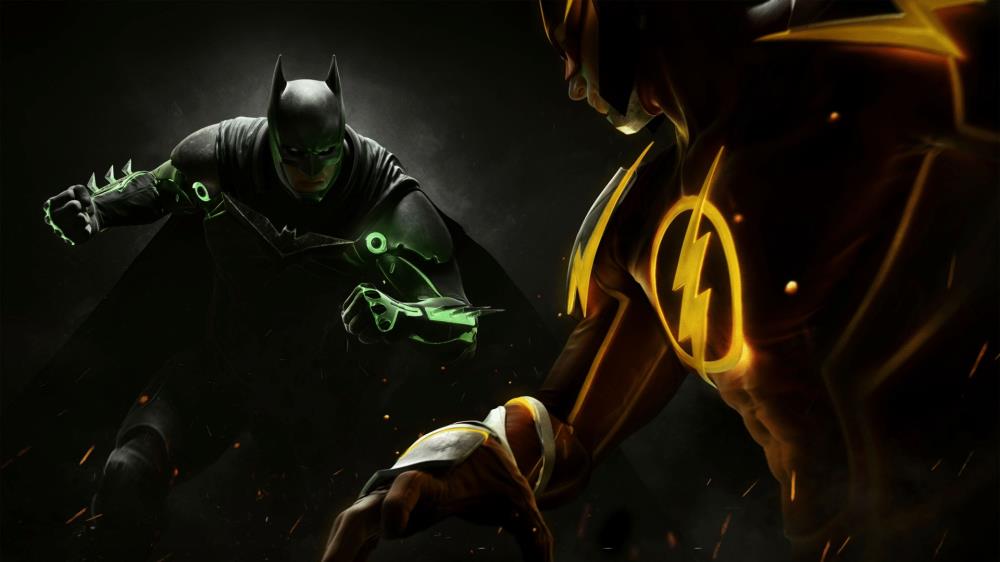
Thanks to the slip-up of an artist working on the title, we now have more evidence that a new Injustice game is in the works.




""Coolbeans: When it comes to Steam, are you planning on bringing it to Early Access?
Luis: No, no. Once you know everything [for Twelve Minutes] there’s really no point for that. It’s not that kind of game.
""
i like this about this game
it's good for any game out there
could be awhile before this game comes out
Could this game be beaten in twelve minutes? That's probably why he doesn't want to put it in early access.
I imagine it would have been really weird if it was done with the GTA engine.