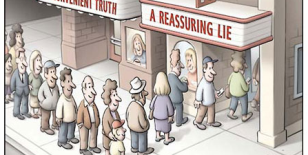
Throughout my years on N4G there is one thing that I have noticed. People tend to support reviews that reinforce what they believe and reject those that don’t. 10/10 reviews are filled with the praise and admiration of everything related to the game. 6/10 reviews are filled with questions and concerns about the reviewer and the validity of the site. Each of them generating a crap ton of heat to reach the front page. While the median scored reviews get almost no comments. Now, this could be the result of ardent fanboys, click-bate, or some combination of the two. However, I believe that there might be another interesting phenomenon taking place. That is confirmation bias.
Confirmation bias, also known as myside bias or confirmatory bias, is a psychological phenomenon where people tend to favor information that confirms their preconceived notions despite any and all evidence to the contrary. In other words, people will search, reach, and look for information that confirms their individual beliefs while excluding any information that might run contradictory to them. Examples of this can be found in everything from scientific research to news media. Discussions about religion or politics are places where it can easily be seen.
As far as video game reviews are concerned, there seems to be a fair bit of confirmation bias not only in the creation of the reviews, but also in the way that we as a community react to them. How many times have we seen the comments section littered with the line: “There’s NO WAY IN HELL that ________game can be a 6 out of 10! It has_____, ______,_______ so it HAS to at least be a 9!”? Or,” no campaign??? Can’t be more than a 7!”? These are prime examples of confirmation bias. The first, obviously, had higher expectations for the game. Most likely because of a history with the franchise, pre-release hype, or the subjective fun that they had with a demo or beta. The second one has set an arbitrary standard for what makes a game. When the game doesn’t meet that standard, then it is considered a “lesser” game.
Now, I am not saying that you don’t have the right to be disappointed by a poor review of your favorite game. That is a natural progression of cognitive function. (as is confirmation bias) What I AM saying is that we must try better to understand when bias is used (whether it be in reading a review or reacting to one) and react more appropriately. With that being said, here are several ways to reduce and possibly avoid confirmation bias as a reviewer and as a reader of reviews.
1 )REMOVE YOUR EGO---The ego is what feeds confirmation bias. In general, we hate to be wrong and we crave the approval of others to validate our opinions. So, removing the EGO allows for us to be able to seek truth and not be locked into fallacious arguments that resort into eventually (maybe way down the line) facing how wrong we may have been.
2) SEEK DISAGREEMENT---Okay, so this one might be a bit contentious on forums (as the nature of forums seems to be trolls seeking disagreement). However, fostering an environment where disagreement isn’t automatically considered trolling allows for a better and more truthful dialog. Plus, it can eliminate misunderstandings and small sticking points that could be the key to the initial discussion. (I’ve found this useful when getting PM’d on N4G. Further explanation sometimes allows for more open and honest discussion…but don’t get your hopes up!!! LOL)
3) ASK BETTER QUESTIONS---Instead of saying “Why isn’t it a 10?” A better question could be “What would have made it a 10 in your mind?” Or even “What does a 10 game need to have for you?” In this way, you engage the other person and solicit a response.
4) IF YOU’RE GONNA GOOGLE, GOOGLE RIGHT (Google with me!?!? Anybody???)---The internet is HUGE. Therefore, if you are using Google to prove a point, you are bound to find some site that reinforces your idea. Don’t only search what you want to prove. Use more open-ended searches or perhaps search the opposite point of view and compare. Who knows…you might actually be WRONG (or at very least not as correct as you thought).
Confirmation bias is a real aspect of psychology and thusly a part of what happens in the perception and processing of information. It is not completely avoidable. But, it can be reduced. In order to have productive conversations about anything, including video games and reviews, truth (or as close as we can get) needs to be the driving force. This is extremely important when talking about reviews and the reviewing process.
Reviews are a fairly important part of our industry. Aside from a beta, these are truly the first looks that we gamers get into a finished product. (several big publishers use Metacritic as a bonus guide) Reviewers need to make sure that they are applying themselves (as much as possible) to being as free from confirmation bias as possible. In the end, we as gamers want the truth (even if it hurts) so that we can make informed decisions about games that we might be on the fence about. As gamers, we need to understand that reviewers are still human and bound by the same psychological “flaws” as we have. People will have differing opinions. The real question is whether or not these are supported by evidence to make them valid. Saying a game is a 6 is an opinion. Saying a game is a 6 and backing it up with reasoning (even if flawed) makes it at very least a more valid opinion. Regardless of all of this, one thing we ALL need to do is check our EGO at the door. Reviews are neither right nor wrong…they are just opinions. You are not wrong or right for disagreeing or agreeing with a review. However, if you use the tips to avoid confirmation bias, you might find a more truthful way to gauge your favorite games or unheralded new IP and the reviews that are written about them. This doesn't solve all of the problems of reviews. But, it does begin to touch on why there are such a wide ranch of scores and how we can begin to at least accept that opinions are like...nevermind! Either way, the most important thing is to just ENJOY gaming!

It's the questions Neo...
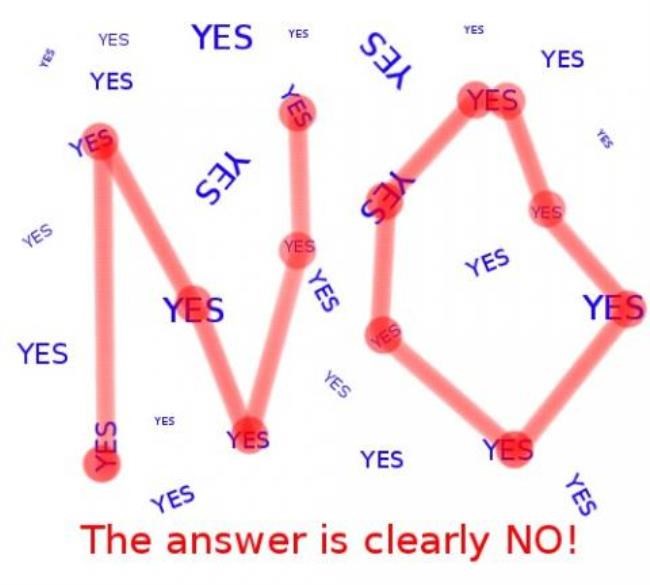
The answer is CLEARLY NO!!!
Microsoft announced its financial results for Q3 of fiscal year 2026, including an update on its gaming Xbox business and more.


Not looking good. Hopefully Asha Sharma is able to turn Phil’s disaster around.


To me it's still quite remarkable how they can cash-in 5.3bn in revenue in a single quarter, since their hardware is basically dead.

The charity event will be streamed live from Gamescom in August.
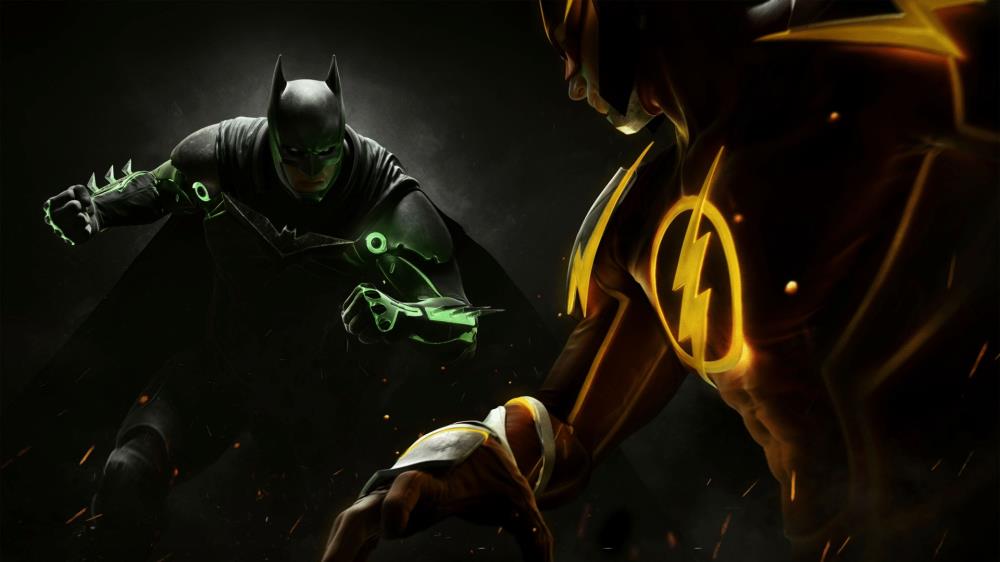
Thanks to the slip-up of an artist working on the title, we now have more evidence that a new Injustice game is in the works.




"Reviews are a fairly important part of our industry."
Those who can, do. Those who can't, criticize.
The fact is, reviews and critics are not an important part of our industry. Or part of any industry wherein the "critic" examines art. That doesn't mean art can't be examined.
It simply means that people who cannot create art should not (and are not qualified) to critique that art.
Without naming games (because I don't want this to devolve into a "that games sucks/ that game is the best" argument) I know that I would have missed out on some amazing games based on what the critics have said.
Also, based on those same critics, I would have bought games that (in the end) were actually broken and couldn't be played.
Critics and their critique amount to a pile of dung. Actually, they don't. Because a pile of dung can be used as fertilizer. Critics have no place and are one of the reasons journalism lacks integrity.
Confirmation bias may play a part in this, but it is only a part. Game journalists exist in a world that is insular. They talk video games, they eat video games, and they breathe video games. Wherever they go, video games are part of their daily life.
When they talk about what they want out of a game, their wants and reactions are reified by feedback from their fellow journalists. This tends to further isolate and insulate them from the mainstream gaming community. And that insulation only continues to validate their perceptions of gaming as a culture.
There was nothing more egregious than when "Value" became an added part of reviews. The dollar/ gametime ratio somehow invalidates or validates a game.
So, what comes when Fallout 4 or No Man's Sky is released. To fully complete NMS, one would have to play for billions of years, which costs .00000002 of a cent per year to play. Will we see a review score that shows this? If not, then there is no integrity. You can't claim "value" for one game then suddenly forget it later.
This is a nice attempt to defend critics, but in reality, they are non contributing zeros that, when they die, will have not made this industry better.
Good blog. This theory is certainly not new, but it certainly applies to video game reviews I think. some of us even cal attention to the things you just mention...the lack of "opposing side" in 10/10 threads vs the abundance of "opposing side " on the lower scores. thats where it gets nasty. We all been there. We all got our hands dirty.
confirmation bias works both ways, it seems. If there was a XBL VS PSN thread right now we could all find something on google to base our points on. To actively go seeking that information in itself is a form of conformation bias. Its a closed minded way of simply hammering your own point. and yes ...I believe every one of us on here has done it at some point. Low bubs or high..we all do it.
I did it today in a certain thread (wont name the game) somebody countered with the same stance..and the merry go round went on, so to speak. "my 'proof' Vs your 'proof'".
The reality is this..nobody wins. Its all opinion. But we do it anyway. Its why we are here on N4G. Lets be real for a moment.
EDIT:You know what WILL radically change the way these ...'debates' (im trying to find a polite word for it all, cut me some slack) play out on here? The removal of the agree/disagree and bubble system. No more of this point scoring, based on likes/dislikes. lets see who can really argue there points around here in a solid way without leaning on agrees/disagrees ( that are blatantly abused..you pick a side and thast where you go, with it...)
I personally don't see the point in reviews, it's ONE person's opinion. Why do people let one person's opinion influence their decisions ? If i listened to reviews, i would miss out on most of my favourite games.
In the past I've reviewed many imports making me the only authority on the games I review. And I've had people who've never even played the game (let alone heard a word about them as I'm the only one reviewing them in English) tell me my reviews are flat out wrong.
Which is hilarious. THEY HAVEN'T EVEN PLAYED THE GAME!
And yet isn't the whole point of a review to inform some WHO HASN'T PLAYED THE GAME?!
well said. i agree.