
This musing is a contribution to the dialogue started by the excellent Edge article (and comments below it) on the Art History of Games Symposium.
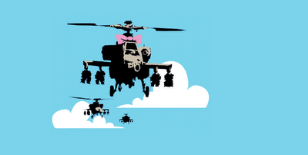
Banksy, pseudonymous hero of the Southwest and serial purveyor of subversion, has found himself ironically welcome within the establishment. His recent exhibition at the Bristol City Museum and Art Gallery was certainly striking, and his transformation of the traditional space was genuinely impressive. But by placing the work in such direct contrast with that of the masters (and, erm, Beryl Cook…) it felt conceptually two dimensional - different punch lines perhaps, but concluding the same knock-knock joke over and over.
This is a great analogy for the problem games face in their (perceived) attempt to align themselves with art. Of course, the definition of art shifts over time, but the common theme since the 15th century has been the exploration of aesthetic response (be it positive or negative) and form. Latterly, in the 20th century, the generation of ideas and not just emotions became prominent, as well as self-referential irony. The last Turner Prize, however, constituted something of a resurgence for the concerns of the aesthete.
Beyond that, two more (very basically considered) signifiers are creator intention, and editions. Although it causes much consternation, the intentions of the creator can transform objects into art (as evinced by Duchamp’s urinal or Carl Andre's bricks), and if their intentions are to make art, then what they make simply is art (for good or for bad). Intentions might include commercial concerns too, and mass production tends to 'lower' the status of an object, making it craft. Art and Craft can both be about emotional response to an aesthetic, but whereas Art tends to be a response to something (a space, an idea etc.), commerciality secondary to the creation, craft is simply a capitulation to demand and driven by markets. Of course, the two can intersect, and artists like Warhol and Koons have played on this with great humour.
So, with that in mind, video games face a bit of a problem: they are very often a commercial endeavour, driven by publishers, rather than unique, high-minded projects. Some games do transcend this though, and Flower is one of the clearest examples. It's certainly aesthetically beautiful, and it comes very close to being a piece of art, but its fairly traditional game mechanics dilute that a little. Imagine if it was just an open space in which you are cast as the wind with no goals. Perhaps the ever more upsetting areas later on in the game are present, and can be flown into, but it is this contrast of feelings that becomes the response in the player, rather than a desire to progress through the story. Some how, this abstraction ‘feels’ more artistic.
Small Worlds is predominantly experiential rather than achievement driven, and is thematically similar, apparently lamenting human society’s impact on the world, but it too places goals. There has been an explosion of games which strive to deliver a larger meaning of late, and their ambiguity (if not writing standard) has certainly created a more mature atmosphere: the multifarious interpretations of Braid’s cautionary tale cover everything from the denial of a relationship’s end to the dangers of nuclear war.
However, having a message does not necessarily elevate a game to any higher status; it is the way in which the subject matter is dealt with that is more relevant. Dante’s Inferno, whilst perfectly functional as a game, lacks the maverick spark of its source material and no matter how good it managed to be, was very unlikely to transcend the wholly singular focus of the poem. A desire to catalyse an emotional response more complex than fear, anger or joy (regardless of any perceived explorations of specific human concerns) is perhaps the distinction we should be looking for when attempting to categorise games into Art and Not Art.
Art places such concerns above whether or not it entertains, and for the most part games do the opposite - even Flower. Games that aren’t entertaining, but instead harrowing or uncomfortable to experience do exist, of course, (50 Cent: Blood on the Sand springs to mind…) but they are about as far from the Chapman brothers’ output as it is possible to get. Subjectivity is a powerful force, however, and the viewer is the ultimate judge of what constitutes good art, just as the player is of a game, regardless of critical acclaim or derision.
Art seeks to offer a new perspective on the familiar, ultimately offering greater understanding of our surroundings, but playing, whilst ostensibly the evolutionary equivalent, doesn’t require such interpretation. In the end, despite the understandable desire of gamers to see their pastime taken as seriously as others, it is better to appreciate video games for what they are best at being: games.
Microsoft announced its financial results for Q3 of fiscal year 2026, including an update on its gaming Xbox business and more.


Not looking good. Hopefully Asha Sharma is able to turn Phil’s disaster around.


To me it's still quite remarkable how they can cash-in 5.3bn in revenue in a single quarter, since their hardware is basically dead.

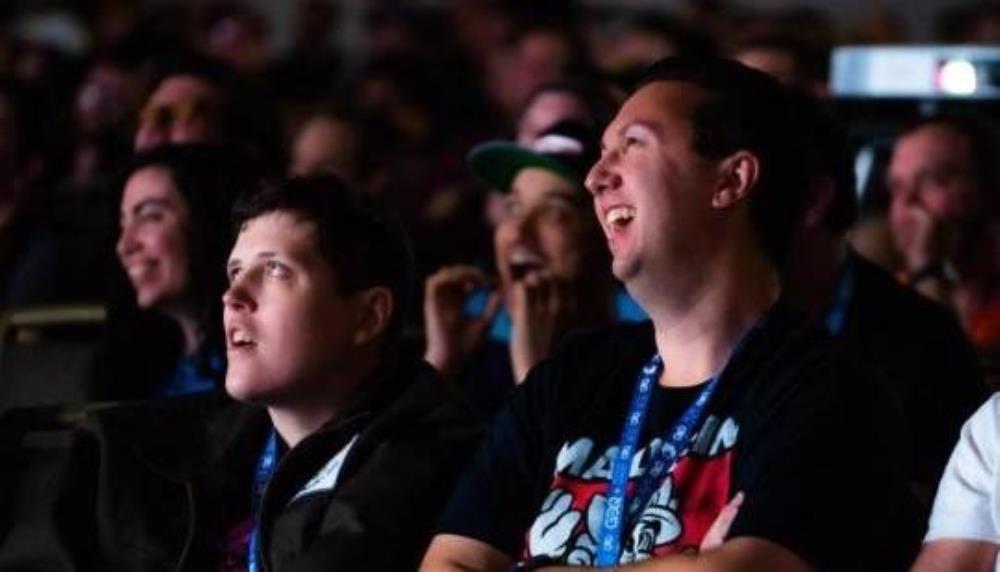
The charity event will be streamed live from Gamescom in August.
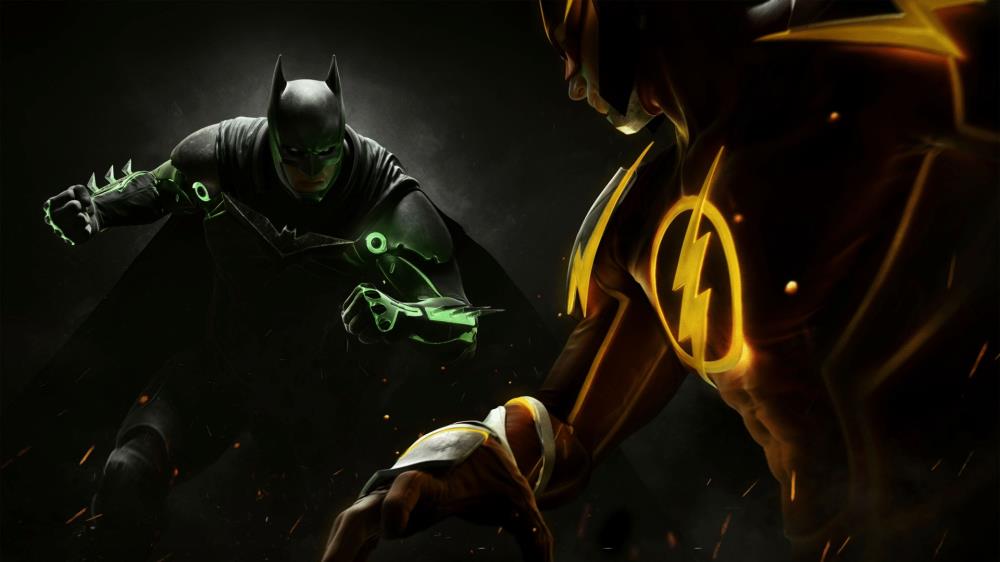
Thanks to the slip-up of an artist working on the title, we now have more evidence that a new Injustice game is in the works.




Thanks for reminding me how much I miss the Strike series with your title.
):
Haha - I'm glad this article works on multiple levels ;-)