

Nathan Drake is well equipped to deftly traverse the Uncanny Valley using whatever uneven protrusions or dangling ropes it presents to him. Regardless of his prowess, though, it would appear that this particular, initially insurmountable obstacle is not one that appeals to his adventurous spirit. Any objective reading of Uncharted 2's Drake would reveal him to consist of around 80,000 polygons and several shader passes, all picked out with exaggerated lighting. The result of this is a recognisable human figure, albeit not one whom could blend into a queue at a supermarket. Yet we are easily able to empathise with this ‘person’, and he (along with his supporting cast) very rarely make us feel uncomfortable through that particular unnerving stare, or ever so slightly inhuman movement that more ‘realistic’ avatars, despite their best efforts, so often deliver.
Of course, a large part of this Trojan relationship is the excellent vocal and physical contributions of the game’s actors (which produces an effect as revelatory as that of early rotoscoping experiments in Snow White or Prince of Persia), and the snappy script. As important as these factors are, many more hours were spent by animators and programmers to translate these performances to the screen; even the greatest voice acting will be let down by discrepant physical behaviour, whilst astonishing animation will carry less weight if delivering flat dialogue.
However, believable, empathetic characters are not only the preserve of motion captured actors, and whilst this method is undoubtedly one route that will progress our emotional investment in games and their protagonists (whilst reducing jarring inconsistencies), it is not the only way to effectively fool our senses. Ico is often cited as an exemplar of story telling and game design, but it has lessons to teach in character design too. The character models of Ico and Yorda are many times less detailed than those in Unchartered 2, the dialogue offered is sparse, and the animation is iteratively created by hand; regardless of this potential disadvantage in engaging our affections, we have no more trouble accepting their façade as ‘canny’ than we do Drake’s, Chloe’s or even the seven Dwarfs’.
Perhaps the greatest personality in Ico is the castle itself, its stylised aesthetic equally as sparing as that which is applied to the characters. Even so, every dappled shaft of light, crumbled piece of stone and gust of wind is burned into the memory; this place feels real, and sits alongside recollections of genuine locales with astonishing parity.
Since the beginning of representation, from cave paintings to political satire, we have stylised and caricatured in order to accentuate. Exaggeration of characteristics is a rich shorthand which, when used well, allows for large ideas to be communicated through smaller actions. This shorthand has brought many believable characters to life; Mickey Mouse, Bugs Bunny and Homer Simpson have all benefited and iconic game characters from Mario to Ico also sit comfortably far from the Uncanny Valley’s precipice, yielding a positive emotional response from players. But there is a tendency to see this position as inferior to the verdant, untouched fields on the other side of the valley. The ongoing drive for realism is usually tied to graphical fidelity, whilst abstraction and stylisation are considered experiments in synaesthesia (Rez) or childish regression – the back lash which resulted from Link's foray into cell shading is testament to this.
Heisenberg’s uncertainty principle, broadly stated, asserts that we cannot know the position and momentum of an electron simultaneously – knowing one will preclude your ability to measure the other. While this is an imperfect metaphor, there are some definite parallels with the Uncanny Valley; like a fractal image relinquishing ever more detail, the more a character attempts to convincingly ape real life, the more previously subtle inconsistencies are rendered glaringly obvious. It is conceivable that the dip on the graph is actually a more sustained tailing off, realism and revulsion inversely proportional and governed by some kind of 'Less is Moore’s Law'; at the very least, the other side is probably further away than it appears.
In dismissing the opportunities afforded by alternative aesthetics, we risk finding ourselves in very monotonous, and much less charming worlds. Given the success of Uncharted’s hyper realistic caricature in endearing itself to us, it would seem that Drake has found some ruins worthy of exploration somewhere at the base of the valley. I Am The Manta hopes that developers continue to explore this landscape before attempting to scale the opposing face.

Microsoft announced its financial results for Q3 of fiscal year 2026, including an update on its gaming Xbox business and more.


Not looking good. Hopefully Asha Sharma is able to turn Phil’s disaster around.


To me it's still quite remarkable how they can cash-in 5.3bn in revenue in a single quarter, since their hardware is basically dead.

The charity event will be streamed live from Gamescom in August.
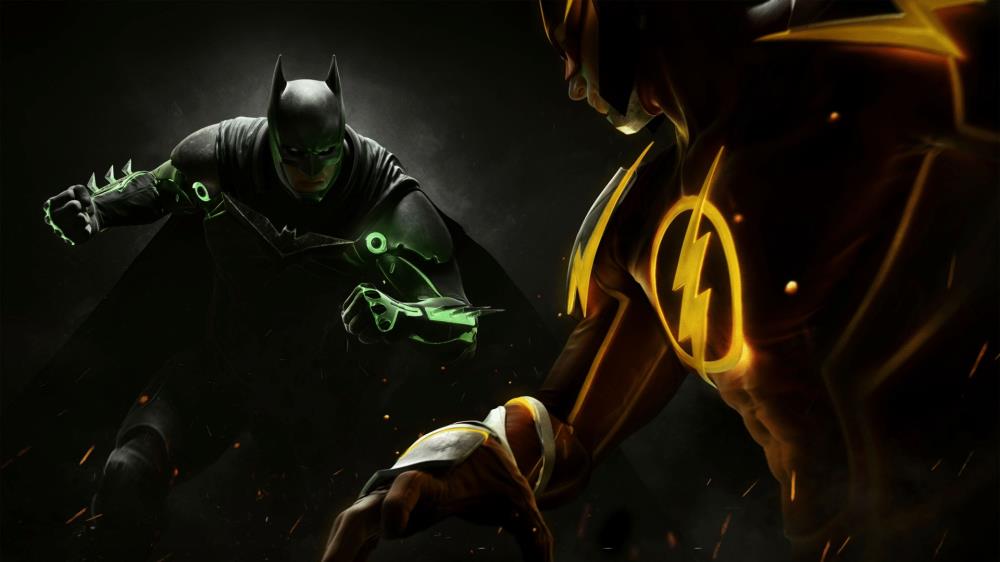
Thanks to the slip-up of an artist working on the title, we now have more evidence that a new Injustice game is in the works.




is appreciated.
well written, frighteningly so actually. What kind of education have you had, if of course, you don't mind my asking? I didn't really understand what the uncanny valley was until i read this, though the words had appeared quite often. I haven't played UC2 and therefore can't ,make judgment but i noticed that you compared the character model detail in the game to ICOs which doesn't really make much sense. Either that or something went over my head, good read nonetheless.
Thank you very much for your comments Harry190 and booni3 - I really appreciate them.
My eductation was UK based, with GCSE's and A-Levels (in Art, Music Tech, and English Lit), before a foundation course in Fine Art, and then finally a BA(Hons) degree in Fine Art. As for writing, Edge magazine has made a large contribution to my education in games critique, and before that, magazines like Amiga Power.
Until last December, I didn't realise that I wanted to be a games journalist, but some friends twisted my arm, I applied for a staff writer position, and got to the last stage (just pipped to the post due to lack of experience). As a result of that encouragement, I've gone from working in a call centre, to freelancing for some of the biggest industry websites in the space of five months. It has been a very surreal journey, I can tell you!
As for the character model thing, I certainly would never compare them in terms of detail. But what I was trying to get at is that even relatively simple constructs can produce a positive response in humans (as opposed the negative revulsion of something that is closer to realism, but just isn't quite right), and in fact, often do a better job of it.
Very well written and I can't agree with you more.
I wish there were more people like you in the industry.
That is flattering indeed, Anon7349 - thank you.