

Happy April Fools everyone. Hope you didn't get anyone hurt with your pranks; or maybe I should hope that you did considering the skill in pranks has continuously dropped year after year.
The last blog I wrote was discussing why iconic characters like Link should be left alone and not subjected to gender/race politics especially when the benefits are either unquantifiable or negligible to the point of not mattering. Several people made the argument that Link is meant to be a representation of the player and not really his own character. This blog discusses why that is not actually accurate using the Silent Protagonist character as the main focus.
I submit that, but for the exception of games like The Elder Scrolls where the player creates a character that has no personality and no identity except that which the player gives it, the player is not meant to BE the protagonist, but instead to be the protagonist's guiding consciousness which is very different.
Forgoing the Legend of Zelda example for now, I'd like to focus on other games that have Silent Protagonists or even games that have a clear hero in mind but a morality system designed to allow for choices that impact the world and story of each game.
I start with a small example from one game. Final Fantasy VIII. Now, on its own this game is not a good example, but it does contain the perfect example through the Laguna dream sequences. A few instances throughout the game has the characters mentioning "Faeries" which the characters assume are entities capable of guiding people towards some goal or destination. The Laguna dream sequences are events whereby the consciousness of 3 party members (one of which will always be Squall) are sent back in time to occupy a space in the body and consciousness of Laguna, Kiros, and Ward. If, as the player, you attempt to take actions against the predetermined actions that can take place, a prompt shows up whereby the characters act confused as to why they are taking such actions and come to the conclusion that the "Faeries" must be the ones guiding them to do so even though they (the characters) don't have to actually undertake said action.
This shows a prime example of the idea of a guiding consciousness being used to affect interaction, though in this case it is a game mechanic and not due to having a kind of "blank slate" character.
Next I move on to The Suikoden Series of JRPG games. This series is one of my absolute favourites because there is just so much to do and some of them have amazing stories. With the exception of Suikoden 3, each Suikoden game in the main series features a Silent Protagonist. Some of the games make allowances for a basic personality type among the main protagonists though, as referenced by interactions among NPCs that have a relationship with the protagonist. This is an important aspect to remember. Personality is not solely what the character does, but how the characters around him/her know them to be.
In Suikoden I you play as Tir McDohl, the son of a famous general who was going to enlist and follow in his father's footsteps. Through interactions with his best friends, we find that Tir is stalwart, brave, and kind; willing to do what is necessary for the greater good. Through dialogue options you can foster this personality type, or you can change him to be clownish, harsh, or lazy. This is a common reality in the other Suikoden games, most particularly Suikoden V as there is a small affinity system in place that you can manipulate to give you different endings. Through these games we see heroes with definable personality traits, yet at the same time those traits can be manipulated by the player as anyone's life choices can be changed day to day by our own consciousness.
Though I have many JRPG classics I can choose from to further this point, I'm going to move on to a series that's completely different in literally every way. The Infamous Series. 3 Infamous games, 2 protagonists with clearly defined personalities and identities, and neither of them are Silent Protagonists. Cole McGrath and Delsin Rowe are two very different people. Cole is more of a reluctant hero who tried to make the best of a bad situation and Delsin is an immature guy who comes to see his power the way a kid sees a toy store. Cole never wanted to have his powers, but decided to use them to save the world and likely inadvertently created the conditions for Delsin's powers to activate. Delsin also never asked for his powers, was freaked out about having them at first, but then came to the conclusion that he could use his powers to shape the world the way he wanted it to be. In both cases, you as the player decided the shape those worlds would take and the personalities that Cole and Delsin would develop.
Infamous' morality system really hammers the point home that you, the player, are guiding Cole and Delsin to being specific kinds of people. It takes a very Black and White approach to things, which I find is rather disappointing since life is really just a lot of gray; but even though Cole and Delsin are very much their own people, the morality system puts you in the role of conscience and asks you to guide how each character will develop. Will Cole or Delsin be Champions of Good or will they become InFamous? That's all up to you, but in the end you are not Cole or Delsin, you are Jiminy Cricket.
So now we come to The Legend of Zelda and the idea that you are Link. Well we have to ask if that's true or not. People will say "you can name Link whatever you want and so Link is obviously meant to be a reflection of you." Is he? Or is it more likely that Link is merely to be the avatar of your decisions but is still his own person? Link has a design. He doesn't look like you, he doesn't sound like you (for the games where Link makes grunts when fighting), and you can't change that. Link has a mission. Whether it's to find the pieces of the Triforce and unite them to stop Ganon, save Princess Zelda from certain doom, or whatever else he has to do he is on a set path with a set goal. You as the player get to decide how he goes about accomplishing that goal, but that's really all you get to do.
Now the obvious point to make here is that games are subject to the limitations of their mechanics, so obviously you wouldn't be able to actually make Link become a blacksmith instead of the hero of Hyrule, but that's the point. Games like that exist. Skyrim lets you be a Nord that can cast magic even though they hate it. Dragon Age lets you be an Elf that uses Two Handed Greatswords. The Souls games allow you to pick classes with set stats only to show you that your starting class literally means nothing because it's how you choose to develop your build that matters in the end.
The point is that there are ways to truly make you the actual star of the show, but most games don't. You are simply the "Faeries" that guide the actual star along a certain path. Most Silent Protagonists are not you, you are them. You act as the part of their being that makes the decisions to cause certain outcomes but that's all that you are. Of course, the argument in psychology can be made about what is a person, but that's an argument for elsewhere.
I look forward to thoughts in the comments, but I expect to see "Nintendo said..." comments as well. Keep in mind that this blog isn't meant to solely be about Link, but any Silent Protagonist that one can play as. It's important to notice the world as it interacts with the character as much as how the character interacts with the world.
Microsoft announced its financial results for Q3 of fiscal year 2026, including an update on its gaming Xbox business and more.


Not looking good. Hopefully Asha Sharma is able to turn Phil’s disaster around.


To me it's still quite remarkable how they can cash-in 5.3bn in revenue in a single quarter, since their hardware is basically dead.

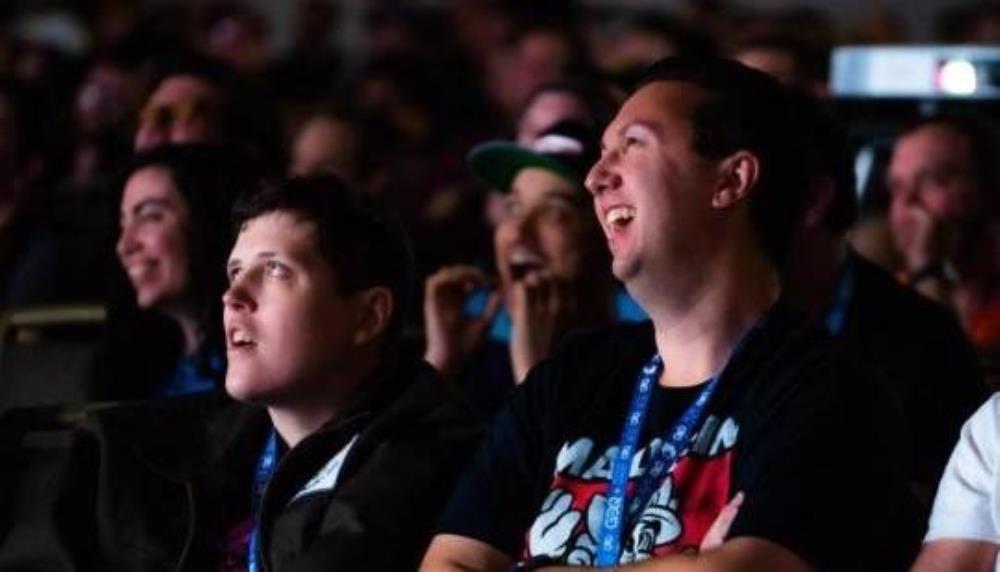
The charity event will be streamed live from Gamescom in August.
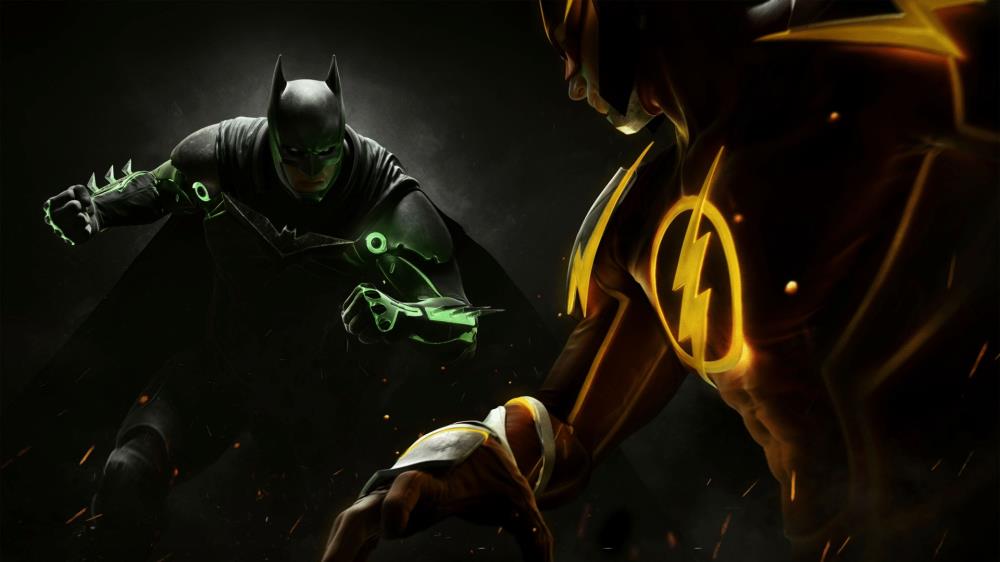
Thanks to the slip-up of an artist working on the title, we now have more evidence that a new Injustice game is in the works.




I really liked the Conversation options from Elder Scrolls and Mass Effect where you get about 4 options to choose from. 1 is positive, 1 negative, 1 pursuade positive, and 1 negative intimidate, regarding the conversation. That to me, felt like my choice, whether the intimidate or pursuade went against me, well thats the chance you take.
Link on the other hand really adds nothing other than a few grunts here and there. The conversation options are incredibly limited.
The Author is absolutely right about link being silent, it drives me nuts sometimes. Lets face it, Link has no personality. Zero. So as for immersion, Zelda games will never really hit it off with myself, which is fine. Thats not what the game is about.
Silent protagonists can make a character feel incredibly distant to the player. I think it all lies in whether the protagonist is a person that the player would even want to hear from or not.
Xenoblade chronicles was a JRPG that really benefited from having a rounded, non silent protagonist. Sad to see the sequel seems to ditch that for the create-your-own silent protagonist. Not that that route is bad, it's just used so often nowadays.
I enjoyed reading/thinking about this. :)
I would like to see Link's character elaborated on, but I don't particularly mind if they add different appearance/gender options, etc. As long as it all fits the story they want to tell - I'd like it either way. There's nothing wrong with the standard hero's journey, and him being a very specific, if vacant guy - like they usually have, but it wouldn't do any harm for them to experiment with things like decisions and more weighty material. Most complex it's got is Majora's Mask, which is my favourite in the franchise.. A lot of deeper story stuff there. I'm not talking about making it gritty/grimdark though.. I'm more alluding to hideo miyazaki type depth, which gets aesthetic and atmospheric nods in the Zelda series, but they can potentially still go deeper while still having it be kid-appropriate. (lol off topic!)
I rarely feel like I was my avatar/character as such, bloodborne is a good example - despite making the character look like me there's no feeling of "being" him. When I play Half-Life2 I feel like I'm mind controlling Gordon, not like I am Gordon. Though that gets increasingly peculiar when using VR.. That makes it feel a lot more like it's happening to you than someone else, even though technically it's no different. Whether VR will change how people want their characters to look is a weird question too. I wonder how people's experiences/perceptions differ.
The funniest games I can think to bring into a avatar identity discussion like this are the old Ultima titles, where you were playing as a guy/girl who was pulled out of modern day to this olde world fantasy setting and everyone there knows you as "the avatar" .. So.. You're playing some other guy.. who got pulled into a vortex.. Who isn't you, but sort of is (in some titles more than others)? Weirdly meta. XD Is hack/sign like this too? I've not played them. I like the whole tron/matrix meta-narrative stuff, in it's place.
Depending on the situation, it can sometimes feel like I'd ask myself that of some silent characters. As ground-breaking as it was, GTA3's storytelling work with Claude (playable character) could make him feel like a secondary character in his own story.
But as far as LoZ goes, this redecorated argument still doesn't land only because it's still limiting Link, his stated design intention, and the idea of a what a tabula rasa is down to just the guiding consciousness of the character. Typically, the tr philosophy of having silent characters comes down to them being empty vessels that offer more accessible immersion, which in turn allow players to fill in the gaps for themselves. Link's got the qualities of a brave adventurer out for a quest but a lot of other stuff is just up in the air.
Technically, Link's doesn't even fit the typical role of a silent protag since he does "talk" via dialogue choices made by the player but doesn't utter any sound, which I think is due to the designers not wanting the Hylian accent to disrupt the player experience. Even the connotations of being named Link can theoretically lead back to him being considered a "link to the audience," when considering the etymology of the word.