

Looking back, the 7th Gen of gaming was fairly tame. No one actually "lost". Wii, PS3, 360, DS, and PSP each carved out a respectable market, and a few of these (like the PS3 and 360) are still getting big-name releases. Sure, there were times of drought. Sure, there were moments when a console got bruised (like RRoD, or the PSN hack), but no one failed outright. It was the first time that had happened since the Genesis/SNES generation.
Think that'll happen again in the 8th? Think again. There's blood in the water, and this gen is going to be a fierce fight to the death. It's a bit too optimistic to think that all five platforms are going to be successful, especially with new platforms (Ouya, iPad, smartphones) chipping away at the core market. Oh, but I suppose a fancy numbered list will help, won't it? Alright, let's dive in.
1. Where's the spending money?
Compared to 2005-2006, the general public doesn't have as much mad money today as they once did. And if they do have mad money, they already spent it on an iDevice or a smartphone. The evidence is all around us: the 7th gen of consoles has stretched on much longer than usual, and the adoption rate of said consoles has been slow but steady. I've said this before in my comments and probably even in a previous blog post, but consider the fact that two out of three 8th-gen systems are currently struggling (Wii-U and Vita), and the third one, 3DS, is selling...okay. The issue of cash will become exacerbated once the two most expensive consoles - Xbox One and PS4 - finally make it to market. Call me crazy, but this may be the first generation of consoles where the market actually shrinks
2. All or nothin'
To piggy-back on the above point, money isn't flowing like a river, especially not for The Big Three. Right now, all three console manufacturers are in a worse place, financially, than they were 3 years ago. What this means is that each manufacturer is desperate to dominate. They can't afford to NOT dominate. Unless the gaming market expands via non-gaming TV-watchers (doubtful), there has to be another avenue of growth to support the increasing AAA development budgets. Either the market grows, or it shrinks. There's no status-quo in business, and the same rule applies to gaming. Before, snagging an exclusive (or making a formerly-exclusive game go multiplat) was just a bloody nose. Microsoft managed to make several franchises like Devil May Cry, Tekken, and Final Fantasy go multiplat. Sony did the same thing with former 360 exclusives like Mass Effect, Dead Rising, and Bioshock. This time around, dealing a bloody nose will not be enough. You think it's a coincidence that Sony is heavily backing Bungie and their new game, Destiny? Sony wants to gut Master Chief. You think it's a coincidence that Microsoft is including a motion-control Kinect in every box? Microsoft wants to gut Nintendo's casual boom. Nintendo's tablet on the Wii-U? Nintendo wants those iPad players.
3. Divergent philosophies
Each console is following a very different philosophy. In the 7th gen, 360 and PS3 were chasing the same crowd, more or less, and the Wii aimed to expand the market. This time around, each console seems to be going in its own direction. While this has the potential to expand the gaming market, it also has the potential to alienate the core fanbases, not to mention these new directions could quite easily lead to a dead end. Nintendo's philosophy is difficult to judge right now, because they're still recovering from the 3rd-party backstab (based on Ninty's comments from E3 '11 and E3 '12, I think they were counting on a LOT more 3rd-party support than they're currently getting) and I can't quite tell what direction they're going to take the Wii-U. But mark my words: the direction of the Wii-U that Nintendo first preached is dead. They're going in a different direction (they have to, honestly).
Xbox One has the gutsiest console philosophy. Microsoft is making the same gamble as Nintendo made with the Wii: will our core fanbase still support us while we spent the majority of our effort chasing non-core customers? The wild card is whether or not people will continue using Xbox Live. Will tens of millions of gamers insist on a paid service, or will they settle for "good enough" online on the Wii-U and PS4 while saving themselves a bit of cash?
PS4 seems like a safe bet. Sony is the sleeping giant: they absolutely dominated with PS1 and PS2, and then they took their bruises with the PS3. Sony seems to be focusing on gaming while also sneaking in some social features. The only hitch is that the Sony of today is not the Sony of the PS1-PS2 era, financially speaking. There's even talk of splitting Sony down the middle, separating the Playstation division from the TV/electronics side of the company. PS4 seems to have the most gamer-centric philosophy, but that means very little if the pile of money supporting the console dries up. Same goes for PS Vita. Vita will be the second-cheapest 8th gen platform, and I think people are going to begin paying attention to that, but if Sony can't keep itself afloat, it'll be another Dreamcast situation.
Obviously, these philosophies can change, but the first 18 months play a major role in a console's history, for better or worse. Wii became known as the "casual box" and no amount of core games was able to shake that reputation among core gamers, but on the flip side, it was known as the must-have family console, and people bought it on that reputation alone. 360 was known as the "online console", and people continue to subscribe to Xbox Live Gold with the mentality that it is the best online money can buy. On the other hand, Microsoft's hardcore reputation crippled their efforts to push into the casual market with Kinect, which sold well at first, but didn't sell very well after that (not to mention it didn't get many worthwhile games). Sony had a bad reputation at first due to the high console cost and a lack of super-seller exclusives. Sony has managed to turn that reputation around, and yet their remarkable efforts to improve PSN still get drowned out by PSN's reputation of "it's not Live". Reputations can change. Philosophies can change. But sometimes the consequences of a philosophy continues beyond the philosophy itself.
4. Aggression
The 8th Gen is starting off just like the last one: companies are getting fierce and throwing punches. Whether it's bad-mouthing, playful jabs, or overt bragging, the Big Three are taking off the gloves. And this is exactly what made 2006-2009 so dang exciting. Every season felt like it was a new round in the ongoing battle. Each console had its PR leader: Sony had Butler, Microsoft had Greenburg, and Nintendo had good ol' Reggie and Iwata as their one-two punch. However, there is one key difference between then and now: back then, a lot of the talk was lip-service and PR, but ultimately, every console did fine. This time around, it's not just "we have this exclusive" or "we have this feature". The war-cry is "we are going to own the heart and soul of your living-room and murder everyone else". Microsoft wants to do it by unifying every media format under one roof. Sony wants to do it by emphasizing play, play, and more play. Nintendo wants to do it by...well, being Nintendo, same as always. One thing is for sure: cherish the last few years of casual ribbing and occasional sales-chart comparison, because the days of peace are over. Fanboy wars are coming back in full swing, and The Big Three are going to be the biggest players.
My personal predictions for the 8th Gen are as follows:
First, this gen is going to turn one of the Big Three into the new SEGA. What I mean is that after the Genesis, SEGA never managed to achieve success. They still sold several different platforms. They didn't instantly shrivel up and leave the market. It did take some time, but after the Genesis, the decline began. This is the gen where the decline has begun for one or more companies. Will it be the Wii-U? There are certainly similarities between the Wii-U and Dreamcast, which was sandwiched between two gens and never had a chance to shine. I'm of the opinion that it will be either Sony or Microsoft. Sony is betting on HD gaming with some social features thrown in, while Microsoft is hoping that people will want an all-in-one box that also supports gaming. In a market that demands the simplest answer, Sony's and Microsoft's philosophies are diametrically opposed. Either you're focusing on gaming, or you're focusing on everthing, including gaming. Only one philosophy can win the day.
Or, will it be third-parties who crash and burn? They're the ones who hope to offset their bloated budgets by putting their games on every platform imaginable. That's quite a gamble, and what worked in past generations may not work this time around. Companies like Capcom and Square-Enix are already feeling the pinch. Will EA and Activision see their core markets decline, too? One of these philosophies is going to bite the dust. The 8th Gen is going to result in a very different gaming landscape than what we're accustomed to.
3DS and Vita are going to be the surprise hits, in my opinion. In terms of tech trends, we've been following in Japan's footsteps for the past decade. We're moving away from one central TV. We're moving away from living-room-consuming entertainment centers, and we're immersing ourselves in smaller screens that can fit in our lap. I'm not saying consoles are dead. Not at all, However, we've already seen the pendulum swing very far in the smartphone/tablet direction. As it swings back, it isn't going to swing into the high-end console/PC market. It will swing into the dedicated handheld market, since people will want more power and more "oomph" in their games, but they won't be willing to sacrifice the portability and convenience. That's just my opinion, and of course it could be argued the other way, but like I said, 3DS and Vita will be the 8th gen's surprise hits. They wouldn't be "surprise" hits if everyone saw it coming.
Feel free to post your own thoughts on the 8th Generation of gaming in the comment section below, or PM me. I'm not a fortune teller. I don't know what the future holds, but I am certain of this: we are entering The Generation of Blood.
Microsoft announced its financial results for Q3 of fiscal year 2026, including an update on its gaming Xbox business and more.


Not looking good. Hopefully Asha Sharma is able to turn Phil’s disaster around.


To me it's still quite remarkable how they can cash-in 5.3bn in revenue in a single quarter, since their hardware is basically dead.


The charity event will be streamed live from Gamescom in August.
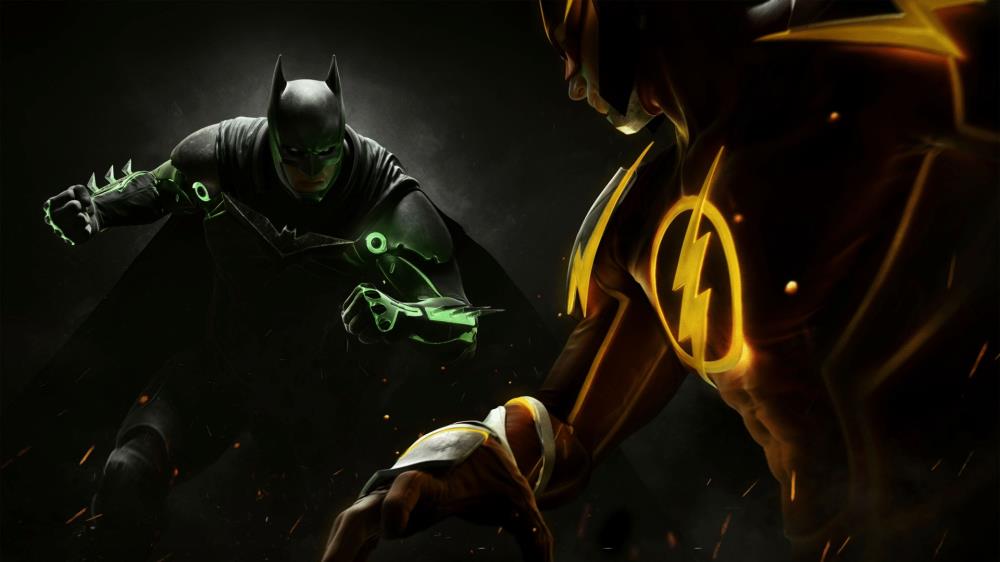
Thanks to the slip-up of an artist working on the title, we now have more evidence that a new Injustice game is in the works.




Great Post. This generation will certainly be very interesting. For some reason tho I doubt one of the big 3 becoming like Sega but its possible.
I like that tagline and it seems to fit the mood of the gamers. they are out for blood and dont seem to care who's.
But in any case, nintendo will not see the wii-u succeed like the wii did. That much is certain because the demographic the wii sold to are either not as inclined to buy the wii-u due to confusion of what it is. Or they are satisfied with their wii purchase and the type of games they bought for it.
I mean we all know the wii-u is a better system but it isnt us that needs convincing. its those that bought into the idea of the wiimote and motion controls and the mom's and old folks homes. There doesnt seem to be any inclination of them all trading up anytime soon.
Sony will be going for the 4th home console and while their 3rd has done quite well for itself, it hasnt matched the success of the 2nd or even the 1st in terms of market penetration (sales) but that does not mean the brand is any less popular. It only means that the competition has been more fierce. And competition comes in many forms not the obvious this console vs that console.
MS will be entering their 3rd system and there has been a long standing urban legend of a 3rd console curse. That curse could hit MS just as it hit nintendo, Sega, Sony...even Atari. But looking back at those companies and the systems of those days it was a very different time. Those platforms were dedicated gaming platforms. That is all they did so there was no social integration or media streaming or online infrastructure (with the exception of the PS3).
So while this is MS's 3rd system, it isnt going to be the same type of system as the other 3rd systems from the likes of Sega, nintendo and Atari. That isnt an automatic success being different but it doesnt mean its an automatic failure. Failure will be at the hands of the consumers and if they are willing to bite on the hook that MS casts out.
The biggest threat (if we consider it a threat) to "traditional" gaming would be from nontraditional means. Convenience is a very powerful term and we are seeing more conveniences as part of the everyday lifestyle. Smart TV's that surf the web and stream are a threat to PC's from that simple aspect but they could never replace the productivity of a PC for home or work use. But if you arent using a PC for home/work use then the smart TV fits the need. Same with the tablet and smartphones and their entry as an entertainment platform.
Gaming is expanding and i think that is what scares traditionalists most. What they held dear is branching out to the most rudimentary of devices to offer a convenience that an individual may already have in their hand instead of spending the $$$ to buy dedicated.
We saw the decline of the portable media player when phones started offering media playback. The same is happening for games on the simplest level but will never replace the full experience of a dedicated machine. But that does not mean it remains that way forever. it took a long time for phones to play games we played 10-15-20 years ago but the time it is taking them to adapt is getting shorter and shorter.
I pride myself as being a traditionalist for gaming. i get my fix from systems that i grew up on as well as modern systems but I can also appreciate the convenience that the mobility market is trying to achieve. Maybe its my years of experience that gives me the ability to respect where the industry is going from having been there since the beginning.
I am not in this hobby to change anyone's perspective on things. I'm just along for the ride and can say i've seen the ups and downs of every generation. This one will certainly be interesting to follow.
I see a rise in PC gaming from free to play, kickstarter projects, and STEAM. I almost forgot that Japanese game developers are finally supporting the PC gaming market like Capcom or Namco along with Japanese indies. I mean La Mulana, Cave Story, Satazius, Street Fighter 4, Devil May Cry 4, rusty hearts, etc. Man is a great time to be a PC gamer oh how could forget the supposedly dead genres like adventure games like to the moon, Gemini Rue, the next big thing, survival horror games like amnesia the dark descent, lone survivor, Lucius, home, etc. The big three should stop with the gimmicks and multimedia crap and focus on games. Here is a concept of a true next generation game www.stompingland.com or among the sleep. If not the console gaming market will become a niche.