
Developer and Publishers are are always complaining about how they’re not making enough money and how we shouldn’t complain about the cost of our games. They also like to fall back on the defunct argument that “If people don’t buy their games then they can’t continue to make them”, to which my staple response is “if you can’t make good games, you don’t deserve my money”.
Lately thought there’s been a trending within games to be really short, but the prices remain constant. This prompts me to call into question the methods employed and the justification of publishers and developers towards the cost of a game and the amount of time we’re expected to play it.
The 2006 and 2007 graphs may seem a bit confusing, they don’t indicate much of an increase, but they’re they base data for the 2008 and 2009 graphs. There wasn’t a standard for trophies or achievements in the early first years of the 7th generation of consoles and it’s important to keep this in mind. I’ll be going over that in a moment.
 We can see here that not only were sports titles among the top selling titles, but sports titles have no set ‘hours of gameplay’. They’re predominantly games people play again and again without need for incentive to do so. If a gamer was really pleased with how their team did the previous year then they’d enjoy the roster line-up in Madden. Some sports games like Fight Night do have a career or story mode and aren’t geared towards really high replay outside of online gaming. Games like GTA are sandbox titles and many players move beyond the set storyline, so they’d spend more time simply exploring than they do playing the actual story.<br><br><br>
 What we see is that based on the top 10 most sold games of the year, the average cost to play per hour is relatively low in context to the average time expected to play. Of course Eldar Scrolls; Oblivion seriously throws the averages a bit but it was one of the most sold games meaning that a majority of gamers in 2006 were spending more time playing at a lower cost than following years.
 In 2007 trophy standardization was being called for and was primarily implemented in sports titles before other games. The PS2 was still popular due to the absurd pricing scheme and lack of developer support for Sony’s new flagship, PlayStation 3. Wii was still a strong seller and motion controls were still being praised as ‘revolutionary’, numerous proof of concept videos were being produced in conjunction with the Wii-mote such as head tracking via reversing the position of the Wii sensor bar and the Wii-mote. This of course was before developers started to submit watered down versions of games and shovelware for the popular console. Still, Nintendo first party titles took the consoles by storm.
 Despite Pokemon Platinum having a grossly adjusting effect on average hours required to completion there were more games that gamers bought outside the sports or party game genre, driving the averages to skew slightly. Even though this is an understood “flaw” it still evidences the fact that games with a ‘time to complete’ cost players more per hour to to the on average shorter length of time to complete the games by more than $1.50 per hour.
 By 2008 trophies and achievements were standard requirements for Xb360 and PS3 titles, and even some PC and Steam titles began to implement the contrived goals with hopes that it would increase both replay value and drive sales on the idea that there was more to obtain in a game with binary prizes. Games that had an indefinable amount of play time as is generally the case with party and team sport titles, managed to dominate the sales charts through 2008.
 In 2008 it appears that the cost per hour to play games decreased while the amount of time to play games to completion slightly increased (two intrinsic values, obviously) only slightly, but it was also the time of a massive economic recession. On the other hand the game industry was one of the least effected industries of the recession as gamers would lose their jobs or have their hours cut back they still managed to keep the industry afloat. Sony’s darling began to show potential as developers discovered that the PS3 wasn’t just another one trick pony. The PSN began to receive critical acclaim for aspects such as @Home and Sports / party titles began to give way to FPS powerhouses that had previously dominated the 6th gen XBOX. Through all of that Nintendo once more white-knuckled top sales charts with their solid first party titles. By this time however, third party titles began to tarnish the glistening aura of the Wii in the eyes of gamers. The media still loved it though.
 2009 may have just passed but it’s easy to forget what went down in terms of sales, particularly when so much marketing and advertising is being done to keep gamers forward looking. The average cost per hour to play games took a sharp increase, as do most things when an economic downturn happens. The game industry cried that they did in fact take a hit, but it’s really hard to figure out if that is their way of trying to be a charity case and asking, “Where’s my bailout?”. Irrespective, record sales numbers flooded the market for what seemed like any and everything. Gamers were getting more hours of work and people began to find jobs again. Titles like Modern Warfare 2 had devastating numbers of sales that prompted Activision’s Bobby Kottic to be pictured with nothing less than a self-righteous shit eating grin since sales number and profits trickled in. Personally, a game that sells for $60 and has LESS gameplay than something by PixelJunk doesn’t deserve to a urine cup sample coaster, but hey… that’s just me. Still, I’d like to kick him in the balls just to wipe that undeserved expression from his face and let him know that it’ll only hurt half as long as it took me to beat his game. I do feel good though that on a global level it didn’t make the top 10 best selling (so, I’m a hater – sue me).
 Here’s where the question really comes into play. It cost on average $7.37 to play a game per hour in relation to the average cost of a game and time it takes to complete it – almost double what it cost per hours based on top 10 sold games in 2006, just 4 years ago. The amount of time it takes to play a game to completion took a sharp decline, and for those that say 7 hours isn’t that long – it’s close to half the time AND it’s about the same amount of time as it takes to drive from Warner Robins, GA to Wilmington, NC – you can drive about 1/3 of the way across Texas – fly non-stop round trip from Cali to DC - about a full day of school or work you have to attend- 1.5 Superbowl games (about) you can’t watch.<br><br>To put this into more tangible contexts, the average age of gamers are between 25-35. The national average income in 2008 was about $41K and with 2088 hours in the work year (with no leave) it means that on a national average people earn about $19 an hour. In 2009, it cost us $7.37 per hour or close to %50 of our hourly wages. This is an increase from 2006 where the median income as $48,201 and games cost (per the top 10 selling games of that year) $4.26 – people at that time made about $30 an hour and at $4.26 over hour that’s less than 1/6 of an hourly wage.
So, in reality it would appear that developers and publishers whining about how they’re not going to be able to able to keep making games if we don’t by them – we pay more now for games contain much less actual traditional gameplay (going through the game for the story and not gauging ‘beaten’ on a metric of contrived achievements and trophies), than just a few years ago… more than twice as much for it and yet we seem pleased as pie to pay more for less. And I’m left feeling cheated and betrayed for my loyalty.
Et tu Brute?
Microsoft announced its financial results for Q3 of fiscal year 2026, including an update on its gaming Xbox business and more.


Not looking good. Hopefully Asha Sharma is able to turn Phil’s disaster around.


To me it's still quite remarkable how they can cash-in 5.3bn in revenue in a single quarter, since their hardware is basically dead.

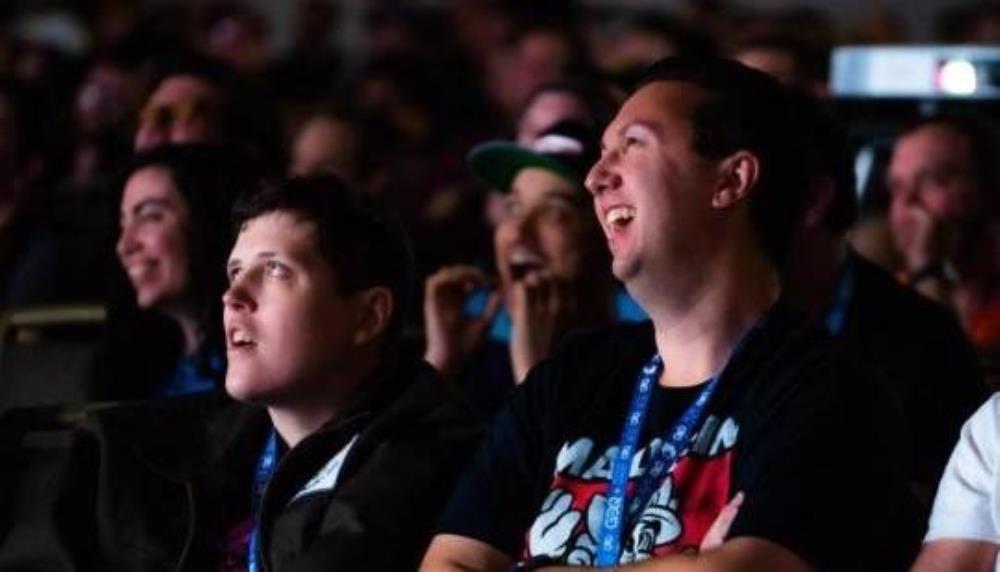
The charity event will be streamed live from Gamescom in August.
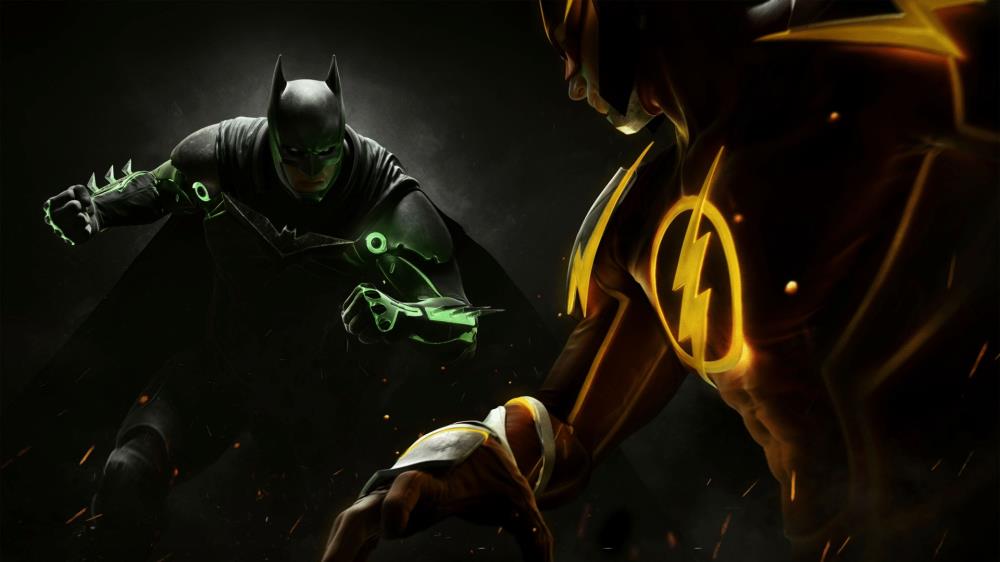
Thanks to the slip-up of an artist working on the title, we now have more evidence that a new Injustice game is in the works.




A few of these titles, such as Halo 3 and killzone 2 have robust online portions that cant be measured. So when you say you got five or six hours of entertainment out of it, that means your ignoring one of the crucial parts of the game. While if I were to play just single player, I'd be spending about twelve dollars an hour, if I were to enjoy the online component as much as I have, it would be more akin to about a dollar per hour, which is much lower.
When I was younger there was not any online multi-player and the single player mode was the main part of the game which it still should be the main part of the game. And even as time went by mult-player was just an extra tacked-on mode to the main game and was only meant to extend the life of the game a little bit more pass the main game and that is how it still should be. But now-a-days it is becoming more and more apart of the main game, in fact some games don't even have a single player mode and just have the multi-player mode. It is sad these days how most games are turning out to be more for online multi-player, yeah it is fun for a little bit but then you realize that you are generally just shooting other game characters and occasionally capturing a flag or something with no real reason to progress except for temporary points, and beyond that is just really no point in repeating the same monotonous tasks over and over again with no real genuine goal, for me after a little while it gets incredibly boring and instead makes the multi-player part of a game more of a chore and waste of time than an enjoyable experience. I think the multi-player part of a game could be a good extension of a game as a whole if executed correctly, and I think when the multi-player aspect of a game takes over as the main part of the game is just an excuse for lazy,greedy, and impatient game developer companies to rush the game out the door and then later charge for the rest of the original game as dlc. So in reality for the most part we really are not getting the whole original game the way as it was intended when bought at the $60 price tag and instead are eventually paying more than $60 if we choose to get the game as originally intended(via: dlc), there are some exceptions to this like if most dlc was offered free of charge or if the dlc in question seriously changed the way the game was played beyond the original game. Whats a matter with game companies these days that don't think making at least twice as much or more money off of a game that they put into is beyond common sense because that is 100% or more pure profit. And even if on a rare occasion a typical game cost a game company more than what the game typically sold it gets written off as a loss for taxes and the game company really does not loose anything and eventually recoups any money loss. It is sad though that now these days a typical video game is split up in sections and sold as dlc. That is just plain wrong and greedy.
Everything was fine except for the Halo 3 - 6 hours part. Are you retarded? Multiplayer... come on! And the story was at least 8-12 hours. You're grossly understating a million other facts, but the Halo insult was probably the worst. Not because it's an Xbox 360 game but because it's a factual nightmare.
Eldar Scrolls.