
[NOTE: EARLY-GAME SPOILERS for Uncharted 4 below. In order to talk about it as I want to I have to write in detail about some of the early chapters.]
It’s been rather tough for me lately to sit down and not think about recent examples of game design that’ve come out in 2016. So I’m just going to jabber on about those that I think are quite nifty. The rules: this game’s level, mechanic, DLC expansion, or whatever else detailed below had to release between January 1 and May 31 of this year. And though I’d really like to expand my thoughts on all of the games that'll be listed in detailed reviews later on, I couldn’t wait that long to talk about them to some degree now. Just know that each game listed here gets either an unflinching (*Certified FresH*) or reserved (*FresH*) recommendation from me.
1.) Chapter 4: A Normal Life – Uncharted 4: A Thief’s End
The beginning of UC4 focuses on Nathan Drake coming out of self-imposed retirement and taking the call of adventure one more time for the sake of his brother’s life. During this start, there are several little bits in some of these early cutscenes revealing Drake’s disappointment of this more mundane lifestyle compared to his younger years. And though credit is deserved for the storytellers at Naughty Dog doing a great job of showing rather than telling through these little moments in cutscenes, games can still offer characterization through the game’s mechanics. Enter Drake’s Attic.
It starts off simple enough with being able to pick up some environmental objects that catalog Drake’s adventures from the previous three games. But lo and behind, there’s some Nerf gun pistol at the other end of this room! Naturally, our hero thinks back to these glory days; we’re now given back control in third-person shooter mode where our targets are plates dangling from the rafters, where each successful hit results in him spouting off another cheeky one-liner. At first I said to myself, “this seems kinda silly.” Immediately after thinking that it hit me: the yearning for another grand adventure. Beyond just showing a moment where Drake starts drifting off when looking at a picture via cutscene, Naughty Dog was able to contextualize his continued appetite for heroics in a very thoughtful way. There have been some that voiced how “boring” the early chapters are (Ch. 4 included) and how cutscenes or text may have been more appropriate (1). Now obviously they’re free to have that opinion but I think they’re way off point by disregarding the subtleties of understanding our player-character’s mindset through the strengths of this medium—even if they aren’t the most exciting.
Shortly thereafter, Nathan’s called down to dinner by Elena. He drops the hatch, climbs down the ladder, and then players are encouraged to do even more exploring of his residence. With just a few minutes of examining the environment anyone can get a good grasp of where the couple lives, Elena’s current occupation, and what shape they keep the house in. It also implicitly raises the stakes Drake himself has the risk of losing going on this daring adventure. Well…obviously life and limb has been at risk throughout the entire series; but there’s something more…substantial here because the risk is more impactful than what gamers have grown accustomed to from typical Game Over screens.
Uncharted 4 Creative Director/Writer Neil Druckmann has been pretty open about the “intimate set pieces” and their important balance with the bombastic moments in this last hoorah (2); examples like A Normal Life show the team followed through on that promise in some admirable and unexpected ways.
2.) Operation Dust Line – Rainbow Six: Siege
One of my favorite first-person shooters of this generation is Rainbow Six: Siege. And while the game did come out in late 2015, the most recent “Dust Line” update made me love it even more. There’s some general gameplay improvements that’ve been a long time coming, such as customizing your loadout between rounds, but it’s the new characters and the dynamics that’ve been turned upside down—for the better—that got me hooked. The only tangible way to help your defending team after death is in calling out attacker placement via the camera system. Since these camera placements aren’t randomized, it didn’t take long for skilled teams to memorize the layout of each map and shoot them all out; and since an Attacker like IQ’s trait is an electronics detector this made her less useful. That is until Valkyrie came along and changed that dynamic entirely.
This new Defender’s trait, sticky cameras, changes things to a ludicrous degree. Being able to throw four new cameras either inside or outside the barricaded base can be the deciding factor to winning or losing. That’s what I like about Valkyrie: the simple addition of her alone affords one of the least popular Attackers a tremendous increase in value. Complexity to tactics has also been added by the new Attacker as well.
The moment Blackbeard was revealed it was instantly understood he had the potential to be a mobile slaughterhouse. Blackbeard's special ability is a clear tactical shield that rests upon his main weapon. When attached, his entire head is entirely covered from a frontal assault, unless the shield is taken off or shattered. This is an incredibly dangerous situation for any Defender b/c even if you hypothetically get the drop on him and fire at the head first that Attacker can just quickly aim right back and down you in one clean headshot without taking ANY damage himself. This also forces Defenders to be extra cautious with rappelling combatants around barricaded windows because a good Blackbeard player can shimmy around the edge of a window frame with a shield protecting the only exposed part of his body you can see.
Siege is such a fascinating case of...FPS chess, if you will; as though Ubisoft has pensively considered and established all of these balanced rules of play for each character. The newest additions of Valkyrie and Blackbeard almost feel equivalent to an extra King added to the Black and White side of a chess board; and it's invigorated me and much better players to experiment various character combinations further.
3.) Active Dialogue System – Oxenfree
This is a game that probably flew under the radar for most, as it came out in early January. The plot centers around a bunch of teens having a beer-fueled bonfire on an abandoned island that eventually leads to them getting entangled in a ghost story of sorts. I’ll avoid giving anything else away. What I want to focus on is how developer Night School Studio handled dialogue options. You know the drill by now: there’s the standard two or three conversational options to choose from (locked behind X, A, or Y on XOne controller); BUT, you never lose control of your character when you speak. In Oxenfree, players have the ability to talk while walking around, performing specific contextual actions like stoking a fire, browsing through the inventory, or whatever else is selectable. This is a considerable sea change then one may gander from reading this.
Ponder on this for a moment: what’s the thing you always do when making some conversational decisions? The character you were previously controlling gets locked into place and a dull mini-game of selecting a dialogue choice is presented in either a list or a wheel. That’s not to say the RESULTS from said dialogue tree are unremarkable or the dialogue itself is unimpressive—though it often is cause video games writing, only that this system of interaction has become such a standard that it rarely seems to be questioned; either that or finding a solution to this is extremely difficult for developers to figure out. It’s just one of those gameplay templates with little nuance to them right now, similar to how standard mechanics of movement have become. [Aside: I’d list off examples challenging movement in games but I want to link this one YouTube video which goes more in-depth on the topic (3).]
Perhaps I may be overselling my enthusiasm here but it’s one of those gameplay features that tickles my fancy when seeing someone try something new. Having lightly dabbled in RPG’s from the 4th-5th generation, with the likes of Super Mario RPG or Pokemon Red, the more cinematic (as groan-worthy as the term is nowadays this did mean something back then) approach in titles like KOTOR 1 and 2 made the conversations with characters feel more engaging than the top-down approach. Similarly with Mass Effect years later, I had a grin from ear to ear just messing around with the dialogue wheel. Years later from that, TellTale Games surprised me with the simple implementation of a timer to its dialogue options and how the story goes on even if you don't select an option in The Walking Dead Season One (and everything else after that). Today, these seem like small upgrades but these applications helped in shaping the tone of those titles.
Dialogue doesn’t have to be a separate system. It can be molded in so many unique ways that haven't been touched upon yet. Which is what makes me most excited with Oxenfree: the potential to set off internal light-bulbs of other creative designers to further explore what other types of mechanics and methods can be utilized whenever our game protagonists need to speak.
[Continued in Part 2]
Links:
1. https://www.youtube.com/wat...
2. http://wccftech.com/unchart...
3. https://www.youtube.com/wat...

Microsoft announced its financial results for Q3 of fiscal year 2026, including an update on its gaming Xbox business and more.

Not looking good. Hopefully Asha Sharma is able to turn Phil’s disaster around.


To me it's still quite remarkable how they can cash-in 5.3bn in revenue in a single quarter, since their hardware is basically dead.

The charity event will be streamed live from Gamescom in August.
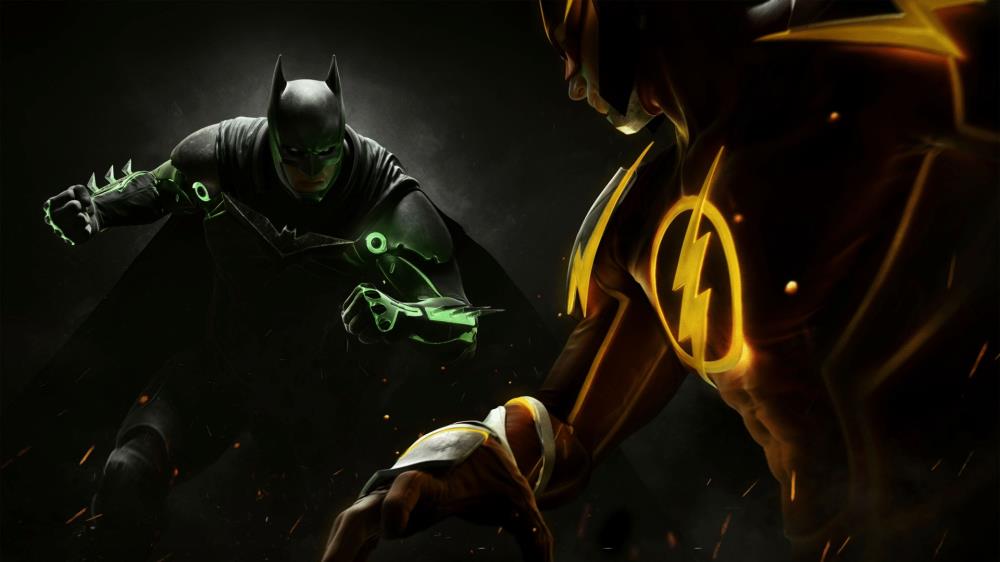
Thanks to the slip-up of an artist working on the title, we now have more evidence that a new Injustice game is in the works.