
The word ‘fun’ is attached with gaming culture to a rather excessive degree. For roughly thirty years, the simple feeling of amusement or the quality of being enjoyable has been the key, oftentimes only, focus on the creative side of developing video games; even development books have been crafted into understanding and harnessing fun. Think about that: for as long as most of you, the audience, have been alive, video games have been constrained to this limited range of human experience. Within the game community itself, it’s not tough to spot a sneering passerby to look down on games of today with a saying like “I remember a time when games used to be just about fun.” While years have passed since I initially saw Warren Specter’s commentary on the subject during the beginning of the 7th console generation (1), the word ‘fun’ still seems to be very pervasive in this industry today, to the point that it can seem nigh impossible for us to move past it.
When looking at the big picture in regards to responses I typically see about games, there’s sense behind fun’s inclusion almost anywhere you turn. If you were to ask someone why they like games so much the short-hand response will often be “because they’re fun.” But to me, that kind of an answer is incomplete. That’s not to say games aren’t fun. Far from it! The problem is ‘fun’ is a half-empty term which leaves an underdeveloped answer to the original question. It’d almost be like photography enthusiasts saying they like pictures so much “because they’re pretty.” While such a statement may be true—eye of the beholder and all that, there’s little meaning behind such an explanation. Nevertheless, the self-damning constraint of fun looms overheard acting as a filter used in describing the quality of most games or when something does or does not work in a game.
There’s an inherent problem in that fun standardization because what makes a game so appealing to one person can be different to another. Not just in different tastes in genres, people can get all sorts of different reactions from separates elements in a game. Some gamers may get more fun out of a game’s mechanics, some may be in it more for the story, others may be more appreciative of the technical aspects or it feeling polished, and on and on it goes. Nevertheless, that hasn’t stopped the publication of all-in-one fun examinational books on gaming, such as Raph Koster’s “A Theory for Fun on Game Design” (2). One portion of that book suggests all games being based on pattern recognition and the fun being in balancing an increased complexity in the game’s systems as the player’s skill continues increasing. While that sort of rationale does seem to fit in perfectly for platformers and music titles I’ve played and found myself glued to playing for hours on end, it’s rather reductionist on what all games are and what makes them enjoyable just to make an interesting hypothesis. Where’s the room for fun credited in making a custom avatar in character creators or anything else that falls outside the system mastery discussed? The point is that while a lot has been written on different kinds of fun, the term itself is an open-ended emotional response to countless stimuli that’s typically unhelpful in quantifying what makes a game work.
Despite just how limited its usefulness is, fun almost seems to get singular focus from those within the industry, creative and/or corporate (depending on the game). Depending on which title it's being crammed in, like Spec Ops: The Line (more on that later), it can feel jarring and misplaced. Just think of that same filter being enforced against some of the greatest art films or if the editor sat Orwell down to discuss how to make 1984 more enjoyable. Ridiculous as that seems for those examples, it feels like so many games go through this kind of an unfitting examination.
The same sort of stretched logic occurs in the game journalistic establishment ineffectively prying in that word into everything that’s played. I’ll still sometimes see that term sprinkled about in explaining the “fun” of the horror genre or how an interesting narrative decision or theme was a “fun one.” Heck, even this site’s user reviews has a sub-category called ‘fun factor’ that really just translates to ‘miscellaneous/other’ depending on what’s being praised about the game. Looking back at some of my reviews, an increased fun factor score hasn’t always translated with what I’m actually praising. Such is the case with Papo & Yo and its ending. Describing that sort of finishing stage of the game as anything synonymous with enjoyable or amusing is just wrong, by my estimation. When understanding what the symbolism represents during the finale and the autobiographical qualities of the game itself, everything about it is tragic and unsettling. That’s what makes it so powerful. Despite that and the irrationality of it being used in other cases, however, fun is pried in as some quantitative measurement akin to how well a steak’s been cooked.
So, the question then becomes: why is a word with such limited utility brought up to the point that it fetters how this particular medium should be defined?
There’s no other artistic medium out there that holds such exclusive expectations from an audience. They’ve been the better for that. Just think of a vibrant art form which has the ability to be terrifying, contemplative, and any other broad range of human sensations is limited to just the singular emotional range of fun. It’d be tantamount to every picture in an art gallery having to be determined as good-looking first before getting acknowledgement or every book being a standard Tom Clancy-esque blockbuster. While I’m sure no one minds seeing these sorts of genres or expressions within those mediums to some metered degree, some of the most compelling pictures, books, and more don’t have an ounce of what’s traditionally considered fun in them. Sure, the types of movies that are the most fun or the songs that are very catchy typically garner the most recognition, but that’s never meant to suggest such qualities now become a requirement for their respective media.
With those comparisons considered, that previous question brought up still remains. I couldn’t say for sure if there’s a bunch of tangential reasons I haven’t accounted for, but there’s one aspect that part of the corporate and consumer level seem to share: fear. What would happen if we were to step outside that old shield of just being considered a pleasant timewaster or plaything and say we can be like any other art form? Perhaps said statement of validity also folds us into those same responsibilities and opportunities for said expressions to be criticized. Or, it may challenge the status quo of the games we already know how to craft.
For whatever tumult is feared to occur, it’s dwarfed in comparison to the potential of expanding our dialogue as to why we think X or Y game captivates us when it seems fitting. Take something like Spec Ops: The Line for example: maintaining traditional third-person shooting that’s dissonant from a heavier narrative that informs the player of what the shooting actually means, providing an overwhelming sense of guilt over completing said objectives. The same can be expanded to numerous indie titles providing a different kind of compelling experience, AAA games like the Souls series that captivates in how far it’s willing to push the player by trying to kill them to an incessant degree, certain games that can cause players to be physically hurt, and more. There comes a point where we ask why fun must be used to compare and contrast these different emotional responses instead of just accepting them for what they are and what they accomplish.
Even in games focusing on something with the traditional understanding of fun in mind, the overbearing demand to ensure every single interaction within the game is simply pure entertainment cripples what a developer can create. One example this rings very true is in Dead Rising’s heavily-criticized save system. The original in the series only gave players one save slot in order to present a greater sense of weight to their actions. Since there was a specific time limit framed around the campaign, players had to weigh in the demands of moving the story forward, helping citizens in secondary objectives, and fun zombie slaying with the gravity in knowing nothing in that run-through can be altered once the overwriting save was executed. Whoever you couldn’t save died for good and you couldn’t jump over to another save to see which actions would give a better outcome. Many gamers hated it since such a design ran against the 100% completionist attitude and ranted about it so much that developer Blue Castle Games “fixed” the problem in Dead Rising 2 by giving multiple save slots. DR1’s decision seemed like such a solid idea of implementing fun arcade gameplay that was weighed down by an interesting design choice. To me, it’s almost similar to what makes Star Wars and The Lord of the Rings as engaging of popcorn blockbusters as they are: because what makes them so enjoyable is by not needing to be fun all the time.
While I can’t say how many people may respond this way, I anticipate some people would ask this: “who plays video games that aren’t fun?” I believe that sort of response is given just because of how often fun’s become ingrained in video games already and that such a word is crammed into the gaming atmosphere so much that it coalesces with what games actually need to be: engaging and worthwhile. While most popular stuff across all media consists of fun, it doesn’t mean we consume games just over one vague sense of emotion. It’s done because we’ve found usefulness in that experience on some level. It’s how one can find the same level of utility in a Kirby game or Actual Sunlight in completely different ways.
Even when looking at the past year of what games I’ve played since then—only slightly represented by what I’ve bothered to review, I’m actually glad not everything I’ve purchased was on Super Mario Galaxy’s level of fun. Consider that my official “beans has gone off the deep end” confirmation if you want, but I really believe that when looking back at the various titles that have captivated me in different ways. Being just as equally gripped in a title like Papers, Please that could use its mechanics as a more palpable way of showcasing such a depressing era than any polished non-interactive cut scene could, it’s great to mix in that sort of very un-fun title with everything else. Sure, SMG is practically the gaming equivalent of the sweetest candy out there; but just like candy too, there is a limit to how much one can have before it eventually tastes awful.
As a certain set of popular and unpopular titles have shown, games can be educational tools, autobiographies, political statements, methods to challenge our spatial reasoning, pop culture icons, and systems to examine the human condition. They can be all those things and much more that weren’t listed, yet it’s the only art form that seems to have a clear burden by the popular conscience of having to be fixed on one pleasurable emotion, in regards to both terminologies used in discussing games and acting as a set of blinders to creators. And that responsibility may be hardly related or even contradictory to those other things games are capable of being.
I’ve harped on reaping more diverse methods of what games and games discussion can be before but it seems fitting to repeat that sort of ideal once more. Regardless of the challenges that lie in stepping outside the old-guard mentality of what games should be, no prosperous medium like this one should squander its potential because of that. To remove those sorts of archaic demands for a game will not only reap a more diverse medium as an outcome but also, ironically, change into a more fun one as a result.
Credit to these links:
(1.) http://www.escapistmagazine...
(2.) http://www.theoryoffun.com/
Microsoft announced its financial results for Q3 of fiscal year 2026, including an update on its gaming Xbox business and more.


Not looking good. Hopefully Asha Sharma is able to turn Phil’s disaster around.


To me it's still quite remarkable how they can cash-in 5.3bn in revenue in a single quarter, since their hardware is basically dead.

The charity event will be streamed live from Gamescom in August.
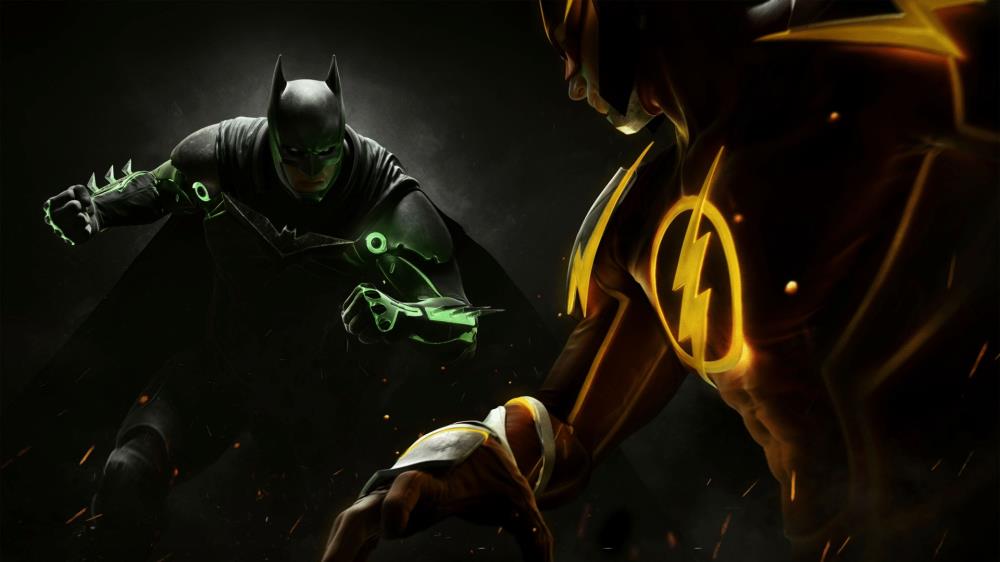
Thanks to the slip-up of an artist working on the title, we now have more evidence that a new Injustice game is in the works.




Hope everyone enjoyed the blog. Feel free to leave your comments below.
I wonder who else remembers that Warren Specter piece back in the day.
Fun just means it's being enjoyed. It's not a singular thought or feeling, because things can be fun in many different ways. People go to horror movies because it's fun to be scared and jump. I go to art museums becuause it's fun to appretiate the works and laugh at the really stupid-looking and bizzare ones. Even the most powerful tragedy dramas are considered fun, because they are good stories that are interesting to follow with a strong emotional impact, thus entertaining.
To be fun, something has to have merits to its design and emotional appeal. That can take many different forms that will draw in many different kinds of people.
But yeah, I agree that "fun" as a term is too vague to be informative or build a game from. There needs to be specific details involved about what kind of enjoyable experience the game will offer and what types of players it is aiming toward.
People don't generally want a representation of fun in videogames nowadays. They want a safe way of experiencing in your face danger (e.g. The Last of Us) and even commitment (e.g. RPGs). Whilst playing these might feel like fun that's out of a sense of 'that was a close shave'. In the heat of the action, what your character is doing would not itself be fun to your character (nor often to yourself). It's harrowing.
Sunset Overdrive is going against this trend by being more about all out fun. Yes, you could technically be in danger from mutants but, on the other hand, you can always be above them (on telephones lines etc) or platforming around them from a respectable distance. Comparisons to recent games e.g Dead Rising 3 might have some bearing but mainly it is a throwback to the arcade sensibilities of Sega who were about fun. Think about Crazy Taxi for instance- your character never absolutely HAS to be in danger- the taxi itself is your protector and it's not like you have police or angry pedestrians out to get you.. Jet Set Radio Future on Xbox stripped out the danger of the original Dreamcast Jet Set Radio by relegating the police chases to an end of level tiny skirmish and increasing the grinding sections and speed, making it far more of a fun pure rail based platformer than the original gave you time to enjoy.
Pure fun's coming back but there are a load of survival horrors lined up that are blending with fun more than the creaking doors of Resident Evil ever allowed.
You watch extra creditz didn't you, it talks about this subject about fun. In a way we need to look at games as engaging experiences not just fun.