
“The term ‘clone’ has been a hot word in the gaming industry for a long time. The process for identifying one is simple: the gamer views a newly-released game that pushes the genre forward-or possibly creates a new genre altogether, perceives later-released franchises within that same genre borrowing ideas from the originator, and then call it a clone of said originator.”
This is part of the opening paragraph of a blog I made last year. Despite feeling as though I had my say on the topic and move on from there, it’s still such an interesting area of gaming to discuss simply due to the new wealth of clones I’ve been able to play and enjoy since then—and because my ongoing Star Wars subtitle shoehorning demands that I recognize the animated film as well. But rather than being impelled to use a specific series and a slice of its fanbase as a springboard for discussion this time around, I want this to be broader in scope and focus on clones from the past and present that have put the notion of being so similar to such a great use and to question why we, from a "kind of somebody, I guess...wait...who are you again?" gamer like me to popular gaming intelligentsia, seem to have such a tapered perception of originality.
It’s rather interesting: despite just how often everyone pegs most upcoming AAA-budgeted IPs as a Call of Duty, Gears of War, or Grand Theft Auto clone, the venerable Golden Age of gaming was so much more evident in this regard. And I’m not just harping on the obvious corporate schemes to capitalize on making the next big gaming mascot, and perhaps secure some kind of toy line. I’m focusing on that ‘Matryoshka doll’ effect of seeing a ‘new’ 2D platformer at the time that would lead back to it being labeled a re-skinned Super Mario Bros. (despite SMB being another Joust), certain Golden Age games spawned from Contra, every SHUMP was Gradius, you get the idea. Point being: if you are to find yourself stumbling into a large arcade spot that’s still running it wouldn’t take long to notice the entire floor filled with the same six or seven games just outfitted with different chip tunes, aesthetic designs, and characters.
It’s strange to now look back and think about because I’m sure I, and many others that had some kind of experience with those earlier eras, probably never took a chance to even sit down and notice it. Why would that be? Well…I’d reason it probably had to do with the new car smell for practically everything during that time. We often forget that “no holds barred” approach of game design of the 80’s and up into the 90’s but during that time the industry was mostly filled with pioneers just making their own rules as they went along. Typically, most couldn’t go to school for game design and the business side still had to keep going by constantly creating new products. Those that filled the role to make these games more often than not got there from different artistic, literary, or other conceptual disciplines and instead of reinventing a genre as we know it instead extrapolated gameplay formulas from elsewhere and just built upon them.
Even though I may have been only a passive observer through the means of interviews in gaming magazines and the like with no direct experience within gaming classrooms (of now or yore), I can’t shake the feeling of there seeming to be a correlation between the subtle ostracism of these “non-gaming type artists” due to the the standardization of game design schooling and more discussion about game interface being the SOLE aspect to focus on which contrariwise made things like artistic visual design be regarded more as fluff. Now, those oft-identified copycats that had very similar, or even the exact same, formulas from an originator morphed from being inoffensive into some kind of taboo as far as the upper echelons of game culture were concerned. This precipitously turned ‘X’ new game into just being categorized as "just another ____________" with different colors and narrative as a negative right out of the gate; an attitude that still seems to linger on, even to the point of certain developers publicly addressing this to game reviewers ( http://www.ign.com/articles... ).
None of this is to say that dissecting a game down to that fundamental game design level—with all ‘garnishes’ removed—shouldn’t be done in order to see if that foundation works, rather to point out that said foundation is rarely the only or even the most important part to almost any piece of art. Granted, various art forms in sculpture, paintings, film, and more can and have been examined just on their foundational levels but that’s not what has MADE them the most well-regarded works in history. Citizen Kane may have a well-written screenplay, but things such as the design, advanced filmmaking techniques, and more are what have bolstered its reputation as one of the most critically-acclaimed films of all time. Make no mistake, I’m not trying to opine new ideas with controls or gameplay innovators shouldn’t be encouraged, only to say it’s seems unfair to have a pessimistic outlook the moment a game decides to push a different envelope in a category like visuals or story instead of interface. Gaming principally may not be a visual or storytelling medium but that doesn’t mean we should outright ignore a game for using an established template and doing something that’s enjoyable or even crazy on a non-gameplay level.
The greatest example of ‘template-maintaining,’ that was readily encouraged back then had to be the beat-‘em-up genre in the 80’s and 90’s. Many of them were really just Double Dragon or Final Fight in different skins, yet certain individual titles are still regarded as classics despite the fundamentals between them being interchangeable. The reason there was nothing wrong with it is because of that template being so good and simple in which licensed IPs could replicate all of the popular parts from the TV show/comic book/etc. and original games could show the developers just having a fun time creating out-of-this-world enemy designs, strange locales, and even an extra gameplay wrinkle or two. Heck, I remember the first time I had a chance to play TMNT: Turtles in Time on SNES. Despite it not taking long to see this lovely title look and play like the next beat-‘em-up my friend and I would put into the console next, the genre was perfectly ideal for what fans like me wanted: bring aesthetics from the show, use karate on The Foot Clan, and don’t screw up anything. Everything worked so well which is why the same groundwork was spread across dozens of other licensed IPs.
I know I’m lingering in the past here, perhaps to the point of frustration for some, but I guess I can’t help but be transfixed on just how pronounced the cloning process was back then and how peaceful everything would be now if we weren’t so much more discouraging against unoriginal templates before trying it out. Because I think the problem isn’t in the lack of fresh formulas but rather HOW they’re being expended.
I’ve certainly been poked in the past for having the “audacity” of really, really enjoying Call of Duty titles past Modern Warfare 1 but in my eyes it’s typically done as good a job as it could to keep above the slog of other military shooters by polishing the template it created—which I admittedly do still like to give it some credit for—and placing it in several different eras since ’07: World War II, Vietnam War with a goofy espionage type thriller in the background, oftentimes modern, and even a near-future war era with a plethora of weird sci-fi concepts. Compare that to the others trying to copy it, either in subtle or obvious ways, and just cynically producing that set of Black Hawk Down moments without the same level of theatrical flair makes it feel a bit more boring. Heck, even with that, of several, other reasons I purpose for the series’ defense—though my tolerance for it has begun to wane overall, I can completely understand others disregarding that when considering how copying within a series was sometimes done in the past. You don’t have to look much farther than the Megaman series during the old-school age to see sequelization that wouldn’t get much flak today: rigorously keeping to a similar 2D platforming model, yet going through several visually marvelous places filled with interesting enemies ranging in shape and size that would demand new tactics, and always guaranteeing an assortment of excellent music.
When looking at how that interface cloning was used by different series back then, the JRPG genre is the prime example of doing that so well and innovating in the way of complex stories. Like with Dragon Quest’s sequels and other JRPG series that simply followed the original DQ/FF setup, part of the reason they were able to do so is by being satisfied with that foundation and innovating in the area of story depth and characterization. We’re still able to see that kind of inspiration leak through the cracks and crevices of the medium today too. My favorite example of that is this/last gen’s Batman Arkham series. When getting down to the nitty gritty of the gameplay, it’s tough for me not to notice someone like a DC comic writer must’ve figured to put Batman and his universe into something close to Assassin’s Creed’s fundamentals: large area to explore that has a 3D Metroidvania-esque structure and a simplistic attack/counter system that’s revamped for Batman’s fighting style. And even though it’s “just” borrowing, Rocksteady’s two entries are widely considered the best games of the seventh generation by a lot of folks, and certainly regarded as the best Batman games since the NES one (which coincidentally was Batman in Ninja Gaiden).
The notion that gameplay and advancement of system specs are the only aspects of forward evolution in this medium that matters is one I have to refute. Sure, it would be more idyllic of games to innovate on all fronts all the time, but in my opinion a game that can improve of what the medium—or even a genre within the medium—is capable of in visual design or story/storytelling can hold a great deal of importance in my eyes just like advancing in gameplay interface. And there are two games I’ve recently played that come to mind that prove this: Star Wars: The Old Republic and Spec Ops: The Line.
SWTOR (The Old Republic) was Bioware’s first leap into the MMORPG arena. The hype train for it was tremendous, with some of the greatest CGI trailers made of this generation, but some derision was leveled towards the final product solely due to the fact that it kept quite closely to the very, very old holy trinity setup for raiding and what had to be just a modded interface from the most recent WoW expansion. It’s understandable to see some enthusiasm lost in only seeing a few nuances and a polished structure to a formula that’s lived on for more than a couple console generations. Even I was miffed (and delivered a downgraded score in the gameplay department) given that a title like Star Wars affords any developer the opportunity to be extremely daring without the risk of losing much in the way of sales, but I still contend that developer’s fixation of non-gameplay components still makes it worthy of greatness. To me, the art design was an inspired choice and the unimaginable dedication in bringing your character’s story to life by having almost every quest be given in fully-voiced conversations a la Mass Effect just ticked all the right boxes for me.
Spec Ops: The Line has to be one of the best surprises of 2012 and is probably one of the most important games of this generation—and one I’d certainly like to review in the near future. Although I find the level design and some gameplay wrinkles to be quite good, it mostly looks like it plays and actually plays like a not-as-polished Gears of War clone in a modern military setting; a smorgasbord of the most worn-out ideas of this generation. How exciting, right? But the reason it became such a talked-about title is that it used that generic backdrop to not only tell an original story but one that also subverted preconceptions tied in with this typical setting and provided a stark, brutal criticism of the genre as a whole.
In conclusion, I’m rather worried that part of the reason games aren’t as innovative as they could be in any regard is that development seems to be increasingly cut off to new voices of any other discipline entering the medium (though Josef Fares' involvement with Brothers: A Tale of Two Sons shows this isn't always the case). If there’s a great writer who thinks the gameplay framework of yet another third person shooter is the best way in which to tell his/her story or an artist that believes something like a Legend of Zelda clone is the best option for him/her to paint a rich canvas, we should not only encourage them but also take care not to mark it down on a whim just because it looks like they’re satisfied with modification rather than complete reinvention of the wheel.
Microsoft announced its financial results for Q3 of fiscal year 2026, including an update on its gaming Xbox business and more.


Not looking good. Hopefully Asha Sharma is able to turn Phil’s disaster around.


To me it's still quite remarkable how they can cash-in 5.3bn in revenue in a single quarter, since their hardware is basically dead.

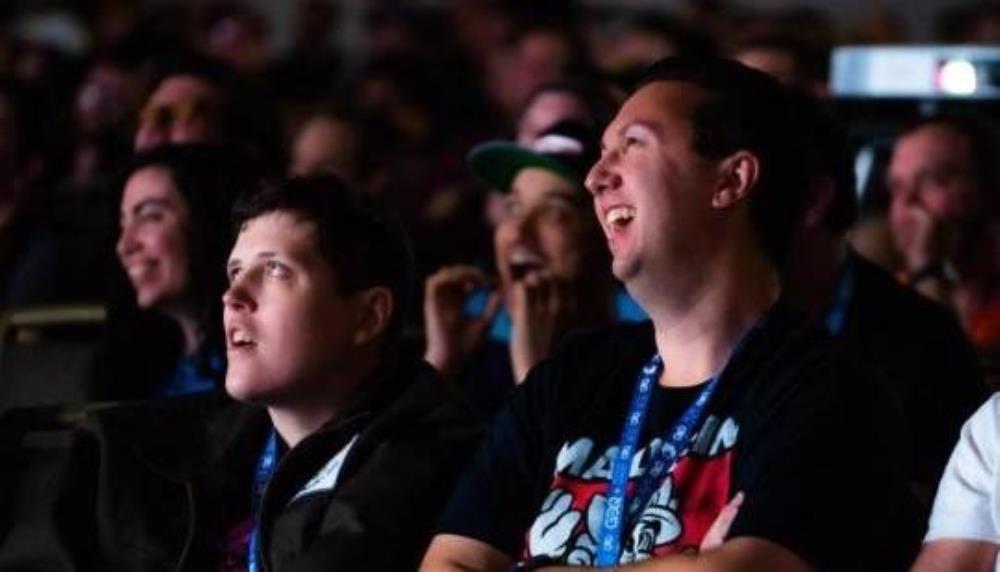
The charity event will be streamed live from Gamescom in August.
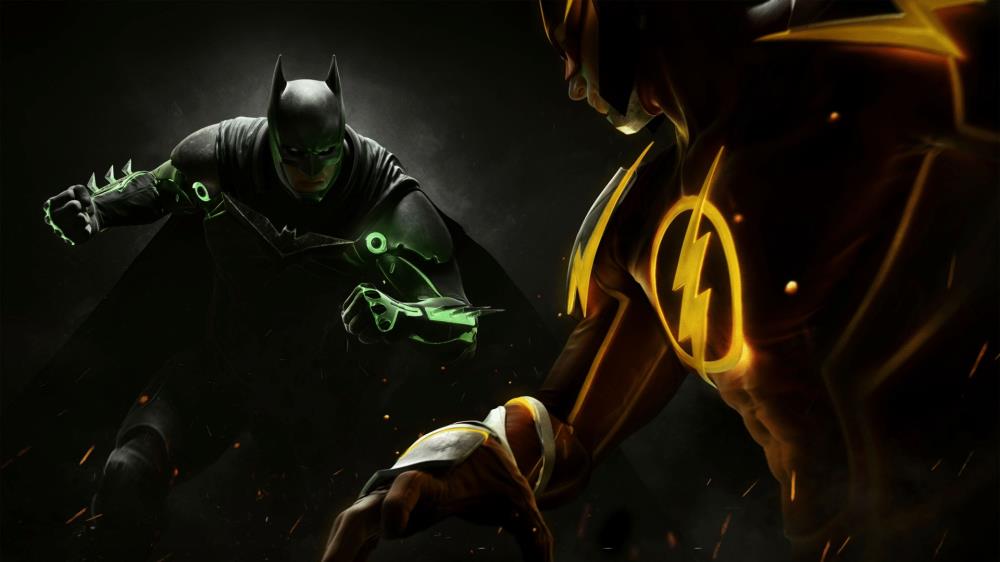
Thanks to the slip-up of an artist working on the title, we now have more evidence that a new Injustice game is in the works.




It's rather funny that the Star Wars Holiday Special came to my mind just while cleaning this one up too. What timing to remember that! XD
Anyways, feel free to leave any comments. I'd like to give a quick shout-out to smashcrashbash for being one of the igniters for me to revisit this topic with a different approach.
Hope everyone has a good Thanksgiving (for those who're celebrating it). http://www.youtube.com/watc...