
You know things are about to go down when I have to uncursify two words in the title.
I can understand the annoyance any poster may have in seeing this topic being brought up again since it’s been a reoccurring discussion for almost the entire year of ‘13. The reason I still feel obliged to attempt my first official igniter into this ongoing sexism debate is simply because it’s become rather dull to just react, react, and react to other arguments, and most of the points I can—currently—think of for why they’re worth discussing have been made before. It’s only proper to finally provide a clearer window to my mind regarding this complex topic. Although I doubt I’ll be able to successfully pry in any sort of nuance to this particular tired argument, I still feel it necessary to try.
…
Still here?
The history of where we are now is rather uncontentious: men's dominant role across every critical facet of political and peronsal life became questioned during the turn of late 19th century. That push started out simply enough as suffrage (voting) which then changed to women’s liberation (reproductive and pay) until finally cultivating into what we have today: often-considered 'third-wave feminism.' The reason I didn’t parenthesize anything stems from what I can't but consider a danger intrinsic in any sort of political movement; namely, vociferating against clear injustices for so long that once said wrongs HAVE BEEN righted there's need to aim said energy elsewhere. When you cultivate such a mindset for your complaints there’s a greater risk of its volatility to remain equally enraged across topics that may not deserve it; like the genuineness of what MLK did to break racial boundaries that has now tragically descended into disgusting examples of race-baiting by the likes of Al Sharpton. And since there’s no broad hurdle to challenge in regards to law, that always-on fighting spirit now sets its sights on negatively-portrayed female role models in media, typically in video games.
As everyone’s aware at this point, the key term used in these arguments is objectification. In the proposed arguments of objectification there are two distinct areas that are typically brought up: strong female role models are improperly represented, shallow, and serve to act just as eye candy, or they’re property waiting to be liberated by the male hero. Let’s look at the latter aspect because it fits in with the annoying title.
The argument posited goes as such: “certain video games are sexist because women are typically helpless princesses waiting to be saved by men.” The targets of these accusations are typically aimed at two of Miyamoto’s most famous characters: Princess Zelda and Princess Peach. Although these two do operate differently based on altered narrative styles for each, there are two qualities often associated with them: they’re leaders and recurring kidnap victims. The accounts of a princess being saved by a hero is a mostly-innocuous reappearance of a classical storytelling archetype that has dated back for ages; but the fact remains, the Super Mario Bros. and Legend of Zelda series are maintained as two of the most popular foundations of narrative videogames. This in turn has made the trope a reoccurring element in which, to feminists, signifies dated gender roles. Although I used to not see a problem with it—and still have a nostalgic likening to it in the proper context, I can at least meet on some sort of middle ground now and say I can…concede to a degree.
Just wait.
Although the goal of my blog is to challenge the argument for those two characters, it would be intellectually dishonest of me to deny that this critique of women in gaming too often acting as property has compelling evidence Before anyone feels irritated at the notion of this agreement also meaning I see no problem in placing games in a greater context of the society and circumstances surrounding them, let’s at least take a minute of introspection and perhaps just meet on the ground of the whole ‘women’ thing in games has some ways to go yet for the sake of the argument. And while that same aforementioned honesty which impels me to agree with the reasoning brought forth, it also impels me to defend these two princesses.
--The Legend of Zelda--
Since the beginning, this fantasy series, which has expanded to a much deeper lore than expected, certainly takes great helpings of ideas from Joseph Campbell’s monomyth: a destined hero, a princess, a villain, the call to adventure, supernatural aid, you get the picture. The plot in most titles typically has Zelda being a significant piece in the puzzle for Ganondorf to obtain the Triforce and take over Hyrule. Certainly, some form of imprisonment is cast upon her, immediately or otherwise, but there’s one consistent way of categorizing her using the context and subtext of the narratives.
An important thing to remember if/when this plot element is reused ad nauseum, there should be an effort to differentiate between rescues being undertaken due to compassion OF the imprisoned character (see: human decency) or to retrieve perceived stolen property. The difference between them is the sexual implications that are deep-rooted in the damsels in distress tradition. That’s a red flag in this case already since this particular archetype she’s in question of embodying was traditionally framed as having the villain snatch the princess for purposes up to and including rape (losing her ‘worth’ in the process) and the knight rescuing her and her virginity before time ran out. But in Zelda’s case, the antagonists never really display that kind of pernicious motivation but rather a specific power she possesses. And even sexuality in this series in general has never gone beyond the E-rated, olde-fashioned ‘Mom and Pop saying they’d make a lovely couple’ routine until the most recent Skyward Sword, but in that special case the new antagonist is…well…let’s just say his motives are most certainly NOT sexual in nature either.
A more meticulous examination shows how much more often Zelda would fall under the ‘Badass Damsel’ trope. Even in the earliest LoZ title, which follows Joseph Campbell’s The Hero’s Journey much more closely, we eventually learn the sleeping princess motif only occurred because she decided to stand up against Ganondorf and separate the Triforce of Wisdom across the realm. From that beginning then on, there have been examples throughout the series in which she’s made independent choices that would vary from humble submission in order to save others, assuming alter egos to aid the hero, or even going so far as to fight alongside Link. Sure, there’s some level of criticism to present for how inharmonious Zelda’s inactivity occurs when the tom-boy Sheik and Tetra disguises are traded for dresses, but to only hang these moments up as an effigy of female subservience robs her of the qualities ranging from bravery, wisdom, and perseverance that are displayed in a much greater quantity.
--Mario series--
For more than half of the Mario games, the action is driven by Bowser coming up with some scheme to capture and imprison Peach. There’s no argument there; however, conventional wisdom equating this as another lazy rehashing of The Hero’s Journey is worth debating. As early as Super Mario Bros. 2, Peach has even opted to fight alongside Mario and recently the roles were reversed in her own game: Super Princess Peach. Getting a bit more off-topic, but still worth pointing out.
[Off-topic thought bubble extension since I’m here: I’m surprised this role reversal has actually been used as FUEL for the 'Peach sexism' argument. I get where someone would question the “mood powers” mechanic weaved into the platforming gameplay, but within the context of the story it’s actually kind of interesting. Bowser’s Vibe Scepter device results in everyone else in Mushroom Kingdom being under the sway of its magic EXCEPT for Princess Peach, displaying a superhuman level of emotional self-control.]
Anyways, recall the sexual connotations listed earlier regarding this trope. Here, it’s a little bit more dicey. Although Bowser does indeed explicitly display interest to HAVE Peach’s hand in marriage has cropped up in the likes of the Paper Mario series, he’s usually been subjected to underling to some greater evil. The rest of the time however, his nefarious plans in capturing her are either political power plays or just basic, destined-to-fail jabs at Mario. Outside of certain pieces of info (she has a “surprise” for him) that aren’t actually tangible, Peach and Mario seem to have a chaste relationship as far as we can tell. In fact, the wider story suggests Bowser’s mortal enemy is Peach and Mario arrives later while the fighting between the koopas and toads is occurring.
The visual design for Bowser also provides some interesting details. Just look at him for a moment: a big monster-turtle with spikes shooting out of his shell and horns on his head. He and his koopa race have definitely been inspired by these demonic figures in Japanese folklore ( http://en.wikipedia.org/wik... ). With the inclusion of horns that have no connection with those mythical water demons and his strange proclivity for places filled with scorching fire oozing out of his overwhelming fortress(es), it’s reasonable to suggest he’s been designed to be a satanic figure. If that assumption is true, wouldn’t that mean Peach parallels to something of a Madonna figure in some respects?
This line of thinking encourages another examination in a recent Mario game I’ve played. In Super Mario Galaxy, we’re given the closest thing to some kind of theology that’s followed in the Mushroom Kingdom. A basic primer from my review can fill you in:
“The story begins with Princess Peach inviting Mario to the Star Festival, a convivial celebration in Mushroom Kingdom that occurs every century [for a strange comet that passes by]. Shortly upon arriving, Bowser and his armada of spaceships rip Peach’s castle out of the ground. Despite his best efforts, Mario is not able to stop Bowser from succeeding in his goal. The chase we’ve come to know and love since the NES era is on once again. Mario’s unsuccessful first attempt to save Peach resulted in him discovering the enigmatic enchantress Rosalina, her comet observatory, and her companions known as Lumas. Since Bowser had stolen all of the stars powering this station, Mario’s tasked to retrieve them scattered about different galaxies in order to go to Bowser’s lair at the center of the universe.”
Basic on the surface, but I find Rosalina, and the storytelling method of how you get to know her (would love to make a blog focused on that), to be quite remarkable. Who was at one time a young girl but now seemingly immortal, Rosalina uses this observatory to traverse across the galaxy as a type of nursery for the Lumas she takes care of until they become planets, stars, and more. These Lumas even go so far as to call her their “Mama.” Starting to see any connections?
-A strange being that lives in space
-The arrival of her observatory whizzing by the Mushroom Kingdom, which those residing on the planet perceive as a beautiful comet, causes them to have what could be seen as a holy celebration
-Raises the components of the universe from childhood to adulthood
-Bonus: Her attire seems to symbolically represent purity and holiness similar to paintings depicting The Virgin Mary
We’re talking about the closest thing to a Creator in this fictional world. So then, one of the most popular series in gaming claimed with pushing feminism decades back provides a sovereign individual that’s both female and a mother figure, complete with creation reimagined as an act of maternal fostering rather than some big, masculine undertaking displaying almighty power.
All of this isn’t to say any type of criticisms cannot nor should not ever be raised with these complex issues, only to state those delivering these complaints should look more closely at the subject of their indignation. These two may look like simple blondes in pink dresses, but a deeper look suggests that’s selling them way too short. Sure, outward appearances suggest they’re in no condition for the grand dragon-slaying adventures taken by the protagonists, but to suggest that makes them inherently weak comes off as a counter-productive argument to me. In fact, if you’re going to proclaim any female character’s muliebrity as an inherently weak trait across the board, even to the point of disregarding the context and tone in which they’re placed IN the story, aren’t you creating an equally-dangerous message to young females everywhere that strength can only be displayed through physical, "manly" feats of destruction? I only pose that question to humbly submit the need to look back at those socio-political origins I stated previously to see if that is what this movement initially had in mind.

Microsoft announced its financial results for Q3 of fiscal year 2026, including an update on its gaming Xbox business and more.


Not looking good. Hopefully Asha Sharma is able to turn Phil’s disaster around.


To me it's still quite remarkable how they can cash-in 5.3bn in revenue in a single quarter, since their hardware is basically dead.


The charity event will be streamed live from Gamescom in August.
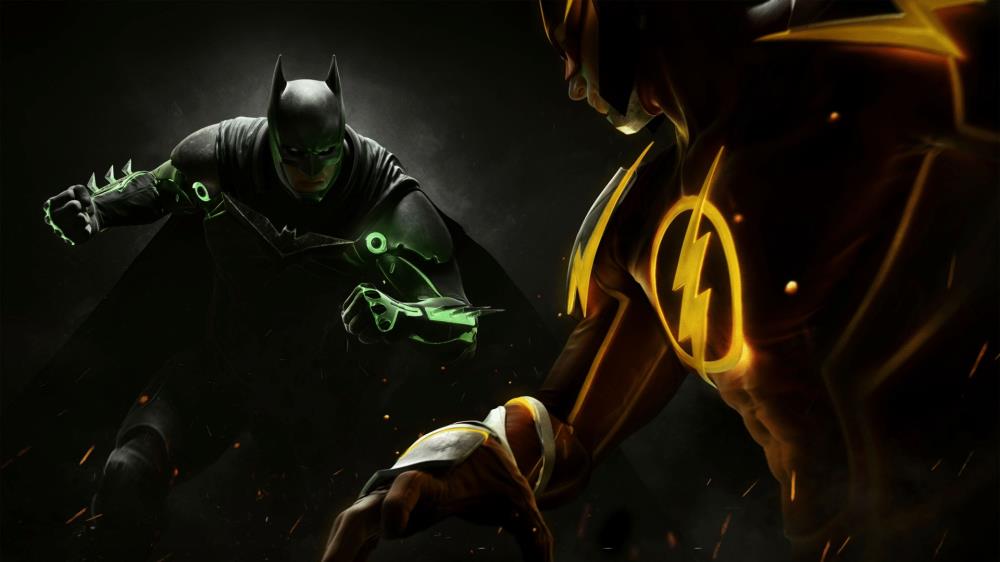
Thanks to the slip-up of an artist working on the title, we now have more evidence that a new Injustice game is in the works.




Hope everyone enjoyed this dead horse that's been beaten to a pulp months ago. :P
Yes, yes, yes, I can understand some annoyance in this being cropped up again--almost as if it's treated like a 'X number of days since last accident' chart--but I just felt very excited to take a shot as well. In any case, feel free to leave a comment.
Honestly i find this entire sexism debate completely absurd, and the arguments people use to counter the points raised by the pro-sexism crew are even more absurd.
This isn't real life and i think anyone who plays a video game and see's a sexism issue needs to get a life. Likewise those who feel a need to counter the issue need to stop feeding the idiots.
Coolbeans, ilu.
I know the topic is tired, but I kinda feel like you've done the best job of demonstrating the selective evidence and discussion that circles Zelda and Peach.
Loved this blog, loved it, loved it, loved it.