
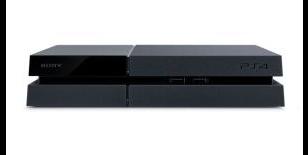
Sony recently announced at a press event that the PS4 would release during February of 2014 in Japan, 3 months after the Western market release in November 2013. The represents a big shift from every other Sony console release, all of which have launched either before or simultaneously to Western markets.
Yet the strategy is symptomatic of a broader trend in the Japanese gaming market that has been developing over the last decade. While we tend to associate Japan with a strong gaming market and Sony’s consoles have traditionally done well at home, the world’s largest consumers of console video games are far and away Western audiences, particularly in the US.
For a land that is home to some of the world’s biggest tech giants and innovators, Japanese gamers have, for some time, been slow to adopt the latest gaming hardware. When the HD generation arrived, the 'new' high-def PS3 was outsold steadily by the much older PS2 for nearly two years while the Xbox 360 failed completely to capture consumer attention. The same was the case with the launch of the PSVita in 2011, which has been playing second fiddle in sales to the PSP in face of attempts to reverse the PSVita's fortunes.
In recent years, the main battles for video game supremacy have been fought between US and European game studios, while big releases from Japanese studios have been relatively few. The makeup of Sony’s wholly owned studios is telling. Of its major holdings, six are based in North America with a further five in Europe. This compares to just two major studio holdings in Japan, SCE Japan and Polyphony Digital.
In 2010, legendary Japanese game creator Keiji Inafune was lamenting the decline of the Japanese gaming market, stating Japanese developers were creating ‘awful’ games. More recently, Hideo Kojima, the mind behind the lauded Metal Gear series, stated Japanese studios needed to emulate their Western counterparts, or be left behind. There has in recent times been an obvious shift in both attitudes and gameplay trends to accommodate Western tastes in Japanese gaming.
But Japanese studios are still making some of console gaming’s most sought after franchises and original titles, despite what we might think. Metal Gear, Gran Turismo, Final Fantasy, Monster Hunter and Mario games all attract huge attention and sales when their latest iterations arrive.
But Sony, and other gaming giants for that matter, recognise that when it comes to consoles, Japan is now a secondary market compared to the US and European territories. Interestingly, the announcement of the PS4’s release date in Japan also coincided with the reveal of a new, cheaper, slimmer PSVita, as well as the micro-console PSVita TV. This is significant in that it represents large players recognising the handheld and casual market as a greater force in Japan as opposed to home consoles tethered to people’s TV’s.
Inafune and co. may have been right to note that there has been a general decline in Japan’s console market compared to the heady days of the PS2, however, in recent years, the overall gaming market has actually boomed in Japan. This growth spurt has been triggered by mobile gaming and the rapid adoption of smart phones. Dominated by casual and indie studios, Sony are clearly making a push for this segment with Xperia phones, Playstation Mobile, renewed focus on the PSVita and now PSVita TV.
But console gamers can still breathe a sigh of relief. The next generation of consoles has in Japan, and the rest of the world, still fired up the collective gaming imaginations of all the major players. We will still see amazing console games made in Japan for Sony’s, Microsoft’s and Nintendo’s consoles this generation.
Just don’t be surprised if they feel a bit more...Western.
Microsoft announced its financial results for Q3 of fiscal year 2026, including an update on its gaming Xbox business and more.

Not looking good. Hopefully Asha Sharma is able to turn Phil’s disaster around.


To me it's still quite remarkable how they can cash-in 5.3bn in revenue in a single quarter, since their hardware is basically dead.


The charity event will be streamed live from Gamescom in August.
Thanks to the slip-up of an artist working on the title, we now have more evidence that a new Injustice game is in the works.




I agree with you for the most part, but I think it has more to do with the MS being somewhat of a threat in the NA. In Japan, it's ruled by Sony and Nintendo. So later on, I'm betting the PS4 will start to really trot out those Japanese 3rd party exclusives.
MS and Sony are treating Japan like a third world country market.
It just goes to show how much the focus has shifted over the gens from a Japan centric industry to a almost completely westernized industry.
Just compare the sales figures of the USA, EU and Japan markets to see that the West is where the money is.
Also another interesting observation would be that the 360 is more or less on par with the PS3 in worldwide sales even if they hardly exist in Japan. They've sold about 1 million consoles to date in Japan when WW numbers are sitting at 80 million. They managed to keep pace with the PS3 though Sony were more or less successful overthere. In other words to the 360 Japan was a completely irrelevant market. If Japan was to sink into the sea it wouldnt change a damn thing for the Xbox.
Now imagine such a scenario in the USA or EU and your console is dead before even launching ... just goes to show where the focus is and Sony know that damn well.
America is Xbox strongest market, so it's wise of Sony to try and make a mark there as soon as possible.
Also home consoles aren't as popular as they used to in Japan, many prefer handhelds, so a delayed launch there might not be too big a deal.
So most likely a strategic move on Sony's part, since they might have limited stock at launch. It will be interesting to see how Japanese gamers react though...
Edit: And looking at the latest news Sony says that the february launch also will help them have more Japanese market orientated games ready, so they do get some benefits too...
PS products/consoles are selling better in the western market plus Japan moved towards on the go gaming.