


Games are a form of intellectual property, like books and film, that, once they have been created, can be copied. Copying a game is a lot cheaper than buying it because the copier is making no contribution to the cost of making the game in the first place. But, obviously, if everybody copied there would be no revenue for games makers and there would be no games.
There are two main forms of game piracy. There is piracy by the individual game player, these days usually over the internet but in the past often by copying using physical media, this is what this article is about. And there is commercial counterfeiting where a professional criminal mass manufactures the game, which is a different matter.
The profile of pirating different platforms is always different because of the technology, the demographics of the users, the state of the market at a given time, relative costs and a number of other factors. What is for sure is that when piracy takes hold on a platform many hundreds of thousands (sometimes million) of copies of a game are made. The huge scale of this theft deprives the publisher of vast amounts of legitimate income and quite obviously harms the game development industry. To think otherwise is to be in self denial.
Of course it is very obvious that not every pirated game is a lost sale. This is because simple price elasticity of demand tells you that far more units will be consumed at a lower price than at a higher price. Yet apologists of piracy use this as an excuse for their behaviour. They try and make out that piracy is a victimless crime. But obviously they are wrong because potential sales are being lost. And the lesson of history is that when piracy on a given platform gets out of hand then it causes huge damage to the game market for that platform. This is common sense really.
The Old Days
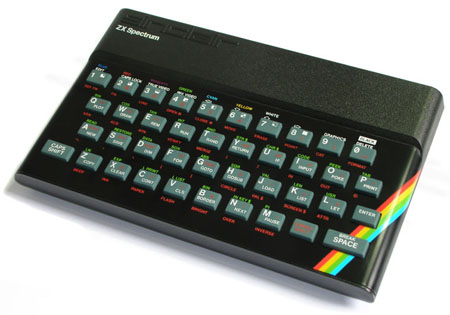
The first mass market game machine in the UK was the Sinclair Spectrum. Software was loaded via a tape interface so games were sold on audio compact cassettes. These were very, very easy to copy from a technical point of view. Especially when dual cassette players proliferated and became cheaper. Schoolyard and club copying proliferated on a massive scale and badly hurt the game publishers. Look at a list of games and you can see the many publishers that went out of business or were forced into mergers. A whole range of technical anti piracy solutions were introduced including, for instance, Lenslok. The publishers would not have gone to the huge trouble of these technical solutions if copying had not been a great threat to their businesses. Another solution was budget games, initially at £1.99, then at £2.99, prices at which they were not worth copying. That these budget games proliferated and came to dominate the market is yet another measure of just how bad the piracy was.
I was a director of the game publisher Imagine software, which went bankrupt in 1984, largely because sales came to an abrupt halt when piracy took off. (Imagine had other problems that made it especially vulnerable to a large and sudden drop in revenue.) Another publisher that was badly affected was Ultimate Play The Game (which later morphed into Rare), one of the most highly regarded publishers of games for the 8 bit home computers. Their initial response to the huge rise in piracy and drop off in sales was to raise prices from £5.50 a game to £9.95. The idea being that if customers paid more for a game they would be less inclined to give away copies. However this didn’t work and they laboured on for just one more year after the demise of Imagine before switching their attention to the Nintendo Entertainment System, which did not suffer from piracy. Spectrum and other 8 bit computer owners lost out heavily as publishers put less and less resources into developing for their machine or quit entirely, as Ultimate did.
Then came the Commodore Amiga and Atari ST. Once again copying was technically easy so it was rife. Once again it was up to the publishers to come up with technical solutions. So a technology war broke out between the software publishers and the pirates. Measures would include copying in random pieces of text from the manual. The led to a huge amount of photocopying by the pirates until the publishers started using photocopy proof manuals. Obviously all this piracy made revenue generation difficult so the game publishing industry did not blossom in the way we see now. In fact piracy has often been cited as part of the reason for the downfall of these machines.
Consoles Arrive
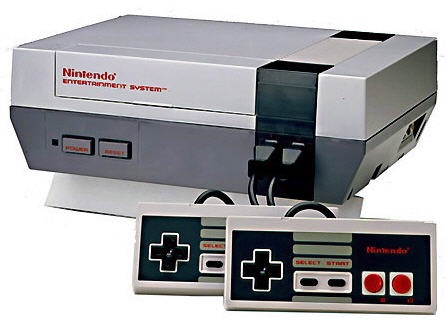
Then came the game consoles. From Sega and from Nintendo. They had their games held on chips inside cartridges so they were technically difficult and expensive to copy. So piracy didn’t happen anywhere near the massive extent that it had on the Spectrum, Amiga and ST. So the game industry blossomed into what we know today. This was the time when many of the great key franchises of our industry were established.
Cartridges were expensive to make so eventually the hardware manufacturers returned to recordable media. This way they could make vastly larger games with far lower production costs. The first to do this was the Sony Playstation (PSX, later PS1) in 1995 in Europe and America, which used a CD-ROM to load games. Sony had a whole pile of technical anti piracy measures which protected it from piracy for several years. However with the introduction of modchips and the development of PC CD-ROM burners that could burn data in the same modes that the PSX used it was game over. Chipping was nearly universal and game sales collapsed. Pirates were selling their copied games door to door in housing estates, at places of work, in car boot sales and anywhere else they could find a customer. This caused huge problems for game publishers. I was working at Codemasters at the time and we were forced to lay off about 60 people. This was terrible as there were no other industry jobs for them to go to, everyone was having the same trouble. The number of games published shrank dramatically. In 1999 there were 100, in 2000 there were 78 and in 2001 there were just 33. Yet the PSX remained in production till 2006, so software publishing for it collapsed just half way through it’s sales life.
The Dreamcast from Sega came out in 1998 and used a special unique disk format called GD-ROM. Once this was circumvented with things like the Utopia bootdisk it was game over. Piracy became rampant and the Dreamcast died after just a couple of years with over 10 million sold. This piracy is sometimes credited with not only seeing off the Dreamcast but also removing Sega from the console hardware market completely (as ever there were other factors that muddy the waters somewhat, what is for sure is that losing so much revenue did not help). It was a huge loss to the industry.
The PC
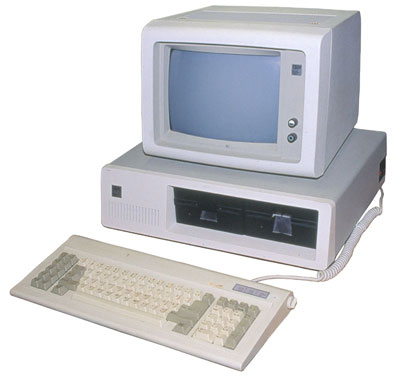
The IBM PC has been around since 1981 and was the first home machine to be connected to the internet in massive numbers. So it obviously has a long history of software piracy and has been at the forefront of anti piracy technology. Often this technology had nuisance value as it actually impeded the use of the computer. But the pirates did bring it upon themselves. At Codemasters we published an excellent PC game called Severance, Blade of Darkness which was well received with a Metacritic of 75 and a user score of 9.5. This game was popular, building an active community of mod makers. Yet Codemasters sold very few copies of the game, most people just downloaded it for free from the internet. So the developer, Rebel Act received very little royalties and went bust. Once again piracy damaging the industry.
Nowadays it is virtually impossible to viably publish boxed PC games, most appear on the internet as free bit torrents before they are even in the shops. In fact it is far quicker and easier to pirate a game than it is to buy it. So most publishers, even those with a decades long tradition in PC games, have given up. And the PC gamer suffers. One casual game publisher reported a piracy rate of 92%, which is probably typical. When they tightened up their protection it didn’t help much because people just moved on to some of the many other games that are available for free by bit torrent. Now Electronics arts have started releasing PC games for free, with their development cost supported by in game advertising and micro payments. But the real way to make PC games as a viable business is to make online games (MMOs), these are server based so impossible to pirate. One day virtually all games will be published in this way and piracy will be over.
Today’s Consoles

The PSP is a very popular mobile gaming machine and media player made by Sony. They have sold 33 million. Yet it is a graveyard for games publishers. It has been hacked since early in it’s life, it is simple to copy games onto and everything an owner can want is very easily available for free online. Here are some download figures for PSP games from just one torrent site:
God of War: Chains of Olympus - 94,154
Patapon - 112,183
Ratchet & Clank - Size Matters - 197,113
Crush - 48,959
LOCO ROCO - 163,904
Wipeout Pulse - 116,965
Castlevania X Chronicles - 102,354
Metal Gear Solid - Portable Ops (Not Including Plus) - 231,054
Burnout Dominator - 269,486
So most developers just don’t invest millions into AAA games for it, they would be wasting their money. This lack of quality games on the PSP (obviously along with some other factors) left the door open for the Nintendo DS to become a massive success with 70 million sold. But even this is being pirated now using flash memory cards in dummy cartridges. This will impact heavily on DS game sales and could lead to publishers becoming reluctant to develop for it, as they are with every heavily pirated platform.
The current generations of home consoles, the Microsoft Xbox 360, the Nintendo Wii and the Sony PS3, are all at that stage in the cycle where there is a phoney war. All three machines have good technical anti piracy. Nintendo went so far as to embed a secret second CPU (an ARM) in the graphics chip to run some of it’s system software (they lost $975 million to piracy in 2007). But all three have been cracked (not fully yet with the PS3), click their names for more details. Owners will be able to bypass the anti piracy and play free games. This hasn’t taken off yet but there are signs that it is just starting to. If previous generations of console are anything to go by then piracy on these three machines could soon snowball. And publishers will move their development resources away.
In the meantime Nintendo are making successive popular game releases that look to see if the machine has been modified before they will play. If it has the Wii becomes a “brick” for that game. Microsoft use Xbox Live to look for modified 360s and cancel the accounts of any that they find. And Sony have the advantage that Blu-ray media is expensive to buy and difficult to copy. All these are just current positions in an ongoing technology war. Very many people are putting so much time and effort into cracking these machines that, ultimately, they will find a way round everything and anything the manufacturers do.
Conclusions

There is one thing that beats pirates on any platform. This is when a game is so big that it becomes a mass culture popular event. The current launch of GTA IV is a prime example. Then a far higher percentage of people just have to have the real thing. A pirated copy just isn’t cool enough. And with these sorts of games there is a massive gift market. All this explains how the rare, exceptional title can still sell well on a heavily pirated platform.
There are the excuses that pirates make that games are too expensive (they are), but then Ferraris are too expensive and I don’t go round stealing them. Then there is the game quality argument, that there is a lot of dross around, which is very true, especially on the Wii. Once again we live in the age of the internet and it is very easy to very rapidly find out everything about every game. Metacritic and Game Rankings will quickly tell you most of what you need to know. Perhaps, as an industry, we ought to publicise these two sites more, just to remove that excuse.
And the game industry continues to grow and prosper, despite the piracy. This is because the proliferation of platforms allows publishers to more easily abandon platforms that are pirated to the point of being uneconomic. Instead they concentrate on platforms where there are windows of opportunity to run a viable business. Either because the anti piracy technology is on top or because there is a sufficient number of honest customers to get a return, even sometimes with a heavily pirated platform. Games with an online element can often be made very pirate proof which has been a major incentive for developers to go down this route.
So for 25 years or so game players have been stealing games in truly massive numbers with zero chance of being caught and punished for their crime. Very often far more copies of a game title have been pirated than have been bought. This self evidently causes harm to the games industry, ultimately leading to less money being invested in games for the pirated platform. So, the game player suffers for his theft by having less games and lower quality games. All pretty obvious to anyone but the pirates who make all sorts of feeble excuses to justify their stealing.
Microsoft announced its financial results for Q3 of fiscal year 2026, including an update on its gaming Xbox business and more.


Not looking good. Hopefully Asha Sharma is able to turn Phil’s disaster around.


To me it's still quite remarkable how they can cash-in 5.3bn in revenue in a single quarter, since their hardware is basically dead.


The charity event will be streamed live from Gamescom in August.
Thanks to the slip-up of an artist working on the title, we now have more evidence that a new Injustice game is in the works.




Actually, the first hardware manufacturer to return to recordable media was Phillips with the CD-i, then Sega had the Sega CD, and Atari even had a Jaguar CD, oh, and NEO GEO. and I'm probably missing a couple.
Well the early Dreamcasts didn't have any anti piracy measures, you could just burn a game to CD-R and play it (with or without bootdisk, depending on some factors). SEGA just relied on the GD to not be copied due to the amount of data (roughly 1GB) and that pirates wouldn't find ways to copy that to a CD-R (about 800MB at that time) - DVD was out of the question, the Dreamcast wasn't equipped to read DVDs. Well, little did they know that pirates COULD do that. But I have to disagree at one point: Although it might be true that piracy dramatically hurt SEGA back the and killed the console (don't know if they ever gave an official explanation), it was very much due to the PS2 and it being one of the first affordable DVD player. Anyway, good read, thumbs up.
"But obviously they are wrong because potential sales are being lost."
I don't pirate games (mainly becuase I don't want to risk my console and the fact that I would be to lazy to), but that is kind of bs. I do pirate movies, and I am assuming you are going to apply the same logic to the film industry, so I'll just say it: Potential sales are not being lost, if the pirates did not intend to pay in the first place.
Piracy can actually help sales in some ways. If I wasn't sure about a game I wanted to play, I could just pirate it and try it out, and if it was truly worth it, then that would gain my respect for the developers, and might give me reason to purchase future titles, or that same game, later on. Not all, or even most, pirates pirate everything they possibly can without paying for anything, no, a lot of us will actually purchase the game and future sequels if the titles are any good.
I also don't think you can classify piracy as "stealing" as you are not technically taking something away from someone, you are merely getting a copy of something someone owned, but guess what, the person that created whatever it is that they created, still has their creation. So nothing was taken in the process. Thats like saying you should be charged for looking at art, such as the Mona Lisa, and I'm not sure if they charge or not in the museum that that piece of art is hosted in, but if it is, then by your logic, everyone who has ever done a google search for the Mona Lisa or saw a picture of it in a textbook, is a criminal, a pirate, and deserves to be punished. Now look at the pot calling the kettle black.
Do not say that games and art are different, just because game devs have to work harder, because thats not true, and because games and art are essentially the same thing. Painting a beautiful picture such as the Mona Lisa, or others, might take just as long as, if not longer, to make than a video game, and in most situations, I am fairly sure that is the case.
All of that being said, I don't think that people should pirate ALL of their games, as they should buy some of them, but I don't think its wrong to pirate every once and a while. And if you are a movie pirate, like I am, at least buy a movie once in a while. I payed for a couple of movies, just because I thought they were worth it because they were so great.
Oh well, there is my case for piracy, and tell me I'm wrong all you like and blabber about how much of a scumbag I supposedly am, but there is truth to what I say, and you can't deny it. I guess I pretty much typed all that in the case of movie and music piracy mostly, but the same key points apply to games too.
I mean the whole lot of grey market guys are from crimnal background here and they get economically better and they are really abusive push crappy stuff on you and charge you more there is no warranty on product and most of them are 2nd hand and are damged. Atlast you pay more to them in the end.
I really like that Sony kill those grey marketers and teach them that Sony is no way friend of Grey marketers. 360 also has been moded but thanks to the raid being conducted its not increasing that much, yeah some home brew is there but all cant do it. These marketers really pushed stuff to kids who can get everything at cheap price even people who are not good enough to hack it.