Sanctuary Hills, a placid, duplicatory old-world homestead at the northern tip of the Commonwealth, had never attracted the attention of the average wasteland wanderer. It simply held no value in the wake of a war that was now over two centuries old. For what use would a bandit enclave ever have with its rusted Corvega carcasses or its distant berth from anything close to resembling the heart of a post-nuclear civilisation? It was the perfect place to start over, to rest cold bones still thawing beneath the green sky, and to offer shelter to those similarly daunted by a freshly unforgiving world. It was home before the arrival of the nuclear fire, and it would be a home once again.
Some eight-and-a-half days of playtime later, and with the distinctive noise of a land at war fading quietly into the distance, Sanctuary Hills remains standing in spite of it all. Along its single avenue are some 20 residents tilling fields and tending stalls. Traders pace up and down its length, passing by towering wooden structures brimming with the luxuries of powered lighting and mattresses atop metal frames. Battle weary power armour suits line hallways and coffers run rich with bounties of arms, ammunition and purified water. Gone was the artificial quaintness of Sanctuary’s pre-war picket fences and verdant lawns, for built upon its vitrified foundations was something much more – a place free of death and politic, and an image of the Commonwealth beyond that of a still smouldering crater.
It became something of a rhythm – go out into the world ahead, get pulled in every direction by the many factions clamouring for my servitude, return home to empty my pockets of all plundered gains and head out once more. Between every major development of Fallout’s fiction existed hours spent tending to my township and micromanaging every aspect of my overflowing inventory. It wasn’t enough to plough through the pages of the story in a mindless rush to reach its conclusion; it had to mean something, and it would so as long as my choices, like the weapons in my hands, were entirely my own. Raising a town from the rubble of a crumbling earth and nurturing it to a state of self-sufficiency initially seemed like an antithesis to Fallout’s nowhere-bound journeying, yet Fallout 4’s crafting systems offered so much more, not least an escape from its own nonsensical self. Being completely free of the absurdity of Bethesda’s delightfully sickening world, even for a little while, was blissfully cathartic.
Perhaps I wouldn’t have leant so heavily on the Fallout 4 experience beyond that of the main plot had it been a shade more rational. The faction heads, each more one-dimensional than the last, generally needed to only introduce themselves in order for me to make a lasting judgement of their character. They were genocidal, homicidal and dangerously unsympathetic. And even the lesser of these evils, for all his good intentions, need only wave his fingers in order to send me on a cross-country pursuit to kill and pillage in the name of his righteous militia.
And yet, foregoing the story of Fallout 4 in favour of stacking the walls of my hand-built city a little higher was a far more gratifying endeavour than it would initially seem. The settlement mechanic, and the crafting elements beyond it, could have been little more than arbitrary distractions when weighed against the merits of the story. But Fallout 4’s unflinching emphasis on player-made creations was one of its biggest successes, and a source of fulfilment to counteract a plot as incohesive as it was stubborn.
At times you were just an errand boy. ‘Go here, kill this’ read the scrolling text on your wrist-mounted computer. To be given a choice was to be lead down one of two predetermined paths, with an obvious lack of player agency being spelled out through inconsequential verbal retorts and an emphasis on rampant reloading. Some of the Commonwealth’s most interesting sights were little more than bandit-ridden hovels just begging to be cleared and forgotten about. And some of the most volatile aspects of the narrative could only be resolved through use of terrain-shifting explosives. To play a role in Fallout 4 was simply to tailor your character for a greater ease of use, rather than to accomplish a specific goal. This wasteland was just never meant to be truly remedied. You can’t cure the sick if you don’t have the right tools.
But the aforementioned issues just made it so much easier to take other things away from Fallout 4 instead. The unscripted instances of chaos as warring factions butt heads on a formerly desolate street corner. The gratitude shown by a companion after helping them resolve a longstanding personal issue. The exploration, and the piecing together of old-world history through fragments of the past. This was a game glaringly flawed and impure, but so wholly encapsulating. Antagonists were not to be believed, but rather gawked at in disbelief as they rolled off a list of their biases and xenophobic tendencies. They were characters in a brilliantly literal sense, but almost completely unbecoming of the measured blend of absurdity and gritty believability that Fallout 3 had espoused. I don’t think I could’ve ever taken a robotic slaver who goes by the moniker ‘Father’ seriously, but I could’ve at least appreciated his overarching message, if he ever had one.
My time with Fallout 4 then was not defined by my personal involvement within a branching storyline, but rather by my extraneous pursuits beyond it. A longing for true authorship of my own tale gave way to a different kind of character development, one that was left far more to the imagination and shaped largely by an appetite for change. What I had expected from Fallout 4 I hadn’t been given, but my continual desire to play it is in spite of its discrepancies remains a testament to the depth that exists beyond its lacklustre narrative.
As my time with the game passed, so did my character change. So did my arsenal grow and my allies increase. It was progression, not structured, but free and enjoyable. “What should I accomplish today?” I’d ask myself before stoking the fires and setting to work on a new set of metallic armour. Looks like I was missing the required number of adhesive. As if I needed another excuse to head out with Dogmeat on another scavenging trip.
There wasn’t nearly enough time to play the hero when so many things needed building, anyway.

 Replies(1)
Microsoft announced its financial results for Q3 of fiscal year 2026, including an update on its gaming Xbox business and more.

Not looking good. Hopefully Asha Sharma is able to turn Phil’s disaster around.


To me it's still quite remarkable how they can cash-in 5.3bn in revenue in a single quarter, since their hardware is basically dead.

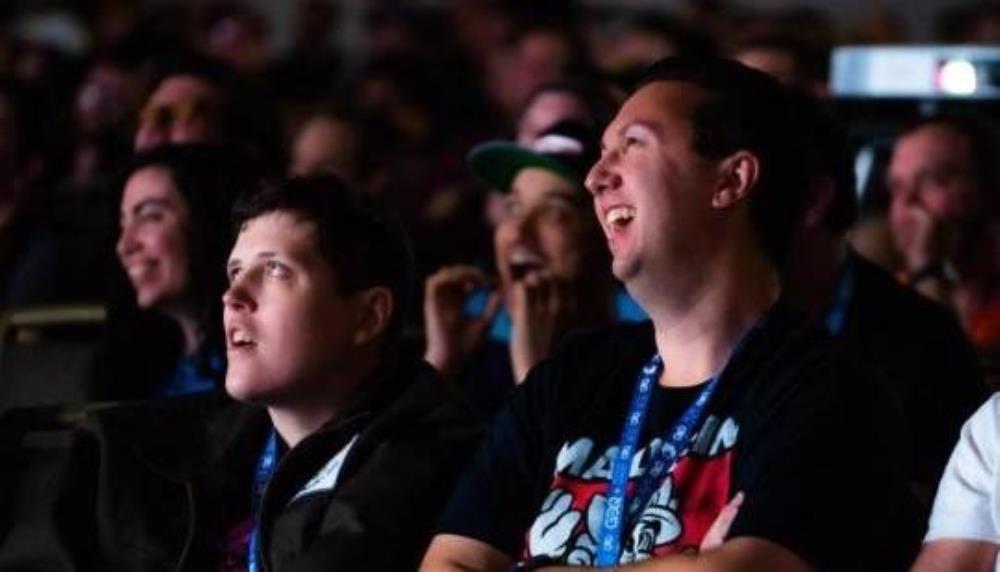
The charity event will be streamed live from Gamescom in August.
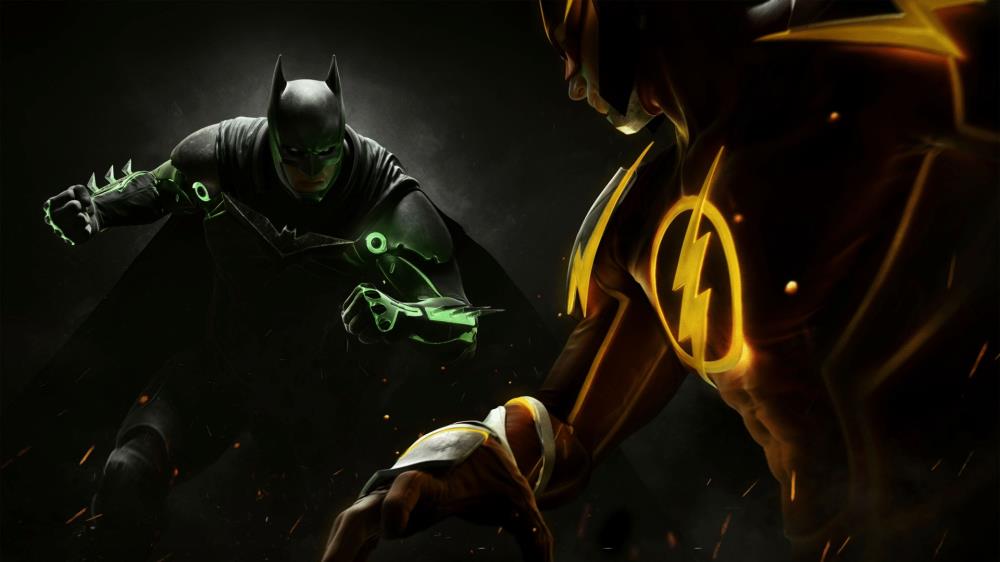
Thanks to the slip-up of an artist working on the title, we now have more evidence that a new Injustice game is in the works.