We’ve all killed Handsome Jack by now. We’ve killed him with a swift shotgun strike right between the eyes, a plasma-infused punch to the jaw, and even a thrown rotary saw-blade to the chest. In the context of the communities collective playtime, Jack has died hundreds of thousands of deaths, and each one of them has been more cynically enjoyable than the last.
Jack’s demise was relieving, his death equal parts satisfying and cathartic, and that was without factoring in the chance of a rare shotgun spewing forth from his still warm corpse. What made Jack’s fall from grace that little more impactful though, was the lean structure of the Borderlands 2 narrative. Jack was the endpoint, the conclusion, and the pitchfork-wielding spectre on the horizon. Our goal was not to attain vast riches, not to become legends of the waste, but instead to rid Pandora of its most detrimental of ills, with every side-quest, ally and morsel of XP taking us that little bit closer to the gates of his domain.
Here he was though, the egomaniacal, murderous psychopath goading our ascension from bumbling bandit to mercenary extraordinaire, and peppering our journey with his inane, self-involved rants. In the first Borderlands game, we had pursued little more than a vault of riches, but now we were trending our crosshairs on an actual being, a man equal parts killer and coward. For in Borderlands 2, Jack was our vault of riches, the mettle of his character strong enough to drive the story from beginning to end, and his very principles plainly evocative of the profiteering and deathly politic slowly grinding the planet into dust. Jack was the leader of the Hyperion corporation after all, and the Hyperion Corporation was but a single one of the many unrepentant businesses prying on the vulnerable. The opportunity to learn more of this troubled, maniacal, fantastic man and his inevitable descent into madness then was perhaps too enticing to turn down. Step forward Borderlands The Pre-Sequel.
Wedged chronologically between Borderlands and Borderlands 2, The Pre-Sequel recounts Jack’s rise to power from that of a Hyperion coder with delusions of grandeur to the man at the top of the mountain, now having been fully consumed by those very delusions. At this point, we know of Jack’s many atrocities. We know of his slaughtering of civilians at New Haven, of his killing of Roland and the enslaving of his own daughter. There’s very little sympathy to be had for Jack here, and yet the Pre-Sequel touts this very ideal each and every chance that it gets. Jack’s character introduction for example sees him being comically decked by a Dahl soldier, whilst at the end of the games second act, Jack is betrayed and almost killed by those who he once called his allies.
But should we feel sorry for a man who believes that the pre-emptive killing of bandit enclaves with a giant space laser is a fair and just action? Well, if moral ambiguity was just a slight undertone in Borderlands 2, then it is a full blown theme at the very heart of the Pre-Sequel.
Past Borderlands games have made no secret of the role of the typical vault hunter. You’re gun for hire, sure, but not one hired for the purpose of senselessly slaughtering civilians. You’re modus operandi is in the title, ‘vault hunter’, and that’s exactly what you do. You hunt vaults, seek unimaginable treasures and give credence to the many tales and legends spoken of your ilk across the galaxy. This, at least, was the introductory spin given to the vault hunter role in the original Borderlands game. In the Pre-Sequel, things aren’t nearly as straightforward. Jack has hired you to hunt a vault, sure, but the impending threat of Zarpedon requires that she be dealt with first, and thus you and your team quickly become Jack’s private army.
As for those fighting begrudgingly at Jack’s side, the lure of a sizeable payday keeping them in check, the moral disparity between them couldn’t be more evident. On one hand you have Wilhelm and Nisha, those who cut down the bandits in their path with just a little too much enthusiastic zeal. And on the other hand you have Athena, a woman who lives by a moral code, and writhes uncomfortably with each of Jack’s many morally corrupt actions.
The Pre-Sequel is suffocated by its limited narrative freedom, the future of its plot having already been played out, but it does reap the benefits of its unique perspective. The Pre-Sequel exists in something of a bubble, with the actions of Jack juxtaposed deliberately against protagonists that we’ve become accustom to. Moxxi initiating the slip-space rupture that almost ends Jack’s life is one of the more evident turning points of his fall, but it also portrays Moxxi in a light by which we’ve never seen her. I didn’t empathise with Jack at that point, but I sure as hell didn’t appreciate Moxxi almost killing my character. And at the games very end, Lilith arriving and slamming the vault relic into Jack’s face was not something that made me care for Jack, but rather something that made me detest Lilith, her actions, while not particularly villainous given the context, were not actions I could have fathomed.
But maybe that’s just a testament to the vacuum that the Pre-Sequel finds itself in, and perhaps it was only fitting that, given the muddied moral compasses and blurred lines, Pandora’s moon, and not Pandora itself, would be the setting for this fractured tale. When our Borderlands journey first began, we were outsiders to Pandora and unaware of its many blights. Brick, Roland, Lilith and Mordecai were one and all vault hunters by name and nature, pure in their goals and unswayed by the lay of the land. But as soon as they elected to remain, Pandora began to infect them all, their decisions and creed now based around more than simply opening a vault full of loot. And that’s exactly what we see in The Pre-Sequel; the ham-fisted descension of Jack, galvanised entirely by the familiar faces that comprise Pandora’s many, many psychopaths.
The Pre-Sequel’s telling of the story of Jack was rushed and awkward, with his motives clear, yet hampered somewhat by clunky writing as well as the games technical aspects. The direction of Jack’s story didn’t veer towards his mistreatment of Angel, nor a deeper look at his remoulding of Hyperion, but instead looked at his place as a devil amongst demons. The plot of the Pre-Sequel is as cynical as it is pessimistic, but it is at the very least conclusive to some extent.
“Let’s be heroes” proclaims Jack in the Pre-Sequel. “I’m the hero of this story!” he bellows in Borderlands 2. But as the Pre-Sequel champions, such an ideal is frivolous, especially on Pandora.
“This ain’t no place for no hero” chimes the song at the top of Borderlands 2. And so it isn't.
Microsoft announced its financial results for Q3 of fiscal year 2026, including an update on its gaming Xbox business and more.


Not looking good. Hopefully Asha Sharma is able to turn Phil’s disaster around.


To me it's still quite remarkable how they can cash-in 5.3bn in revenue in a single quarter, since their hardware is basically dead.

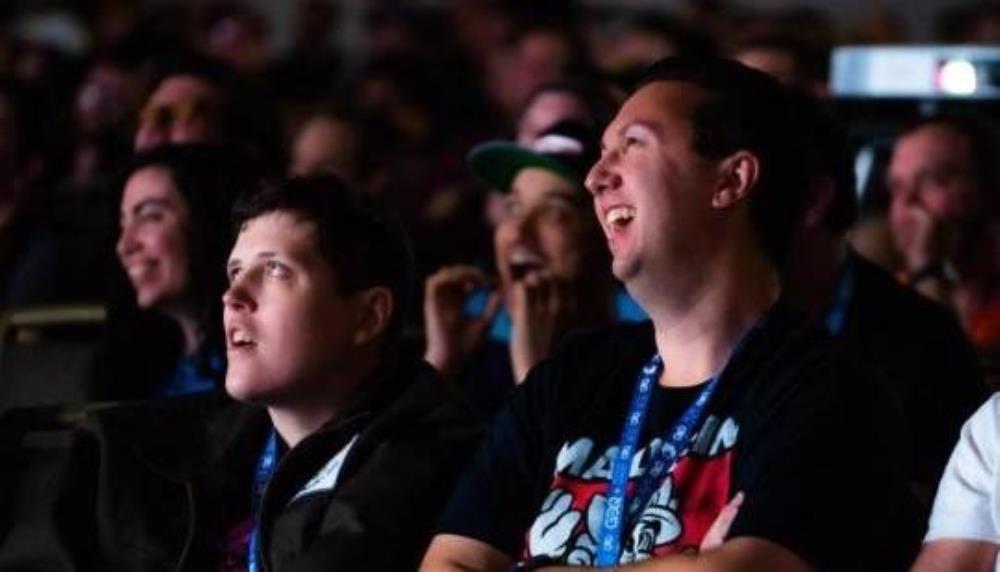
The charity event will be streamed live from Gamescom in August.
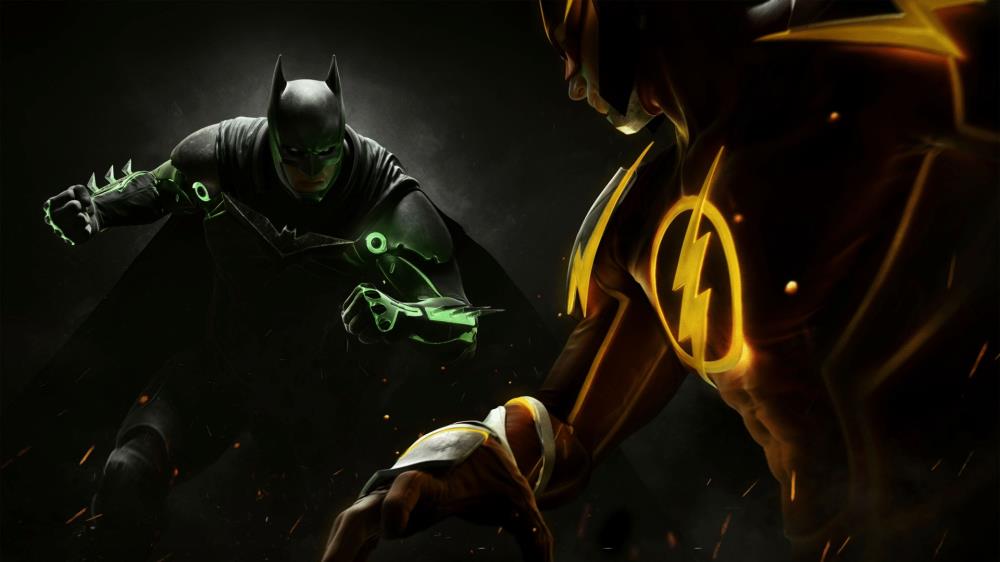
Thanks to the slip-up of an artist working on the title, we now have more evidence that a new Injustice game is in the works.




I read this on GameBleed.com the other day and wondered the same thing: is this a review or summary? I'm not entirely sure what the intention was here.
@Valenka
Thank you, that means a lot!
The Pre-Sequel is undoubtedly the most morally ambiguous Borderlands game to date. It'll be interesting to see how this theme plays out in the eventual Borderlands 3.
Very well-written thoughts on the subject you have here.
What I took away from the Pre-Sequel was that the 'goodness' or 'badness' of any given event or individual behavior can be all a matter of perception.
Someone can be doing something because they genuinely believe it to be the 'right thing' while someone else sees it completely the opposite and feels that person's actions are wrong. Jack thinks, at some points, what he's doing is for the greater-good but eventually gets pushed over the edge.
Eventually Jack does go rather mad, but the ironic thing is that the 'good guys' (Lilith, Moxxi, etc.) played a huge part in creating what he becomes without even realizing it.