
There has never been a hero within a Grand Theft Auto story.
Tommy Vercetti, Claude, Carl Johnson, Niko Bellic…all of them, by definition, were anti-heroes, people who sought a fair, just end via way of unfair, unjust actions. And in keeping with the calculated brutality of their methods, as well as a desire for peace beyond the crystalline snowstorms and the bloody resolutions was inherent dysfunction, flaws that shaped each of them far more than either a scuffed leather bomber jacket or floral Hawaiian shirt ever could.
In this sense, the typical Grand Theft Auto protagonist has always been archetypal. You take one mildly malleable guy ambling somewhere between a shallow grave and a state penitentiary, give them something to strive for, and cut them loose, their story now a moderate rags to riches tale dictated by the actions of an uncontrollable agent of chaos.
In Grand Theft Auto V, the telltale signs of previously told chapters within the GTA universe remain. Grand Theft Auto V is a story about ascension, about revenge, and about death. But whereas the likes of Vercetti and Bellic walked their journeys predominantly by themselves, GTA V injects life into the format beyond that of expected graphical updates, and beyond that of a new world in which to wander. For in Grand Theft Auto V, there are three captains at the helm, each one defective, evocative of the world in which they live, and a product of a Rockstar reality soaked to the bone by wavering moralities and loud, colourful caricatures.
It’s this trio of losers that reside at the forefront of this particular GTA episode, but rather than serving their purpose as three copies of the same character, each has their own motivations and creed, and exists within their own microcosm, the bile of their collective self-loathing continuing to fester. And it’s this very self-loathing, this juxtaposition of a bleak existence drawn against the backdrop of a pastel paradise that epitomises Grand Theft Auto V’s most prominent undertone.
Grand Theft Auto V is the first HD universe detraction from the overcast, glum monotony of Liberty City. Grand Theft Auto IV, my favourite game in the series upon its conclusion, was an unsuspectingly darkened chronicle reiterated by its loveless protagonist and his fumbling pursuit of a modern American dream. By now, I had gotten used to worlds as pure as they were rotten, and as colourful as they were damningly dangerous. Vice City, with its neon nightlife, and San Andreas, with its vivid clash of cultures, boasted environments bright and inviting, rather than dreary and daunting. But was it too dark? Too overpowering? Not every Grand Theft Auto game needs to end with a rousing victory and our protagonist standing unchallenged atop the mountain. And seriousness aside, GTA IV was still atypical of what you’d expect from a GTA game. Satire and humour shone through when they needed too, feeling, for the first time, completely inextricable from the whole experience. And in terms of what you would generally expect from a Grand Theft Auto plot, GTA IV was easily the most refined example of storytelling within the series. There was no rolling start, no unnecessary convolution, no heavy reliance on filmic tropes. Grand Theft Auto IV had a definitive beginning and a definitive end, and it had a concise, lean structure supporting it. The aesthetic perfection of the story it told almost felt like an opus, like every previous volume in the GTA almanac had offered it something in the way of inspiration. And it’s why the end of Grand Theft Auto IV, more so than any other GTA game, felt truly conclusive. Niko Bellic had reached the top of the mountain, only to find himself king of nothing and nobody.
It was perhaps still a minor relief when GTA V arrived and dissipated the Liberty City smog through combination of its celebrity centric culture and its bustling coffee house metropolis. Only after my second full completion of the game however, did the more nuanced cynicism of its plot really strike me. On the surface, just like many GTA games of old, Grand Theft Auto V was a vibrant satirisation, a picturesque hub built on the foundations of Bleeder Burgers and iFruit phones. Beneath this veil however lay much of the angst and hatred synonymous with GTA IV, characterised entirely by three Los Santos delinquents fighting against the rising tide.
Michael DeSanta isn’t growing older gracefully. His retirement from his role as a career criminal consists largely of self reflection and disassociating himself from any voice careless enough to undermine his pitiful stagnation. Franklin Clinton is in the prime of his life, yet whereas Michael is content to remain idle, Franklin yearns for more, and spends his days sulking over a lack of fulfilment and direction. Lastly, Trevor Phillips assumes the role as the trios most volatile initiate, dividing his time between cannibalising bikers, huffing petrol fumes and distributing homemade amphetamines statewide. These are the characters at the forefront of GTA V’s narrative, and these are the anti-heroes that have all been cut from the bloodied cloth of modern day Los Santos.
The structure of Grand Theft Auto V’s story is largely dictated by its three central characters. In the past, with there being only a single character to focus on, be it CJ or Vercetti, there was always a central goal, and always a clear endpoint. GTA V isn’t that straightforward however, and that isn’t just on account of its three protagonists and their three very different lives. The focal point in GTA V is always the next heist on the horizon, which can also be used as a barometer for your progression in the story. And as the heists get bigger and the stakes get larger, the relationship between Michael, Franklin and Trevor continues to change, a notable villain rarely taking precedence over the theatre that accompanies these three reluctant teammates.
The lack of an irrefutable antagonist does tend to hinder GTA V in some aspects, though. Sure, Weston and Haines tend to exude much of the arrogance and pomp associated with some of the most notable demons within the GTA Universe, but neither really have enough about them to distance themselves from the crop of generic Los Santos clowns that you’ll find driving recklessly on the Palomino freeway. And as for Stretch and Wei Cheng, their impact on the story is perhaps best indicated by the unceremonious fashion in which they’re dispatched late on.
It’s strange then that Grand Theft Auto V is more a tale about unity than a lust for revenge, particularly when our three leads don’t tend to share a collective burden until the very end of the games events. Franklin’s time is consumed with bailing our Lamar, Trevor by his lucrative drugs business, and Michael by the pursuit of seeing his name atop the masthead of a film script. And yet without these introspective looks at the trio, without the continuation of their lives beyond the uniformity that comes with a heist for a corrupt government agency or the shakedown of a private militia, it’s easy to forget just who they are; cold and unrelatable, and three entirely different lenses from which to view Los Santos.
As much as they are all products of their own failure, all monuments to Grand Theft Auto characters past, each is in some way shaped by the world around them. In GTA V, the landscape has again changed drastically, with the state of San Andreas now modernised far beyond simple aesthetics. Los Santos, San Andreas seems to exist in a sort of lucid, rabid reality. Everywhere you turn exists another pillar that stands as testament to Rockstar’s bold, overpowering mockery. Beneath the halogen glow of an illuminated downtown Vinewood, bustling civilians regale about their screenplay, phone in one hand, caffeine injection in the other. Across the street, billboards for clothing chains, technology conglomerates and corrosive soft drinks tower over you. Whilst beyond the rolling tundra of Grapeseed, gun-toting patriots shout racial obscenities from the sanctity of their trailer porch, tossing bottle after empty bottle into the furrow beneath their feet.
Los Santos is alive, but it’s painfully numbing. On occasion, the completion of a mission will leave you standing alone alongside an endless stretch of road, no car or person in sight. It’s only as you begin to walk does the rarity of a break from the overwhelming lights and sounds of Los Santos begin to set in. Much like the capitulation of a Michael and Trevor argument, there’s only so much noise you can take, which makes the solace of treading footprints in the sand or diving beneath the shroud of a lifeless lagoon seem almost therapeutic. Grand Theft Auto V’s Los Santos definitely doesn’t exude the same natural atmosphere of, say, Red Dead Redemption, but it is what it means to be. It’s abrasive, it’s unrelenting, it’s uncomfortable, and at times, incredibly tiring.
But is it all worth it? Are the somewhat inconsistent heist missions, the disjointed conclusions and the stories of Michael, Franklin and Trevor worth seeing through to the end? Are the crossed wires worth untangling? Almost undoubtedly so.
At the very end of the game, there exists a moment of tranquility, of absolute and undiminished clarity. Thus far, we’ve seen the boys work together when robbing banks and assaulting militia, and we’ve seen the expected failures that occur as a result of such a maladjusted group of people coming together to accomplish a shared goal. But not until the games hasty conclusion have we seen them come together when not tempted by financial security, when not lured in by a comfortable retirement and when not offered the chance to be apart of something bigger than themselves. This end finale, with its lack of planning and its lack of substance may just be Grand Theft Auto V distilled into its purest form; a misshapen plot full of misshapen people meeting its misshapen end.
The Grand Theft Auto V narrative isn’t conventional. In fact, it’s the least conventional narrative that the series has ever seen. But almost as a reflection upon its three protagonists, the story meets an end neither conclusive nor downright satisfying. This has been a game full of some of the finest set-pieces, some of the wittiest dialogue and some of the most enjoyable missions to have ever graced the series, but it has also been a game about three lost souls caught within the maw of a dead city, trying their hardest to fight back against impending destruction. Alone, the fate of the trio seemed to have been already secured. A slow death, a quick death, an gradual dissipation into nothingness. Together though, Michael, Franklin and Trevor not only survived, but gained redemption where none was thought possible. Lamar, Patricia, the entire DeSanta family. They’ve been validated, reprieved, even. They’re still degenerates and they’re still deplorable criminals, but if that’s what it takes to beat Los Santos, then at the very least they’re successful. I may not understand them, nor relate to them, but I can damn well empathise with them, especially when fighting against man and metropolis both. And if my role as the player in all of this came down to either knocking one of them off for the sake of some flimsy reasoning, or giving each of them one last chance to fight for breath, then you’re damn right I’m choosing option ‘C’.
“We did it kid, we actually did it!” texts Michael to Franklin as he settles in for another viewing of a Vinewood classic. Welcome back to the top of the mountain.

Microsoft announced its financial results for Q3 of fiscal year 2026, including an update on its gaming Xbox business and more.


Not looking good. Hopefully Asha Sharma is able to turn Phil’s disaster around.


To me it's still quite remarkable how they can cash-in 5.3bn in revenue in a single quarter, since their hardware is basically dead.

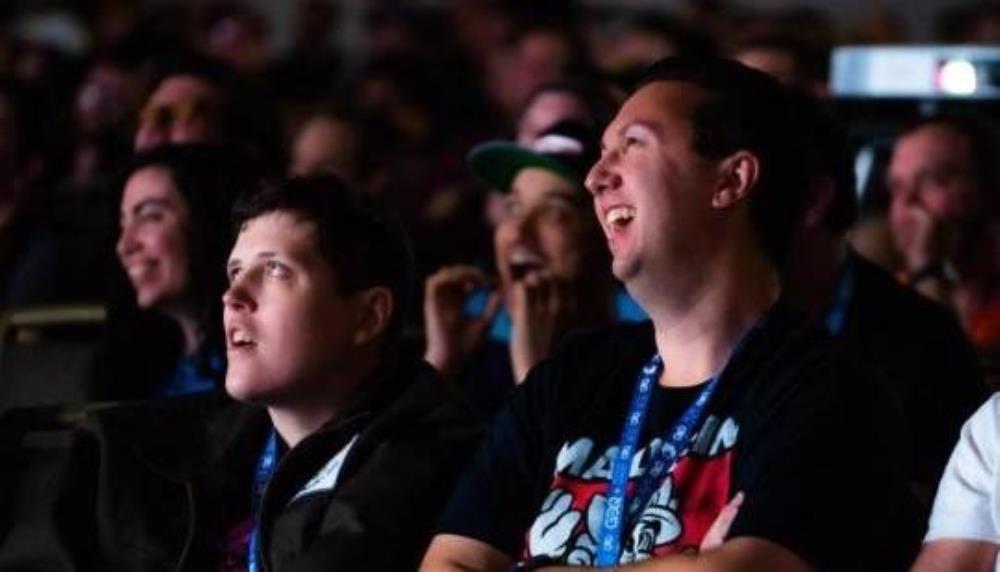
The charity event will be streamed live from Gamescom in August.
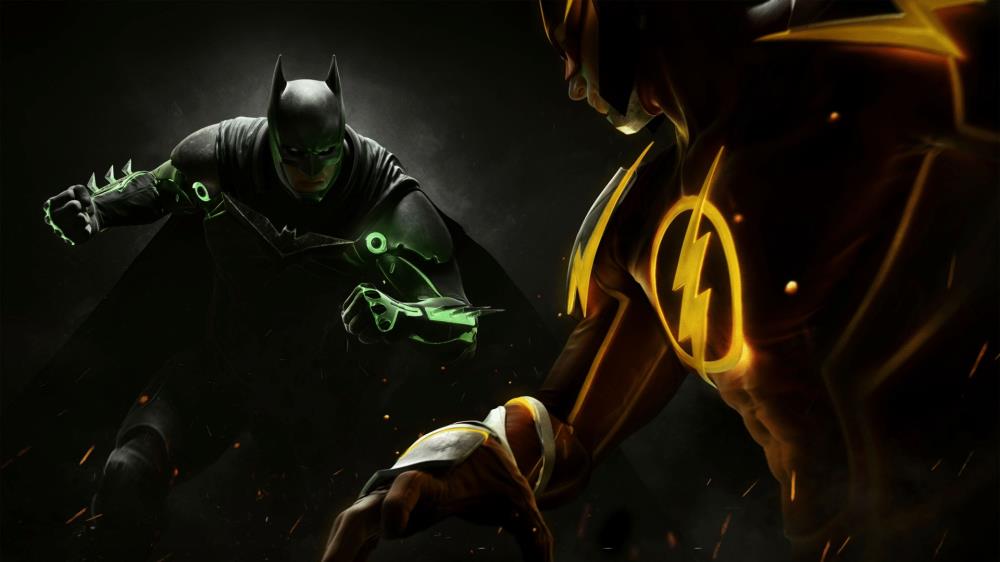
Thanks to the slip-up of an artist working on the title, we now have more evidence that a new Injustice game is in the works.




GTA V's story was the worst of all gta's. Having three characters simply limited connecting enough with any of the characters. With all the other GTA's i've played, I think the best part of the storylines came down to the connection players would develop with the main characters over time. GTA V didn't do this for me. I didn't feel anything for any of the characters, they were simply a vehicle to provide gameplay and nothing deeper. GTA V seemed like a foundation for rockstar to build on new features, gta online, and the next gen consoles. No heart and soul like it's predecessors.
@Jasker - Thank you!
GTA V was a game with a lot of irons in the fire, which is why it's far more open to personal interpretation than say, GTA IV. Three protags over one, a far less linear story over a more conventional one, no antagonist over a clear antagonist...it's easy to see why the game is so polarizing. To call the games story a 'failure' simply because you felt it seemed 'too thin' seems a little too harsh, even so.
And like I said in the article, my affinity for each character was solidified once they had each gained some form of personal redemption as per the games finale. It has been far easier to immediately begin to like many of the past GTA protags because of their far more straightforward story arcs, but in GTA V, the good in each of them was harder too see, eroded as it was by angst and selfishness.