In a time before the micro-transaction, the glittering brightness of 1080p and the unflinching fluidity of an unbreakable 60 frames per-second, there was a period of simplicity and incredible design.
For due to the remarkable feats of Call of Duty 4: Modern Warfare and Halo 3 before it, 2007 provided us with two of the most ground breaking and unmistakable first-person shooters ever created.
Succeeded a few months later by the equally ingenious Battlefield: Bad Company, it was a good time to be a fan of the FPS genre, and in the years that followed, the similarly inspired Battlefield: Bad Company 2 and Modern Warfare 2 would round off a fantastic time for fans of unbridled multiplayer warfare.
But, as the player-counts began to dwindle and the urge of ambition drove game developers forward, the generation ended with shooters far too dissimilar to the ones it had begun with.
Influence bore too heavily on future titles and the well of creativity had all but run dry.
We had begun with the thrill of kill-streaks and the addiction of challenges, and we had ended with the predictability of kill-streaks and the monotony of challenges.
But with the birth of a new generation came the chance to make things right. The industry as a whole was much more acclimatised to the wants and needs of the player, and on top of that, the hardware was the best it had ever been.
So as the lacklustre Black Ops 2 became Call of Duty Ghosts and Battlefield 3 became Battlefield 4, we were ready for what the successors to not just a series, but to a whole generation of shooters were ready to bring to the table.
We wanted an FPS renaissance. What we got were graphically polished versions of what we already had, and from there came the vitriol.
So, where did it all go wrong? At what point did the steady flow of creative thinking and inspired design become copied game mechanics and dull implementation? Well, we should first look at where it all began, with 2007’s FPS behemoth Call of Duty 4: Modern Warfare.
Here was a game seeking to reinvent itself. Following a few decent attempts in the past that took players back to the theatres of World War I & II, Modern Warfare was just that; a modern spin on FPS combat that hadn’t yet been thoroughly replicated. And in order to make the game a success, Modern Warfare would not only need to reinvigorate its single-player storytelling, but also be a success when it came to multiplayer.
And with a renewed combination of an original story complete with likeable characters and a multiplayer schematic that would redefine the genre, Modern Warfare was a hit, and the first meaningful step in the Call of Duty assault on the FPS market.
Of course, the Call of Duty franchise was a multiplatform one, but on the Xbox at least, it would still be heading into battle against Microsoft’s very own Halo franchise.
Like Call of Duty, Halo was a game series that was already established in its own right, but unlike Call of Duty, it wasn’t in need of a drastic reinvention.
Halo 2 was considered by many fans of the brand to be the best game in the series, and as Halo 3 was launched in earnest, it had much more to live up to than Call of Duty 4.
With Halo 3, there were no kill-streaks or perks or a 10-tier prestige mode, but there was an incredible community, and combined with a development team that preferred to spend their time on their own hallowed fields rather than in their ivory tower, the entire landscape of Halo 3 was unlike any other game I had ever played.
On top of that, an emphasis on being the victorious team lead to a competitive edge that spawned a huge tournament focus and saw Halo 3 heralded as the pinnacle of the professional FPS, drawing comparisons with the likes of Counter Strike & Quake. And as if to compliment Halo 3 as the full-package FPS even further, a map editor, a game type creator and a theatre mode for replaying some of your finest moments were all also included, going as far as ushering Halo 3 into being my all-time most played FPS, and my favourite videogame ever.
And then came along Battlefield: Bad Company, an FPS that wasn’t loadout-based like Call of Duty, and wasn’t as competitive as Halo 3, yet held its place amongst the best FPS’ of its time through its sheer unrelenting assault on its own, neatly created environments.
Destruction was the word of the day for Bad Company, and no game series as of yet has challenged it for its place on the mantle.
Add to that the vehicle combat of land, sea and air that was prevalent in the already popular Battlefield games on PC, and Battlefield: Bad Company represented a renewed take on the series console career that began as well as DICE and EA could’ve hoped.
All of these games had one thing in common; despite being different, they were all relatively simple. There was no fat on their bones, and as such, the games were accessible to all and provided a tremendous sense of fun through very little strain on the part of the player.
In Call of Duty 4, achieving a kill-streak of 5 wasn’t impressive, nor was it difficult to do, but the feeling of seeing a fleet of bombers that you yourself guided onto the battlefield lay waste to an enemy team was unmistakably joyous. In Halo 3, traversing the map as a team, collecting the enemy flag and then ferrying it back to base as part of an armoured convoy gave off the same sense of joy and accomplishment, whilst over on the shores of Battlefield: Bad Company, levelling a house full of aggressors with nothing more than a small stick of C4 was a destructively devilish way of looking like you were helping the team.
But as the needs and wants of gamers extended far beyond that of new maps and weaponry, necessary changes became ones that were not only superfluous, but also not completely foreign to their source material.
“More kill-streaks” seemed to be the way to refresh the Call of Duty brand, but next to its tired formula and rapidly deteriorating map design, this was a game steadily losing its life. By the time Black Ops 2 rolled around, Call of Duty had nestled itself firmly into a rut of predictability, and as the first Call of Duty of the new generation ‘Ghosts’ appeared still bearing all of the bells and whistles tacked on to its predecessors, it was clear that the Call of Duty brand wasn’t changing anytime soon. A victim of its own success perhaps, the risk being that change would incite hate and hate would breed deviation from the series. For now, Call of Duty resides precariously on the edge of a cliff, destined to lose its footing unless it finally decides to hoist itself upward and begin anew.
The problem with Halo couldn’t have been anymore different. Bungie had left, and Microsoft’s new key holders to the franchise, 343 Industries, stepped into the limelight for the first time.
With new source material, new developers and a new ethos, it was an exciting time to be a Halo fan, and with droves of consumers making the release of their introductory effort one of the biggest Halo releases ever, all signs pointed to this being the perfect start for the rebooted franchise. But, mere months after its release, around 360,000 early adopters of the game had ceased playing, and the cumulative population of Halo players was at an all-time low.
Simply put, Halo 4 is suffering from an identity crisis. 343 obviously want to carve out a name for themselves and make this trilogy fully known as the ‘343 trilogy’, but to do so at the expense of everything the series has stood for in the past was a bad move. Call of Duty-esque load-outs and kill-streaks are prevalent for reasons unknown, whilst a credit based ranking system rewards only time played rather than skill, effort and victories. And as damning as the population decline already suggests, Halo 4 may have been well received critically, but its formerly steely user-base wholly disagree.
And at the third and final point of the triangle is Battlefield 4, a game that simply doesn’t work.
Sure, it’s possible to play multiplayer matches as per usual, but next to a slew of problems with the netcode that show player movements a with a second or two delay, a one-hit-kill bug, rubber-banding on most of the games maps, imbalanced weaponry and broken features like the improperly aligned sights on attack helicopters, and Battlefield 4 takes the unwanted title of being the most broken game I’ve ever played with ease.
The game is in such a state of disrepair that it has even had consumer lawsuits wagered against its publisher EA, whilst a recent patch to rectify a few of the problems only resulted in many more arising in its place.
It’s fair to say the decline of some of my favourite FPS’ has left me more than a little disillusioned. And next to bland repetitiveness of Call of Duty, the afresh yet contradictory direction that Halo has taken, and the incomprehensible breakage of Battlefield 4, then what’s left? Well, there is actually some light at the end of the tunnel…
Rather surprisingly, the only shooter I have found myself going back to in the early days of this new generation is Killzone: Shadow Fall. The campaign may have been akin to receiving a lobotomy in a 4x4 greyscale room, but its multiplayer evokes everything I’m hoping to see return to the multiplayer of future FPS titles; it’s simple, it’s fun, it’s addictive and most of all, it works. I may have criticised the game in the past for not having a niche, but maybe its niche is being the only worthwhile shooter out there at the moment.
But despite all of this, I’m less concerned with what will happen in the future as I am with what has already happened in the past.
We’re in an advanced time, with amazing technological advances that are in place to bring us some of the greatest games we’ve yet to see. The Xbox One and the Playstation 4 are terrific machines both, and for as much as recent FPS releases have disappointed me, we’re in a healthy enough position for this to not be the case in the future. And with Planetside 2 and Titanfall both already on the horizon, perhaps now is a better time than ever to cease shuffling from side to side and instead take one giant, genre-defining leap forward.
Microsoft announced its financial results for Q3 of fiscal year 2026, including an update on its gaming Xbox business and more.


Not looking good. Hopefully Asha Sharma is able to turn Phil’s disaster around.


To me it's still quite remarkable how they can cash-in 5.3bn in revenue in a single quarter, since their hardware is basically dead.


The charity event will be streamed live from Gamescom in August.
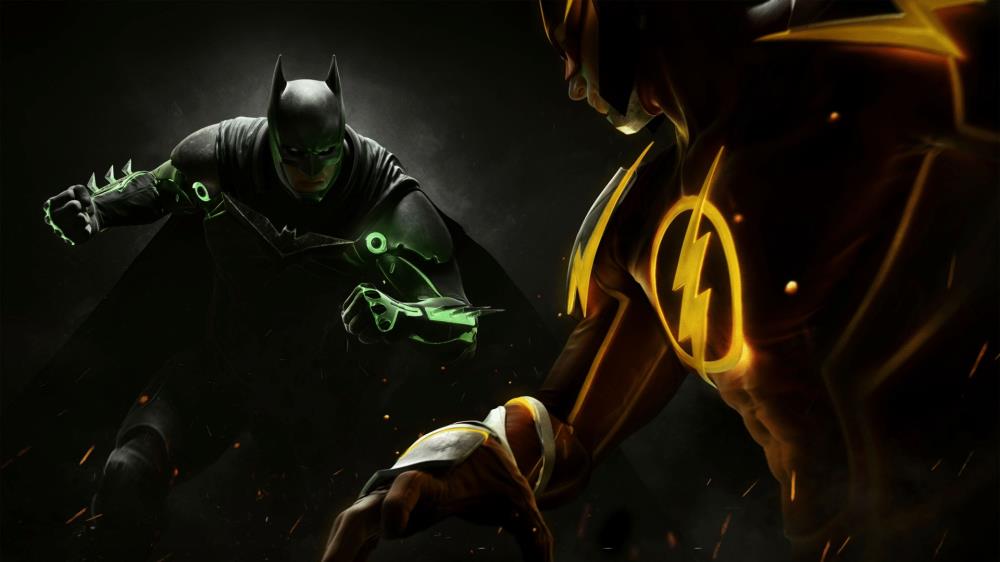
Thanks to the slip-up of an artist working on the title, we now have more evidence that a new Injustice game is in the works.




Brilliant, simply brilliant. The new generation is indeed offering up a few unique deviations on how competitive multiplayer is played, and we're already seeing that in the mainstream. We're seeing this with Titanfall (as you've mentioned) and Evolve. But a lot of gamers are against Titanfall.
For some strange reason, people are of the mindset that Titanfall needs to have a ridiculous amount of players in order to be considered a next-gen game. I find that to be very close-minded; it just comes off to me as sounding like a child who thinks having more birthday presents than last time is somehow an improvement.
Having 60+ players in a battle sounds nice for a battlefield-style game, but if you've seen how Titanfall plays, that would only complicate the experience.
I don't want to just see new IP, I want to see new IDEAS, not companies playing it safe by simply adding more and more to what we already have. That's not fitting for a new generation.
I also blame those three (along with Zipper) for the CallofHalofield 4: US Navy SEALs incident... That was the final nail in the coffin for SOCOM
While i agree Fps are less and less interesting, Some that come to mind of course Infinite and the seriously underrated coop fun that is Syndicate. The issue is with the shear numbers of Fps coming out. I think Re-invention is going to be hard, I have high hopes for The division ( even if its not reallly a fps but a shooter none the less ) Destiny has me very hype, With Bungie at the helm with a large budget this is a day one purchase for me at least.
I do however disagree with one of your statement about Bf4, On pc at least i have had no issue to play since i got it on Black friday sale. The game is simply brilliant and my 4 friends and i cannot stop playing together. Its a great game.
all i know is mw2 was simply amazing in every way it catered to everyone... and for some reason with the same guns w diff names or same names/guns! i cannot consistently pull off 4+ kill streaks but in mw2 ohh man i was callin in my sentry gun,harrier and pavelow like clockwork now just about every damn time i die in that kill cam it shows me standing/running never shooting at all but on my screen im unloading on the guy and im the one dyin
CoD4 simply had the best mp maps out of all Call of Duty's. Since MW2 there's been a rapid decline in quality of maps. The same with Halo 3. To me, it's one of the main reasons those two titles were much better than the newer ones