
We have all heard of emulators. If not let me explain; an emulator, is essentially a computer program that acts as another system. In this case, the program acts as a certain console. We have Nintendo emulators, Playstation emulators, Sega emulators, and many more. To make an emulator, people use reverse engineering on consoles and then program them for PC.
(A lot more complicated then it sounds)
Reverse engineering takes a very long time.
It is basically tearing a console down piece by piece and rewriting the code, which is why it is rare to see emulators of current gen systems. However with the PS3 being hacked it may come sooner then later.
Recently Graf_Chokolo a hacker who has contributed many things to the PS3 hacking scene was raided. He threatened Sony by saying that he would leak many things if he was pressured, and this morning he was. The police raided his private home and he kept true to his word and leaked his information over the internet. He says "The uploaded files contains his database which is a series of tools for the PS3′s Hypervisor and Hypervisor processes.It will help other devs to reverse engineer the hypervisor of PS3 further." With all this private information being gathered from the PS3, reverse engineering is much easier for developers and programmers.
What this means is that we may see a PS3 emulator sometime soon (and by soon I do not mean a couple of days) which excites many PC gamers and could potentially be devastating to Sony.
Microsoft announced its financial results for Q3 of fiscal year 2026, including an update on its gaming Xbox business and more.


Not looking good. Hopefully Asha Sharma is able to turn Phil’s disaster around.


To me it's still quite remarkable how they can cash-in 5.3bn in revenue in a single quarter, since their hardware is basically dead.


The charity event will be streamed live from Gamescom in August.
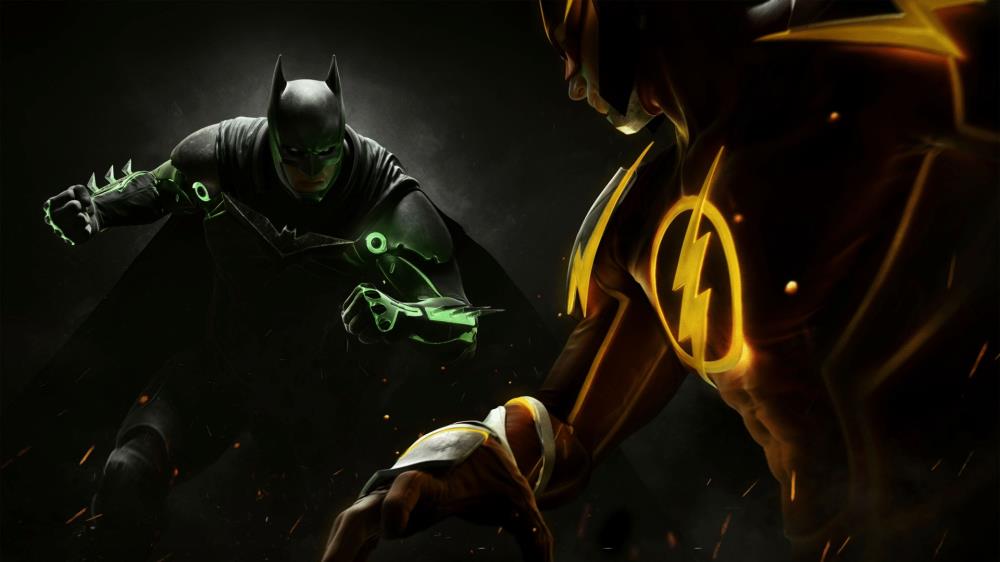
Thanks to the slip-up of an artist working on the title, we now have more evidence that a new Injustice game is in the works.




I don't think it will be possible until the next generation of computer chips come out that use graphite rather than silicon. Current chips top out at like 2-4 ghz depending on cores and such. The more cores the less power the total unit needs to still be faster. It'll be extra difficult for present computers, to emulate more processors than they have themselves.
All speculative however and I'm mostly just debating points for fun.
Anyway good well written article.
Like Dramscus said I don't think we'll see a ps3 emulator running on too many PC's, I mean you need a computer much much more powerful than a ps2 just to run an emulator for that smoothly. It'll be pretty sweet though about 10 years from now if they do have them because we'll prolly be able to run all games at 60fps with a lot of AA and prolly higher resolutions.
010010010010000001100100011011 1101101110011101000010000001110 1000110100001101001011011100110 1011001000000111001101101111001 011100000110100001010
- http://www.youtube.com/watc...
The fastest, best way to emulate a chip is to "recompile" code for the chip -- but you have to take into consideration that this method doesn't factor in parallel cores working in unison.
The PS3 can't really be emulated for that reason. You can't simply pretend that the SPU local stores work like a cache, and that the ring bus can be emulated completely, including the connectivity to the GPU and CPU both. The system is too complicated to work on similar speed cores with a different parallel architecture, and greater speed cores... well they just aren't going to happen... ever. More cores, sure, but the 10x or more required, for an individual core, to truly emulate the PS3 architecture? Heck no.
It can't be done in the foreseeable future. Don't kid yourself into thinking otherwise. Sony could stick a super Cell chip in the PS4, and *then* it would be possible for that chip to be backwards compatible with the PS3... but that's about it. No non-Cell chip will ever be able to emulate the PS3 Cell, due to the hardware/architectural differences and problems with emulating parallelism. And "bigger" Cells wouldn't be doing emulation -- they'd simply be backwards compatible.