
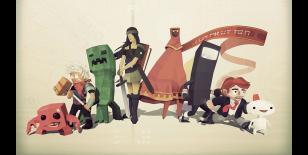
Creativity, experimentation, innovation.
These things give rise to new frontiers in human consciousness, as well as challenging our most stubborn of assumptions. For when something genuinely "new" is made, it creates a new space in culture; it channels a new voice to be heard by the world that was either unknown prior to its creation, or was silenced or suppressed. Creativity and experimentation allows us to explore other possibilities and alternatives to the status quo- politically, culturally and artistically, and almost necessarily, it always simultaneously challenges those three things. At a more basic level, the products of creativity and of uninhibited imagination show us new things, new ways of looking at things, and make us think about things in ways we hadn't before. It is something that continually works against convention. Before Mario for instance, few people would have thought of making their protagonist - for anything - a plumber, and yet nowadays, we accept that- it's registered in our consciousnesses and it makes sense to us. Now, that was just an example off the cuff, and I'm not saying Mario, while certainly original and beloved, is somehow the pinnacle or epitome of creativity and imagination in action, but you see my point. Creativity has the power to include. It has the power to look beyond conventions for other things to include and to be accepted. This is why it is so important. Generally, "trying something new" creatively has political implications. It is a search for things to be registered in and accepted by human consciousness- it might be things that haven't been considered or included or things that OUGHT TO BE considered and included. At its best, a person's creative vision is conscious of its own power, and conscious of what it's trying to show people. If it is not conscious of such a thing, it can still hold value and can still produce things to be revered- happy accidents and the like - but such an approach runs the risk of yielding nothing and courting accusations of arbitrariness.
So, indie games, as they become more and more popular, are doing just this service for their medium. They're challenging preconceptions about what games can be; they're defying expectations built into the medium, and slowly, they're injecting a bit more class into the medium- a bit more sophistication. Already though, they face an adversary. It is however, an adversary that wears an inviting smile; an adversary that entices these indie developers with all sorts of monetary incentives and benefits. I am of course talking about Sony, and Microsoft.
What Indies have quickly become – and will continue to become – are crash test dummies for the big corporate monoliths of videogames. Sony and MS continually express sentiments that would suggest a kind of care for the creativity side of things, but really, in an industry that's fast becoming stagnant, they seek to co-opt Indie developers in order to scope out new, and PROFITIBLE territory. Once the risk is seen to vanish from these new and innovative ideas, corporate entities can intervene and put them to market themselves. They don't really care about the growth of videogames as a creative, expressive, and culturally significant medium; they only care about running a business- acquisition, monetisation, the accumulation of wealth and corporate power. Clearly, these things are of a higher priority to the games themselves and to the importance of human creativity. It seems highly likely to me that their intent is to establish new fixed norms in videogames from which to generate a stable profit. The CoDs of yesteryear will be replaced with nowadays’ indies, these indies of which will become the new cash cows- their ideas eventually becoming just as stagnant as some of the stuff that's churned out these days.
Corporate co-option is a superficial and deceptive practice. As I mentioned in my previous blog, it exploits the attractive and varied "surfaces" of various artistic and cultural artefacts in order that it may profiteer off of them. What this shows is a patent prioritising of profit over creativity. The profit motive acts as a huge distraction from the intellectual, human content therein, and all that's important is the marketing of the surface features of those artefacts through advertising. That "something new" that is made is snatched up and subjected to the superficial and exploitative practices of corporatism, and only its most broad and widely appealing features are advertised, and with great aggression. It promotes a kind of freezing of cultural consciousness by absorbing that which is "trending" and aggressively touting that trendy element until saturation point and eventual stagnation. It precludes a deeper more profound understanding of any of the material it markets. And creativity, rather than opening spaces in culture for the unmediated consideration of reality and consciousness, becomes shallow, and any "inclusive" sentiments it might offer, become equally so- chiefly because at the very core of it, such fundamental concerns are not the concerns of the corporations supplying these artefacts- profit is. Indies who play into Sony’s and MS' hands are courting artistic disaster and failure and will inadvertently contribute to a shallow culture.
Creativity then, allows us to explore, like I said, new possibilities and new configurations and potentialities, and in enabling this, is also necessarily political, specifically with regards to identity politics. My worry is then that the sexism debate, being such a "current" and "trending" thing, could easily be co-opted itself, and subjected to a shallow and cynical treatment. If the debate was to finally come to a close with those who aggressively denied its existence giving in, there is a definite possibility that the anti-sexist, gender equality (and all the other forms of contentious equality) sentiments will be co-opted themselves. That is to say, because they are "trending" and "popular", corporate entities will see opportunities for profiteering, thus disembowelling the substance of the whole debate. In fact, this even threatens the debate as it currently rages on and it’s easy to see how it too might be co-opted into various corporate products and represented in a shallow manner. It is easy to see how both camps could be pandered to by a corporation who doesn't actually give a hoot about any of it, and who materialistically values money over humanity and human relations. Corporations in general like to advertise things to a degree such that they seem indispensible to potential buyers- they are a force that attempt to naturalise things, to fix and freeze realities about things in order to create a stable platform on which profit can be securely generated. They are cynically indifferent to questions of human existence, reality, knowledge, and the advancement of our understanding thereof. They try to fix the growth of these things by aggressively marketing them as the be all and end all, not to mention reducing them to mere "products".
Anyway that's all for now, thanks for reading.
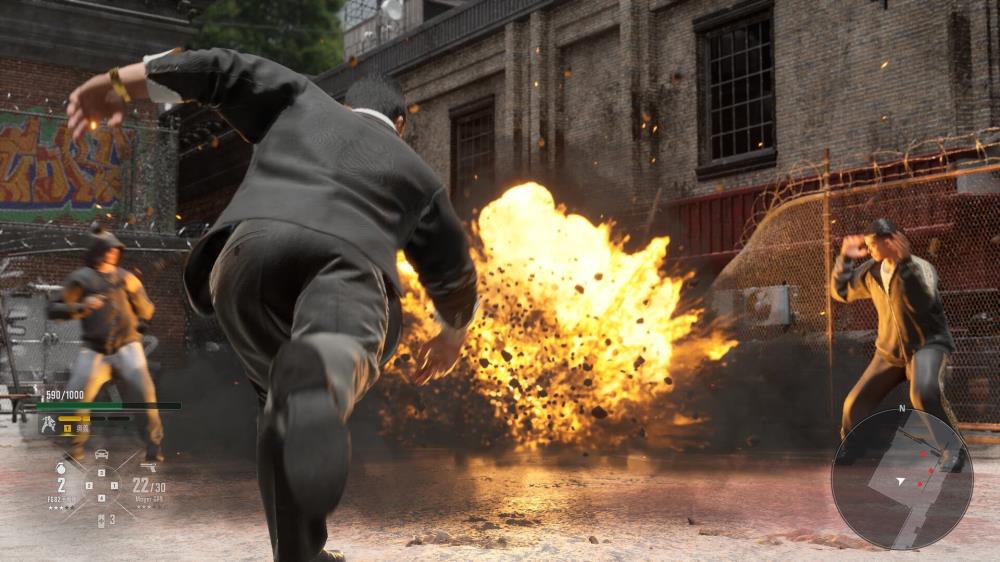
Nagoshi Studio’s YouTube channel with the Gang of Dragon trailers appears to have been removed following reports that NetEase will stop funding.

Dear team,
Xbox has always been different.
We started with a simple idea. Games should bring people together through shared experiences. That led to the first Xbox in 2001, Xbox Live in 2002, and new ways to connect, from friends lists and achievements to parties and play across devices. Today, Xbox reaches over 500 million players around the world, with some of the most important franchises in entertainment.

re-evaluating exclusivity 💀
PS players will need to go back to pretending to dislike Xbox games

If they go back to exclusive games it at least shows that they are finally getting it. They would be turning down immediate money for something that will potentially workout in the long term.
Only issue is they've already opened Pandora's box. A lot of their base has moved to PC or jumped to PS. So will be a long road to get back on track.
We have been saying this from day one exclusives are a must if you are going to be selling hardware look at Nintendo and Sony before Jim Ryan. That's the proven formula. You had some that were deluded and blinded by loyalty accepting that multiplat was the future and that MS was merely getting ahead of where the industry was headed, but at least they can finally see the light and agree with what everyone has been saying for a decade+

Despite all of that, it's clear that Microsoft's Xbox division is broken beyond repair.

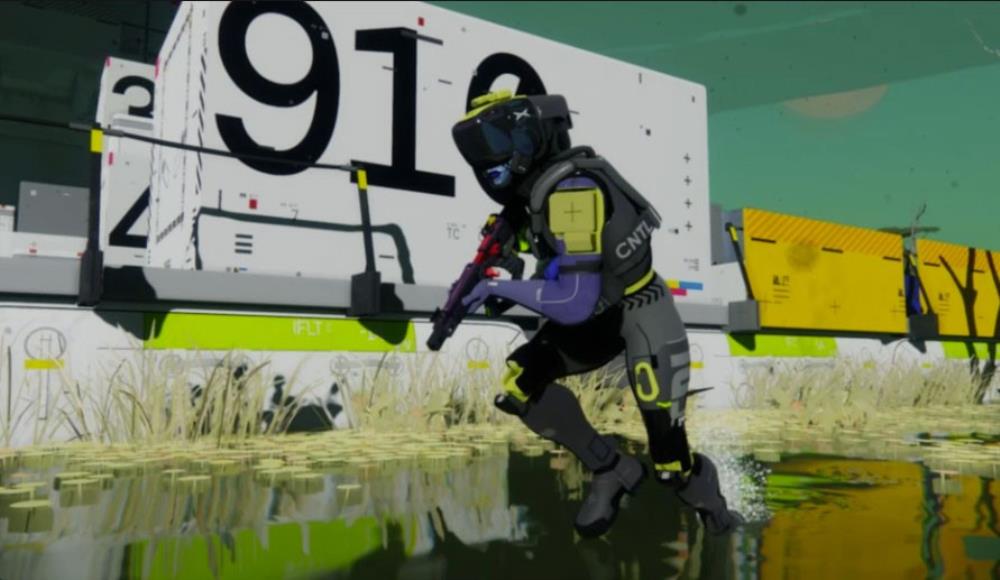
Insider Gaming writes: "Marathon was one of the best-selling video games in March 2026 in the United States. On Wednesday, Circna released the best-selling games of the month, and it featured six new releases along with two games returning to the top 20 after previously falling out."
Is it April fools day again?
The game is dead.
EDIT: the numbers are fudged. “digital sales on Nintendo and Xbox weren’t included in the data”

“ Is it April fools day again?
The game is dead.
EDIT: the numbers are fudged. “digital sales on Nintendo and Xbox weren’t included in the data”
Does it hurt you to hear a SONY game was BEST selling ?
You gotta let go of those OBCURED feelings 🤷🏿

Yeah sure, yet the player count is no where near what they want for a AAA game with so much money behind it
Why people are trying to spin this game like it’s done overly amazing is baffling to me.
It won’t even be a blip on peoples radars by the end of the year .





You are clearly an intelligent person with something to say but your writing style is really tedious to read.
I concur that from what I experienced from Sony as a corporation in regards to indies is the fact that some not all indie game developers have succeeded in the Playstation platform; such as, that game company behind flower, q games the company behind the pixel junk series. My point is that Sony has not ruined or drove indie developers insane. The only downside is that Sony fails to promote say indy titles, that's the major issue with Sony the lack of marketing and hyping the independent games. Anyhow pretty good blog