
Video games have evolved as an entertainment medium, and educational values continue to evolve with it. While video games have a lot of controversy for being “junk for your brain” and influential on violent behaviour, there are a myriad of games that can be fostered for educational learning.
I will break down the dimensions of how video games can be approached in a classroom to give you an idea of how video games can help serve students and learning. In the end of each section, I will list the major theme, examples of games in this area, and certain concepts to consider.
1. In a modern classroom, learning has evolved to be especially considerate and sensitive to the diversity of the learner. There are those who struggle with exceptionalities, and require special education for a variety of physical, behavioural, and mental disabilities. For these students, video games can fall under the guise of assistive technology, which is to say that special education students can use certain tools to assist in their disability.
For example, braille books or a wheelchair can be considered assistive technology for blind students, or students that lack mobility. But how do video games assist students in this way? Well, the answer here is that video games in a classroom are generally understood as assistive. Exactly what the benefit is, is broken down into the rest of the categories in this blog. But to give an idea of how video games can help special education students, you have to consider the special education exceptionalities: there is blindness, physical, deafness, and behavioural. Suppose you have a student who is hard of hearing. What does this student look like? You can assume for one that they lack proper speech, struggling to sound out words and carry conversations. A game like Rock Band, where a student plays vocals, can help develop confidence in using speech. Another example includes behavioural exceptionalities. A student with problems with temper and anger management can be aided with a game like Journey.
Students with special needs also lack certain basic skills, like management of time, or organizing and focusing on tasks. A wealth of management games exist, across mobile and PC, and consoles, that help develop these skills in an engaging and relatively stress-free way.
There is another kind of exceptionality that is often overlooked: giftedness. Gifted students struggle in different ways, mainly to do with boredom and lacking a challenge in the classroom. Again, games as assistive technology help these kinds of students stay engaged. Puzzle games like EcoChrome, for example, require a certain kind of thinking and complexity in visualizing concepts and shapes. It is both challenging and rewarding. More traditional games like Chess also exist, as well as Sudoku.
These are particular ways in which special education students can use video games to help inspire confidence in their abilities, and educators can and do use these games as assistive technologies, to provide for student exceptionalities.
In this way, video games can be assistive technology.
Games include: Rollercoaster Tycoon, Rock Band, Journey, Chess, EcoChrome.
Concepts: Rehabilitation, therapeutic, assistive, confidence, impulse behaviour
2. The classroom is more than the class itself. What do you think of when you imagine a classroom? Usually, the rudimentary image is that of a room dedicated to assessment and standardized testing. But the classroom is more than learning curriculum and practicing for standardized testing. The classroom is social, and the activities a student participates in extends past the classroom. Video games are an activity that promotes the social growth of a learner. The student is more than a container that knowledge is poured into. If the student were a painting, knowledge would be like the black and white lines and geometry that shapes the image. But what's a painting without colour? The social development of a student is a crucial component to learning and growing. Without a health social dimension, students lack the colour of life, a sad realization that affects learning. What does video gaming offer in the social context?
As you can imagine, a lot! Multiplayer games, or even single player games, bridge together various people of age, creed, and skill to promote learning together. Tackling goals together is done by working together, as various individuals contribute their skills in a meaningful way that promotes and inspires confidence in their abilities. The most obvious social factor here is communication, where players lend their opinions to each other to help build or complete an objective. This shapes the learner by building social skills that are brought into the classroom with their peers, and also helps build confidence that is more practical in every day life. Leadership roles, and a stress-free way to follow orders are other skills that are built in this context, while differences in age or learning skill are made into a melting pot that plays off each other to help shape or complete a goal (or in other words, everybody is different but can exercise their strengths and weaknesses as they see fit, and this all helps contribute to completing a task!)
Even playing games individually, social skills can be exercised. Think back to the child who is hard of hearing, who becomes more social by playing Rock Band, and who develops confidence by playing a game that asks them to use their voice (something that may not really be asked or expected of them in most other situations)
Or think of the behavioural student who is impulsive or reacts immediately to a situation, without giving much thought process to what they are responding to (ask a child to multiply 5 by 2, and they may simply shout out an answer without processing the problem).
The design of a video game is tailored fundamentally to give feedback to solving a puzzle or problem. You defeat enemies by utilizing your weapons in God of War. You solve a puzzle in Grim Fandango before progressing the story further. Games are played more basically with a “good” or “bad” stimuli, and working through a game promotes this kind of interaction and problem solving, that helps curb impulsive behaviour.
In this way, video games are social.
Games Include: LittleBigPlanet, Portal, Minecraft
Concepts: Stimuli, Impulse, Social Interaction, Leadership
3. What makes video games different from movies? Inherently, it's the user input: interaction. While not every game is dependent on the unscripted actions of a player, the minute-to-minute inputs of a player can vary wildly from player to player. Walking down a hallway in Uncharted may have scripted set-pieces and ultimately end in a scripted outcome, but how a player approaches this hallway, and how they input commands to clear the hallway of enemies is different from player to player.
In a classroom environment, this interaction has experimental potential. Interacting with the environment and moulding the actions on-screen narrates a visualization that has implications to understanding. Put aside the idea of a AAA action game, and imagine something more basic. Imagine a math problem that is presented with a visualization. Suppose you have to find the difference in speed ball A and ball B, both of which are thrown at different speeds. Having a visualization of this that has some interactivity (changing the speed of ball A, or creating a goal or objective that requires adjusting the math behind the scenario), helps learning become more engaging.
Video games in this sense can help inspire students, by having visual interactivity that can help make more difficult concepts easier to understand. A student who lacks the language skills to understand a math question like determining the speed of two different balls is in trouble: Math requires more than an understanding of numbers, it requires an understanding of language and problem solving skills.
Interactive games help visualize these math problems. What does it look like to visualize a ball traveling a certain speed, compared to a ball traveling another certain speed? What does it look like when you change variables that affect speed, angle, and hang time? Since some students are better visual learners, programs that help create math problems in an interactive medium, are creating games at the most basic level. This further makes math more engaging, as experimentation comes to life: no longer are numbers stuck in formulas or in the question itself, but they can be experimented with and moulded by the student. This kind of learning can be crucial, and without it, students can become easily dismayed by the lack of an option to understand a subject in a way that best helps them.
In this way, video games develop understanding.
Games include: Math Rescue, Word Rescue, Scribblenauts, Minecraft
Concepts: Visualization, Experimentation, Interaction
Conclusion:
The classroom is a place of learning and assessing the basic subjects: mathematics, science, language. Children develop a set of skills and critical reasoning techniques that help shape their education in these subjects. We expect students to be critical thinkers, assess word problems, structure ideas, and deduce problem solving techniques. While surprising to some, there is room for video games to help assist (but not replace) in developing these skills.
Video games have a long way to go in becoming introduced and properly implemented into a school, but I hope I've shown how and why they ought to be. Social values of leadership and confidence, psychological benefits of therapeutic and rehabilitation, critical development in conceptualizing and experimenting are all valuable skills that children need to develop, and video games are a big part of our society. The importance of harnessing this medium into something educational is ripe with potential, and it is my hope as an educator that gaming continues to help aid in understanding our ability to learn
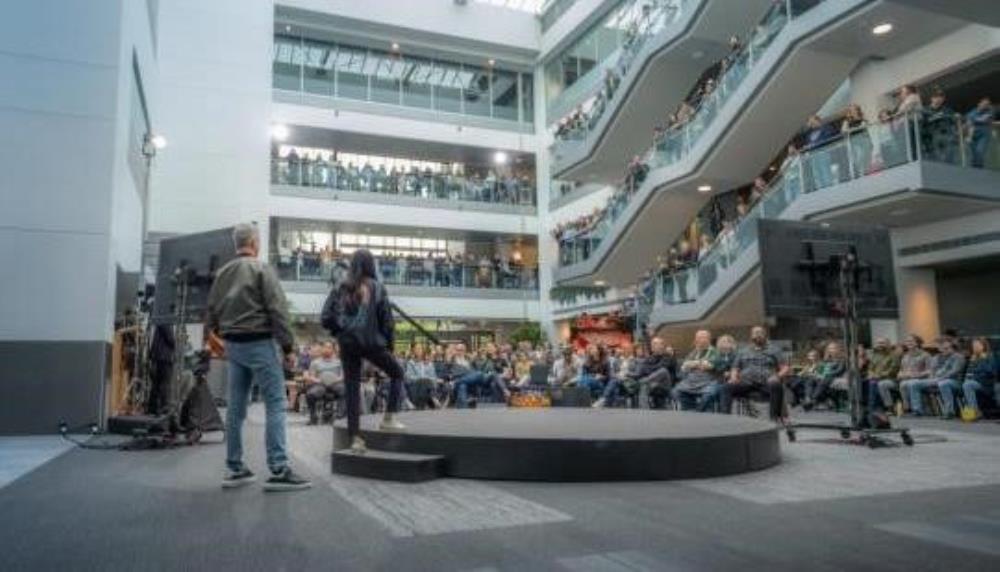
Dear team,
Xbox has always been different.
We started with a simple idea. Games should bring people together through shared experiences. That led to the first Xbox in 2001, Xbox Live in 2002, and new ways to connect, from friends lists and achievements to parties and play across devices. Today, Xbox reaches over 500 million players around the world, with some of the most important franchises in entertainment.

re-evaluating exclusivity 💀
PS players will need to go back to pretending to dislike Xbox games

If they go back to exclusive games it at least shows that they are finally getting it. They would be turning down immediate money for something that will potentially workout in the long term.
Only issue is they've already opened Pandora's box. A lot of their base has moved to PC or jumped to PS. So will be a long road to get back on track.
We have been saying this from day one exclusives are a must if you are going to be selling hardware look at Nintendo and Sony before Jim Ryan. That's the proven formula. You had some that were deluded and blinded by loyalty accepting that multiplat was the future and that MS was merely getting ahead of where the industry was headed, but at least they can finally see the light and agree with what everyone has been saying for a decade+

Despite all of that, it's clear that Microsoft's Xbox division is broken beyond repair.

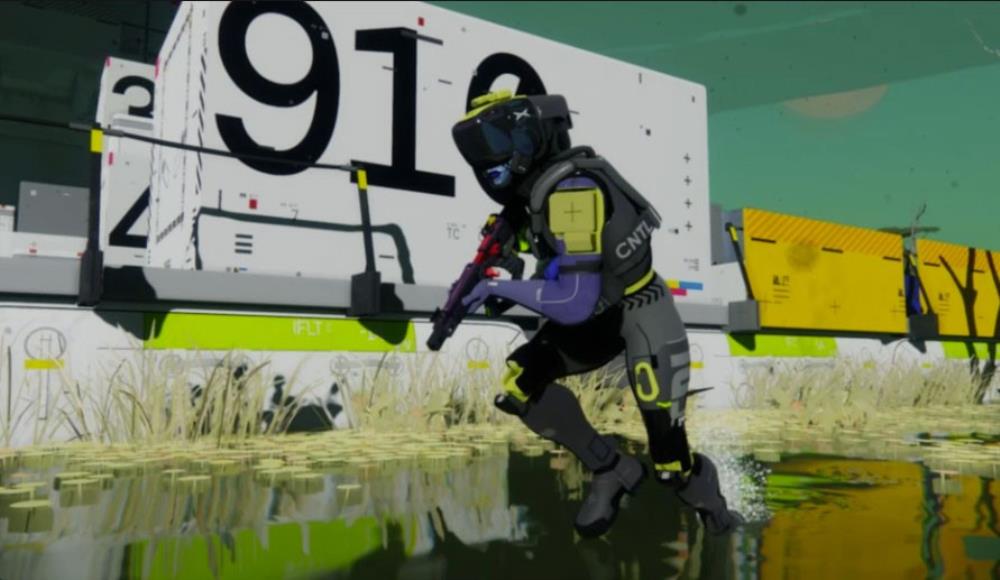
Insider Gaming writes: "Marathon was one of the best-selling video games in March 2026 in the United States. On Wednesday, Circna released the best-selling games of the month, and it featured six new releases along with two games returning to the top 20 after previously falling out."
Is it April fools day again?
The game is dead.
EDIT: the numbers are fudged. “digital sales on Nintendo and Xbox weren’t included in the data”

“ Is it April fools day again?
The game is dead.
EDIT: the numbers are fudged. “digital sales on Nintendo and Xbox weren’t included in the data”
Does it hurt you to hear a SONY game was BEST selling ?
You gotta let go of those OBCURED feelings 🤷🏿

Yeah sure, yet the player count is no where near what they want for a AAA game with so much money behind it
Why people are trying to spin this game like it’s done overly amazing is baffling to me.
It won’t even be a blip on peoples radars by the end of the year .


The release on Steam of the anime-style gacha-less open-world RPG DragonSword: Awakening is facing a legal challenge from its gacha publisher.




I would go as far and say appropriate "games" are, sort of, already in the classroom. Granted, being a primary school teacher, my scope is limited to what I know but games are in most, if not all, lessons.
The problem schools have is justifying spending money on something that can be done far better and more useful in a practical sense. I use more appropriate games in my lessons to support learning a topic. But these video games never, and should never, take centre stage for the child's learning. Working through problems on a big, practical scale is better for a child's development social and physically. Games don't solve the latter issue which is why I use interactive games as a means of consolidation (a fun way to revisit a topic and extend those who can that will keep them engaged).
The problem with some of the games you list is that they are not as appropriate as what is currently available in education. There are a lot of different schemes/programs to follow which do a better job than LBP, Rock band or Minecraft. I couple of my class go for social/language support and they don't play video games because there is a scheme that has practical (almost party style games) to target the social and language side of development. Maths rescue or word rescue look more appropriate however for $40 your asking for a lot for an educational institution to spend. I work in an independent school and £4 for an app is too expensive (especially when cheaper apps can do a similar thing). Minecraft may stimulate creativity but so does lego (also lego helps with fine motor skills). Minecraft/LBP also do not teach children how to code while other games like SCRATCH do.
Side note: I am also unsure how Maths rescue works (random questions or can you choose specific types of questions but if it the former that isn't good for a school since you need to have differentiation options and be able to focus the game on your specific topic/child's need).
Interesting blog but, where ever possible, we shouldn't replace practical games with video games. It is a big issue in education to try and get children (of all ages) to love being active. Video games go against that
edit point 3 is interesting but again cost comes into it
I remember in 5th grade my teacher had an N64 in the classroom to play on rainy days. It made me actually look forward to rain, hah.
Good blog.
Ohhh, I thought this blog was referring to playing while the teacher was teaching.
Use to play Golden Sun on my Gameboy Adavance behind a textbook.