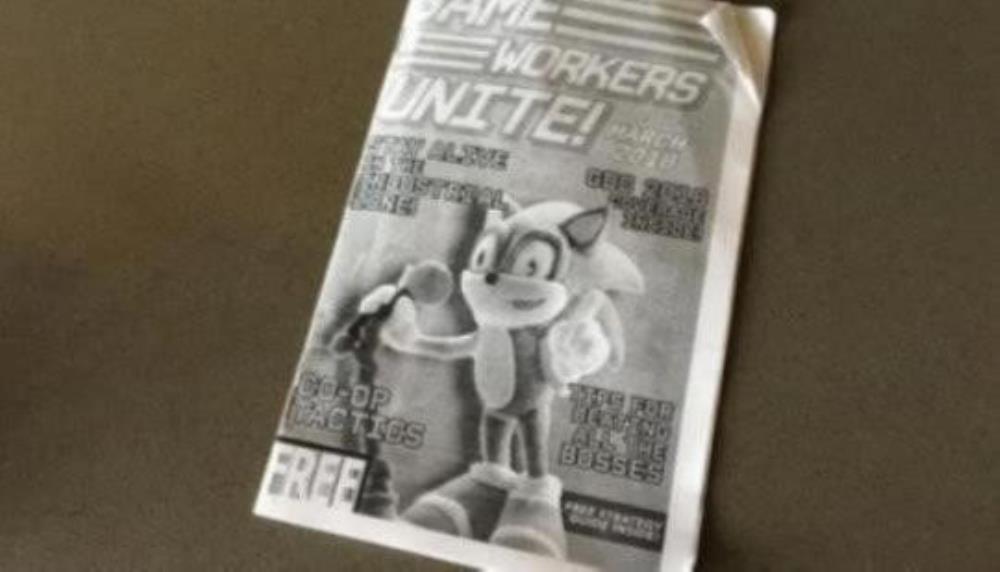
SAN FRANCISCO—In a small room yesterday inside the massive Moscone Center meeting complex, roughly 200 people crowded around a large table to conduct a challenging conversation about working in the video game industry. There was a single microphone, chauffeured from person to person by a sprinting staffer working the Game Developers Conference, which is running in town all week. Most people began talking before the mic got to them. Raucous banging, presumably from construction nearby, drowned out many attendees’ comments. Despite the din, the buzz in the room was apparent: People were ready for change.

New report from Skillsearch found that 22% of those surveyed had been laid off within the past 12 months.


It's a step forward for Stop Killing Games.

The Callisto Protocol director thinks the solution involves the right people, the right timing, and perhaps a little bit of AI
I don't agree with that. I WISH I could agree with that. But buying habits and customer opinions prove otherwise
We've seen developers in the AAA space try new things and ideas. More often than not, the customers aren't willing to give things a chance, or not enough people buy into the project for it to grow.
Creativity works better in the indie space because the budgets, pressures, and expectations aren't the same.
it's a nice idea and it worked during the PS2/PS3-era when AAA didn't cost hundreds of millions of dollars. smaller budgets and shorter development time left room for more creativity and more risk. a game didn't need to sell 4 million+ copies to break even. things are different now.

This is the guy who bragged about crunching his staff and having them work through the night. Crunch culture has lost more talent and done more damage to the industry than any other factor. Screw him.




Please Jason Schrierer, don't talk about things you don't understand. The issue of unionizing the video game industry is a complex one.
yes, there are lots of developers that want a change in many things in the industry, but there is nothing to say that a union will achieve that.
Regular laws already being worked on by the federal government, and some even implemented by individual states will change some of the complaints so far.
The issue of crunch has been addressed for a couple decades now, and no real solution has come to pass, because it's a matter of poor management or unrealistic expectations by producers.
Unions are not a absolute solution. They may be a solution. but the IGDA, along with many industry pundunts who are much more respected than anyone from Kotaku, have been working on addressing these issues. The publishers don't want to unionize, and even if the workers do, then it doesn't mean the publishers have any obligation to listen to them. These workers could go on strike, and then publishers will just outsource their work overseas.
Unions are a complicated issue. Don't talk about what you don't understand. I'm in the industry, and even I don't know how I feel about it. I'm not opposed to unions on theory, although I don't like how some operate. I don't see how any union can achieve anything without trying to twist the arms of the production companies.
There is no tech field that has a union, and most of them don't have problems. Why does the game industry? It's because it doesn't have enough managers that actually know how to manage. A union won't train managers, it'll just make good ones less effective and probably they will end up quitting the industry to go to more lucrative jobs where they don't have to deal with the BS.