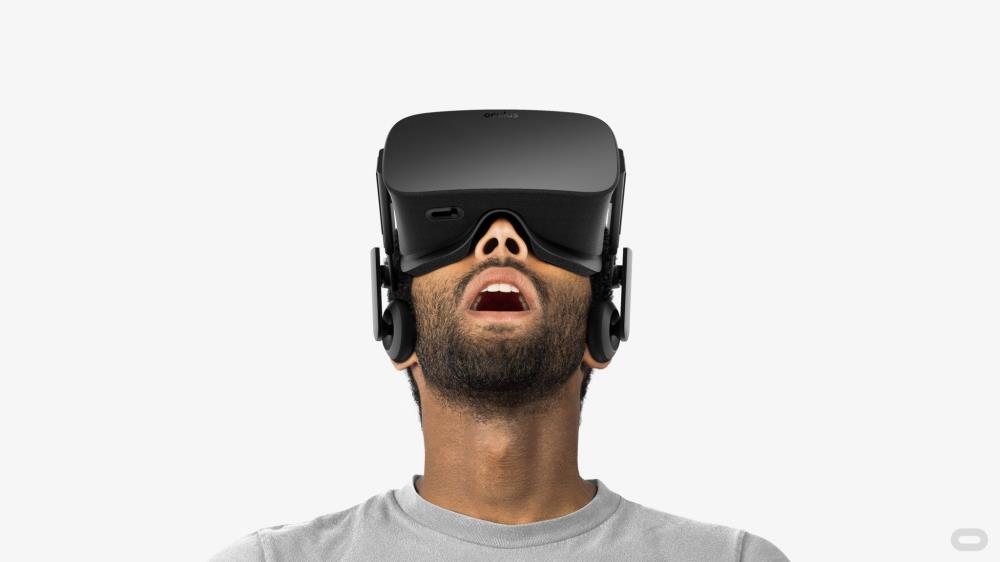
As VR becomes more promonent in the gaming world, we are looking to make that push to the next level of realism. What could that be exactly?
Microsoft announced its financial results for Q3 of fiscal year 2026, including an update on its gaming Xbox business and more.


Not looking good. Hopefully Asha Sharma is able to turn Phil’s disaster around.


To me it's still quite remarkable how they can cash-in 5.3bn in revenue in a single quarter, since their hardware is basically dead.

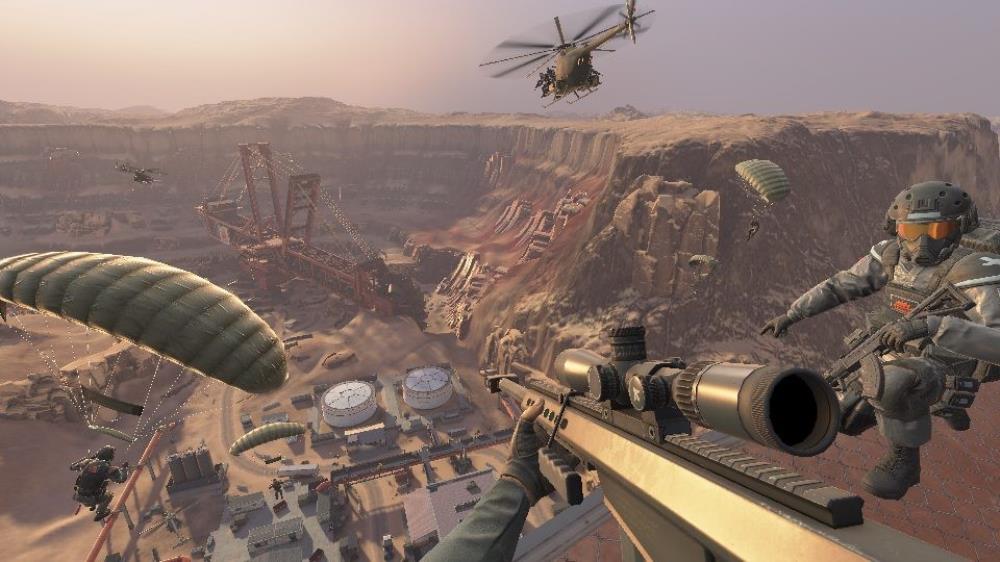
TG writes: If you’ve ever wanted that chaotic, large-scale modern warfare feeling from Battlefield but in full VR immersion, Forefront delivers it better than anything else currently available on Quest.






Convoluted article. Even though I'm known for being long winded, I'll keep this short.
VR has expanded beyond videogames to other sectors from education, entertainment, sports, real estate, space industry, automotive industry, etc, etc. Naysayers who think it's going the way of previous tech like 3D,that has not expanded beyond TVs and movie theaters, are fooling themselves. VR is here to stay. Just needs refinement.
What limited VR before was cost, quality and technology. It was too expensive to create, not high in quality and too expensive for the consumer to buy. Those limits no longer apply. Graphics have improved, tech is relatively cheap and consumers can buy into VR that would have cost the price of a car a decade ago. Now that VR and the tech behind it can be done on a phone, it comes down to making it better and not connected to any one device.
Credit for mass market adoption will be the company that can make VR wireless, self contained,graphically impressive, has at least 4-6 hours battery life and can be comfortably worn. Currently, high quality VR is tethered to console, PC or mobile phone. If a manufacturer used components that are 3x the power of say, galaxy s8, separates the power away from the screen to a wearable battery pack that also holds graphics processing. Making the screen more like glasses and uses sensors or inside out tracking from mini cameras on the glasses frame. With connected, trackable controllers to use in 3D.
It could be done today but would cost somewhere around $1500-$2000 to produce. But, If a top phone that's $600-$800 can drop below $200 in less than 2 years, a VR unit in less than 5 years could be no less than $250 but no more than $500 to buy. Which is mass market. We don't have it now because companies weren't chasing VR before like we are now. But now that companies like Microsoft, Google, Facebook, etc are chasing mobile AR/VR solutions, it's coming sooner than we think. Which will only leave *content* as something to worry about.
VR Porn ends all VR arguments.
I'm still waiting for the killer VR app.