Like a shiny medallion hanging around the neck of an unsightly drifter, The Order’s interpretation of London is one of distinctive duality. This is a city of great industry and progress, yet also one permeated by a lingering sickness that looms large over the simmering dockyards and thatched terraces alike. In the streets, effigies of the Queen are branded and burnt on hastily affixed gallows, whilst in the hallowed courtroom chambers, the towns influential elite deliberate and ponder to no end. But this isn’t simply a city wrought with the systemic issues of pestilence, crime and class warfare, with the alternate history London at the forefront of The Order 1886 harbouring a foe of far bigger significance and far greater detriment to the future of England’s capital.
The story of The Order revolves primarily around mans centuries old war against the mythical Lycans, a war that has now landed on the doorstep of Victorian London. As a Knight of the round table, it’s your job to ensure that the uprising of these beasts is quelled, and that their insurgency of one of the most prominent cities on the globe doesn’t come to pass. This is the basis for The Order’s plot, a tale that’s told in a linear style and with a distinct sense of familiarity. And although this may not necessarily be an impediment, The Order’s story disappointingly remains devoid of the certain reverence you’d expect from such a unique source material.
Part of The Order’s problem is the structure of its plot. Aside from its nonsequential opening, the games events play out like a day in the life of Knight, and for the most part shirk the overbearing Lycan threat. Rather than focusing on the blood-hungry pack of wolves that are skittering across Whitechapel roofs and preying on the weak, the plot veers in the direction of a war against rebels, with the Lycans relegated to just a series of cameo appearances. And for all of the build up that these half-breeds are given, their application in-game attests to very little.
At first, the very notion of a Lycan encounter is enough to leave you shuddering in a corner, the prospect of staring a snarling, man-sized wolf right in its blood-soaked mandibles being something that you’d actively strive to avoid. But after all of the subtle nods in the direction of a Lycan confrontation, their reveal is something of a let down, the beasts themselves attacking the player one a time, charging head first into your knees before reverting to the shadows and trying again. There’s no fear of being hunted, no quivering in terror as you hurriedly try to jam another magazine into the body of your weapon. Instead, there’s nothing but an underwhelming skirmish that is over just as quickly as it had begun, an exasperated Sir Galahad affording the creatures a far greater compliment than they probably deserve.
And really, that seems to be a somewhat recurring theme in The Order; a big, rousing build up, followed by a flawed execution that seeks only to subdue any momentum the game had accrued up to that point. The same can be said for many of its filler sequences too, such as pushing a wagon into place so that it can be used to boost Galahad onto a wall, or slowly navigating the rooftops of a rundown estate under the guise of a pursuit. Even in battles against rebels and mercenaries do things quickly devolve into predictable slogs, with enemy combatants either stupidly suicidal or annoyingly tentative and content to hold position for an exorbitant amount of time. These aren’t problems exclusive to The Order, but they’re definitely accentuated by the games staunch principles surrounding its blend of cinematic storytelling and gameplay. If a tetchy stealth section complete with archaic instant fail triggers loudly contradicts the rest of the experience, then it’s likely to break the level of immersion in the story that the game has built up, with this being a caveat that The Order struggles to deal with.
The Order’s issues are perhaps only punctuated by its much maligned depth. Outside of a solitary run-through the games campaign, there really is little to do beyond reverting back to select chapters in order to hunt for missed collectibles. And with Order’s narrative already concluding at a rather brief seven hours, much of the games post-release coverage has been directed at its general worth.
The climate surrounding ‘AAA’ console games right now is far less optimistic than it has been in years prior. This is partly on account of there being no game that, as of yet, has offered something truly befitting of this eighth generation of consoles. The wait for the likes of The Division and No Man’s Sky would be far less agitating had the likes of Destiny and Watch Dogs not already failed to live up to their billing, whilst those games, although far from the titles that they promised to be, at least had more content to offer than The Order. Despite its aforementioned flaws and lack of innovation however, The Order does bring a few things to the table that allow it to leave its definitive mark, with none being more overwhelmingly encapsulating than the games spectacular aesthetics.
Ready at Dawn’s incarnation of a London blighted by a legendary bestiary fits in well with the games emphasis on a cinematic experience. Black bars adorn the top and bottom of the screen, whilst a thin yet noticeable film grain makes the game feel decidedly like a nineteenth century film reel that wouldn’t be too far fetched in a world of projectile voltage weapons and militarised airships. What the emphasis on cinematic storytelling fails to do though is provide a meaningful place for the player in the events that unfold, as an expected focus on quicktime events serves only to detach you from the unfolding scene. And whilst the use of QTE’s may be far less scandalous than in many other games, their inclusion is just another check in the column of archaisms that The Order seems to revel in.
The world beyond the black bars of The Order’s letterbox perspective is really the games biggest achievement. A land of smog and smokestacks, of gold and gilded halls awaits as you venture forth to some of London’s most iconic locales, with every brick and broken bottle crafted with an almost painstaking level of detail. From a rooftop balcony, London is a bustling hub of rain-washed factories and industrial sites that stretch for miles, whilst between the velveteen curtains of a dimly lit brothel lies a microcosm of happiness laced with a thin cloud of smoke and dried puddle of Absinthe. In accordance with the stylings of its environments, The Order has clearly taken aboard the steampunk ethos, as an anachronistic, industrialised theme gives a marked influence to the games gadgetry, architecture and clothing. You won’t be likely seeing a host of mechanics donned in foggy, thick-rimmed bronze goggles or women bearing corsets affixed together with copper struts though, with The Order’s usage of the art style rarely evolving beyond that of a subtle yet noticeable influence.
The biggest success of The Order’s environments though may have to be the atmosphere that accompanies them. Through a delicate use of soft lighting, a controlled yet appreciable score and organic sounds such as the heavy thud of leather boots against a hardwood floor, each location brings with it a certain natural horror that connotes a perpetual sense of dread. It doesn’t tend to matter whether or not you’re in a bright, busy ballroom or skulking through a darkened warehouse either, as the ever-present threat of a Lycan bursting into view is enough to keep you constantly on your toes, and forever fearing the worst.
The Order’s shortcomings undoubtedly hampered my enjoyment of the game, but they didn’t make me regret playing it. Sure, the games story was at times a thin, lethargic affair that struggled to get off the ground, and its shooting galleries as uninspired as they were generic, but the world in which I waged a war against man and beast was both believable and beautiful. Everything from its decadent, ice white theatres to the burning copper furnaces of its boiler rooms was another piece of a gothic, horrifying London that added far much more to The Order’s narrative than its stealth sequences or its wave defence sections. And whilst the chronicle of The Order was one that left a lot of room for more to be told, it’s perhaps more important that any future title rectify the issues of its predecessor, with The Order 1886 existing as an impaired yet encouraging introduction to a world anew.
If you’re willing to accept the game for all of its defects, then The Order 1886, with its pristinely bleak world and delightfully dour characters may just entrap you within its maw, and leave you longing for just one more jaunt down the moonlit streets of a dreary, blood stained Westminster.

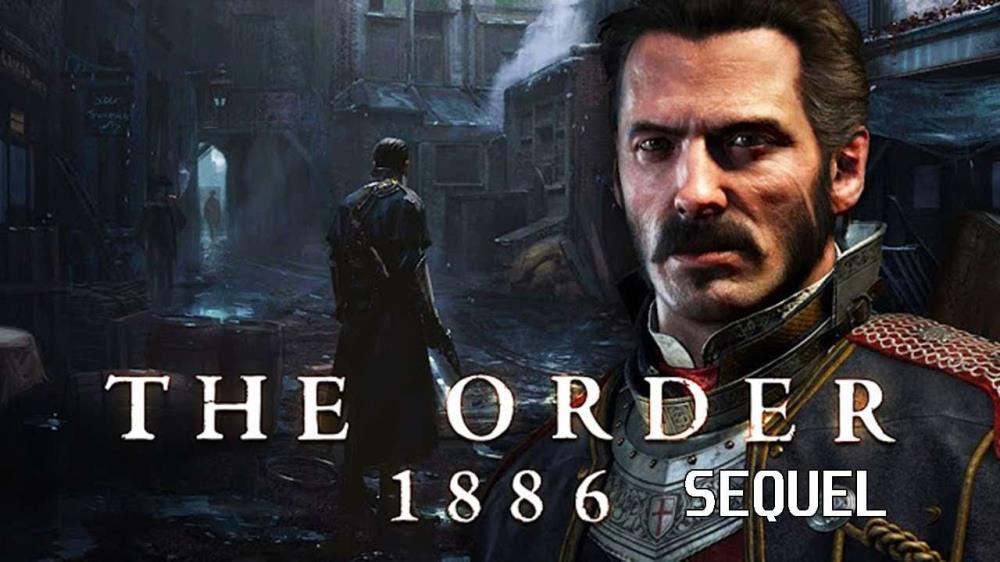
A sequel to Sony and Ready At Dawn's action-adventure game, The Order: 1886, would have featured larger-scale battles as well as multiplayer.

I missed it when games use to have a multiplayer to them.
Hope Sony revives the game at one point

Why add multiplayer when the single player (despite enjoying it for what it was) had flaws?
You'd work out the issues with how you craft the single player then once you’ve perfected it do multiplayer after.

https://www.videogameschron...
"Two sequels were planned for the franchise, The Order 1891 and The Order 1899. While the third game was never in development, Weerasuriya says he had planned where the story of the franchise was planned to go, if he had been able to develop the full trilogy."
...
Alas, we'll also might never get the PC version of 1886, which is currently residing in some dev's hard drive, nearly ready for a release if required.

It’s a shame we didn’t gave its chance to this franchise.
Game world was very interesting, and gameplay could have evolved to a major hit with sequels.
Not even speaking about graphics that were way ahead of their time.
I think MP being co-op would’ve been awesome. Essentially, I always viewed this as Sony’s take on the Gears series.
However, it really failed to measure up to what I expected. I definitely saw the potential but there were some things that really bogged it down for me like the forced slow walking segments (which I know was to hide loading), the repetitive warehouse werewolf fights, not enough variety in enemies, oddly we fought more humans than Darkstalkers, and the stealth sections were infuriating.
One thing there’s no denying though, this damn game was a looker. Such a shame at the wasted potential.
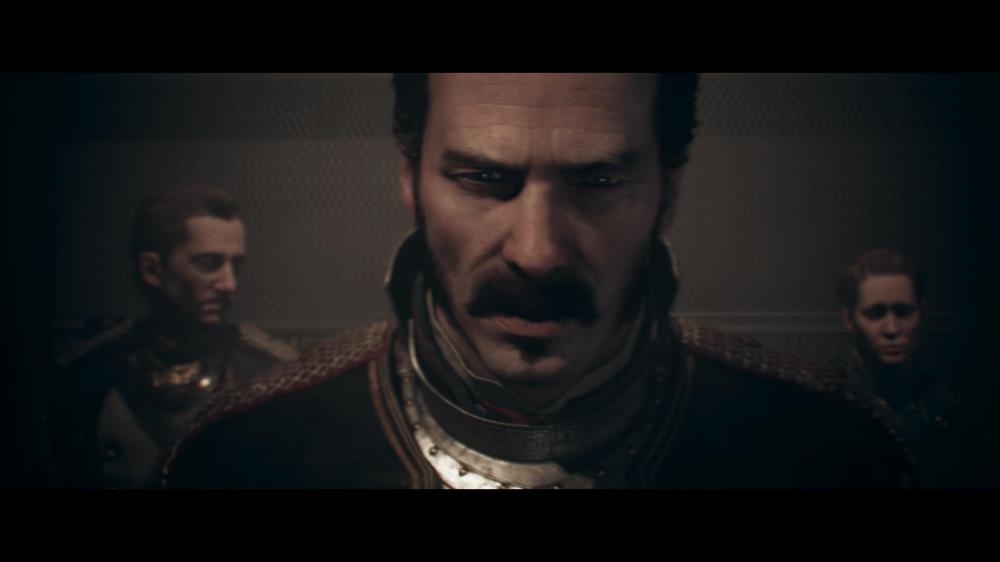
WTMG's Leo Faria: "After finally playing the now decade-old The Order: 1886, what do I think about it? Is it really worthy of all the hate it has received over the past decade? Or is it some kind of hidden gem? I honestly think it falls somewhere in the middle. I loved the setting, the story is initially fine, the combat isn’t half-bad, and the potential for some awesome world building was there. It was all bogged down by too much ambition against a tight deadline, as well as poor marketing. As a result, it’s short, full of plotholes, infested with QTEs, and not exactly memorable as a whole. As a game you can grab for less than ten bucks today, I absolutely think it’s worth checking out. It’s one hell of a wasted potential, but for such a discount, I had some fun with it, and I’m sure you will too."

Great setting, great graphics, even decent gun play, but what a trash of a game. The fuck were these people thinking? We could've had something like an Alan Wake 2 meets Mass Effect 2 style game. With investigations, creepy locations to uncover and explore, people to talk to and even recruit, clues to uncover and connect, monsters to slay, side quests to get lost in, and a more expansive lore to go with it.
Instead we got a shitty AAAAAAAAA Third Person Pew Pew snoozfest. Awesome.
Im back again to simp for The Order, if ya like games well grounded in their reality with consistency in everything it does then I recommend it if ya haven't played it. Play it thru emulation or on your PS it don't matter just play it.

A great game run down by the media for it's price vs length - Which was understandable, but it shouldn't of been the be all and end all.
At the right price this was a great game & deserved a sequel!
I enjoyed this. I think the complaints were the length if I remember. Nothing wrong with a short good game, at least to physical copy owners 😅

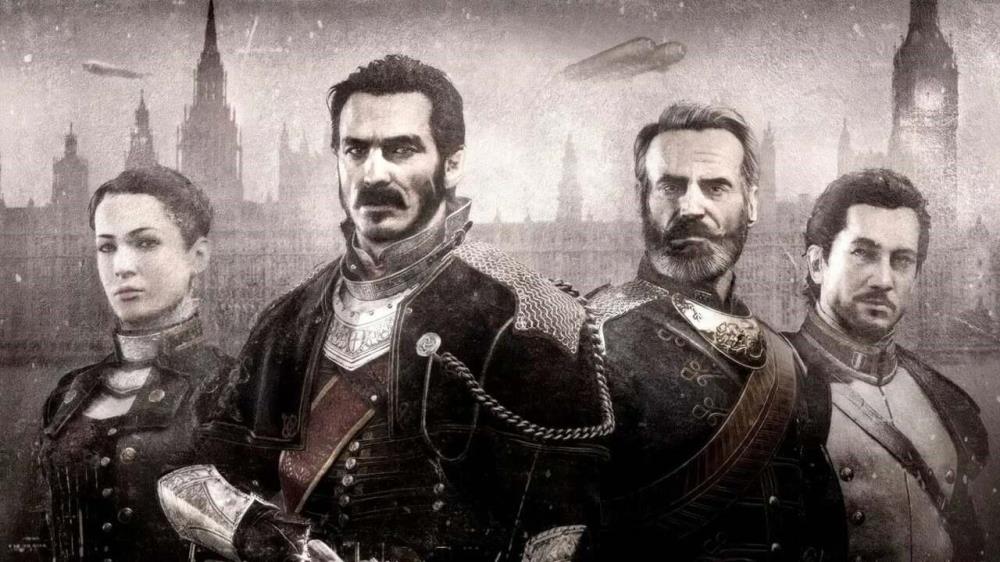
Co-founder thinks bad reviews were to blame.
Ready at Dawn co-founder has revealed the now-shuttered studio pitched a sequel to PS4 exclusive The Order: 1886 to Sony, but was denied the chance to make it.

I can't believe sony turned down a sequel to the order 1886 which ended basically on a cliffhanger. The game is amazing and I would love a ps5 pro enhanced version just like I'd like a driveclub ps5 pro enhanced version.
It’s strange though Sony would be so proud about their work and overall quality but wouldn’t give them an extra year to, give them that quality.
Anyway he talks about if it was in the 70s they’d have had their sequel but Days Gone is at 71 on Metacritic and we don’t have a sequel.
Both games should have one, I think they deserve a second chance at refining and building onto that foundation already laid out.

Yea and there was/is a PC version of 1886 too in 2016 ... but now maybe collecting dust in some dev's hardrive.

That's lame. It's not perfect, definitely a flawed game, but deserves a sequel. You already have the first game as a starting point just need to improve upon it. This could have been a much better sequel like the jump from Assassin's Creed to Assassin's Creed 2. The IP has potential.