*Note: Review reflects my experience of an updated version of the game. First time playing was on February 14th of this year.*
I’ve grown slightly irritated at the idea of a term like “unbiased” being a way of giving adulation towards my reviews. At times, it causes me to wonder if I had only presented calculated information then my own subjective perspective on experience. It’s in cases like Never Alone (Kisima Inŋutchuŋa) that such considerations are amplified. One method of playing the game is practically a guarantee of being the more favorable and that experience the first time through has left indelible memories for me that still overshadow flaws I’ve seen while taking the less-favorable route the second time through. I also can’t ignore that I knew about the laudable intentions the developers Upper One Games and E-Line Media had with this project, which probably influenced my thoughts on it more positively. If you don’t mind these stated biases then please read on.
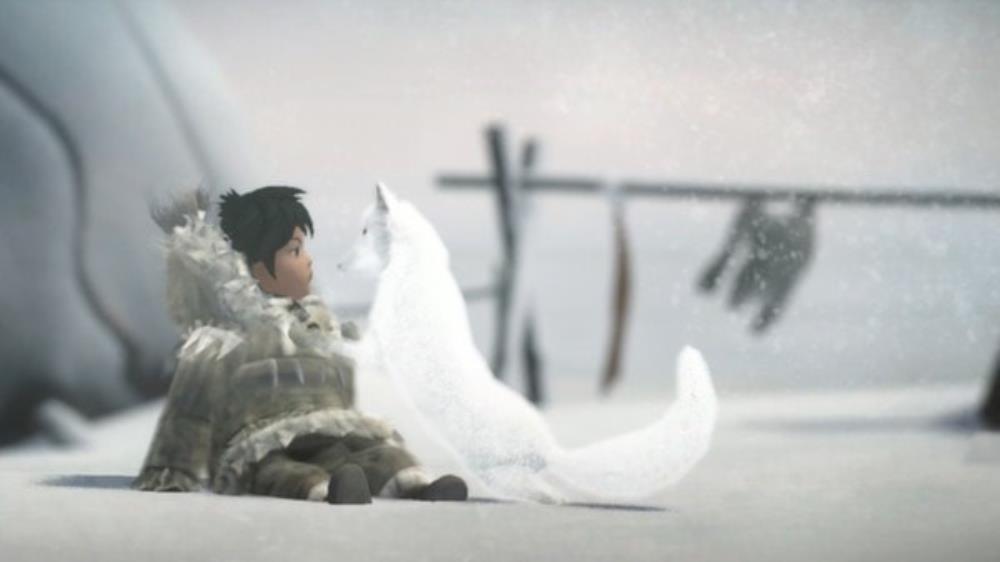
Never Alone’s story is based upon Native Alaskan folklore and follows an Iñupiaq girl named Nuna and her arctic fox companion (called ‘Fox’ here for the sake of simplification). Nuna’s hamlet has been continually besieged from a powerful set of blizzards in recent times, to the point of pushing them towards starvation. With her whole tribe at the end of their rope, Nuna sets out to find the source of this blizzard and put an end to it.
While many games may stick to an expected structure and use this cultural heritage as a means of simply adding character to Nuna, every aspect of the game feels as if it that culture is imbued into every crevice. The first few interesting storytelling subtleties is the voice-over narration being in this Native Alaskan language with subtitles, the start opening up with this “as I heard it from Nasruk” line, and much of the cutscenes animated like a “scrimshaw motion picture” so to speak. Even though I’m not fluent in this Alaskan language, the emphasis and these brief remarks the storyteller makes while espousing the over-arching narrative, plus his quality delivery, did a great job of imitating what it might feel like to listen to this around a campfire.
While supplementary aspects sound nice, what does that mean for the quality of the story? Well…it’s tough to be straight-forward on just its themes, poignant moments, twists, etc. when another secondary aspect, twenty-four unlockable mini-documentary segments dubbed “Cultural Insights,” are intertwined with this story; in fact, any time you get one of the owl collectibles an on-screen prompt to watch a two-minute video comes on screen. One such special case is when Nuna stumbles upon a mysterious shaman-type character who asks you to retrieve his drum that’s been stolen. On the outset, that just sounds like a simple fetch quest from a pure gameplay perspective, which is true; but with added perspective of one of these Discovery Channel-esque collectibles, the task changed from just getting a simple item into something that has such a strong symbolic meaning to this culture altogether. And while some of those short videos are more fluff than history-oriented, the edutainment dynamic here adds substance in a well-paced way; it feels akin to reading a bite-sized chapter of a folk tale while following a cicerone at an Iñupiaq cultural museum.
Never Alone’s narrative is one that’s rife with secondary elements that bolster a simple yet poignant tale. The only quibbles I may have don’t really have much of a negative impact to the experience. It was strange at first for the Nasruk quotes during loading screens to refer to the protagonist as “he” when that clearly wasn’t the case in the game’s story (explained in later documentary clip) and it’s fair to feel a missed opportunity with much of the storytelling relegated to non-interactive-based principles and only aesthetics in gameplay. But because of how those non-interactive techniques are used and how necessary that lateral method of learning is essential here, I don’t think it’s too grave of a concern for it not to be another solid interactive storytelling example. The hardships endured, some unexpected twists, and interesting thematic material all make it so easy to stay invested in this heartfelt story anyways.
The same kind of storytelling inspirations in getting one imbued into this culture are also repeated in the quality visual design immersing anyone into this harsh environment. The methods of a quick death are aplenty and this icy landscape is certainly quick to remind anyone of the dangers here: floating ice blocks subject to the ocean’s will to strong blizzard winds blowing you backwards. One of the most interesting tidbits of visual information projected for the player is in getting down the timing of the wind by having a short burst of tailwind blow Nuna’s head covering of her caribou clothing and Fox’s tail forward before an extended headwind gust tries to knock them down. Those sorts of intimate details, along with the likes of the arctic fox’s stunning swimming animations and the unsettling depictions of spirits that either act as enemies or platforms, all complement the well-rendered 2D landscape trying to encapsulate what a pure Alaskan folk tale would look like in a game.
While not having as many bells and whistles for me to give a lot of appreciation to, sound design is intentionally more minimalistic in trying to capture this world that can change from desolate to serene in a heartbeat. Oftentimes there’s nothing more than hearing the soft footsteps between Nuna and Fox as they trudge through the snow; other areas can feel less like a stark representation of this climate and more tranquil, even meditative. The little details like Fox’s cute little grunts when falling off a platform or the detailed destruction of stilt houses were certainly well-done. Though it’s easy to understand why a soundtrack-heavy approach throughout the whole game would've been a challenging approach to properly nail, there’s really only one later level which uses the soundtrack in a standout way to make that area feel more alien and unsettling.
It is a shame that, despite the healthy amount of aspirations to take away from this game’s creation as a whole, the gameplay will oftentimes feel like a routine 2D platformer. And if played not in the way the title suggests—cooperatively (local only), it can become rather frustrating at times.
Akin to Brothers: A Tale of Two Sons, both of the characters here possesses unique abilities that complement each other. Fox is much spryer than Nuna, is able to jump higher, run up and jump off walls, and call upon spirit platforms when they’re in close proximity. Nuna is able to move boxes and acquires a throwing item called a bola early on that’s used in various ways throughout the campaign. If in solo mode, you switch between characters manually; in co-op, each player controls a character.
Solo mode highlights some key problems that make it a lesser experience. One key issue is the poor path finding of whichever character is controlled by the AI. Although they’re not terrible, there is a noticeable inconsistency that may cause them to fail a jump, walk towards a hazard, or remain still unless switching between them to keep moving. And when considering how easy it may be to understand many of the gentler puzzles, the focus on materializing spirit platforms with fox to then HAVE to transition to Nuna in order keep moving ahead eventually gets to feeling like busywork with the added complexity to certain obstacles later on.
Going with the local co-op route certainly alleviates these issues with expediting the puzzles faster and getting to blame human error for any failures; yet even with this kind of consideration, there are still universal issues at the core of its platforming template. The bola-throwing mechanic feels too loose and un-agreeable in trying to zero in on the proper trajectory to make when hitting small spirit orbs or breaking ice. The difficulty tends to spike inconsistently towards the end and the different mechanics towards the finale don’t really gel with what the game was building up beforehand. It’s a conflicting case of subtraction by addition: different abilities that appear to be more freeing for one character but don’t feel that way because of how necessary it is to babysit the other character. On top of that, it simply feels less enjoyable to play. And, admittedly, there is a lot of ‘down time’ in which the only action being taken is left-to-right platforming.
It seems tough to avoid all of the gameplay annoyances not matter what you choose! But I don’t want to sound totally negative. The game’s simplicity works well with its gradual slope of difficulty and a couple of the brainteasers and chase sequences were very enjoyable. Even the ‘down time’ complaint and laggard pacing compared to what I’m used to in 2D platformers seemed rather fitting here. Those easy moments where there were only jumps and transient changes in the winds to deal with did a great job of capturing that quiet time of this wilderness without developing into ennui while I was playing. Perhaps that excuse is more of an appreciation of the setting more than anything else.
The part where my subjectivity will play a bigger role than that would be how I experienced the game in my first playthrough. Despite playing the game in both singleplayer and co-op the whole way through, I still can’t take away how I felt when doing it in local co-op first—which should’ve probably been the only option for the game by my estimation. There’s this inexplicable pull towards everything the game had with that mode which left me rapt in attention with what was happening quite often. That sensation of the game’s thematic underpinning of interdependence and essentially reinforcing that when playing with someone else marked this experience as something unique to any other platformer I’ve played. When I implicitly considered that 'non-gamey' quality, Never Alone felt less like a 2D platformer focusing on a culture’s identity and more of a platform in engaging in the sort of communal experience that the game's examined culture so cherishes. And in some small way, that made quite the difference.
If you’re in the mood for a three to four hour experience and can meet the terms of what the game’s title implies then perhaps you’ll feel that same kind of connection too.
coolbeans’ *FresH* Badge
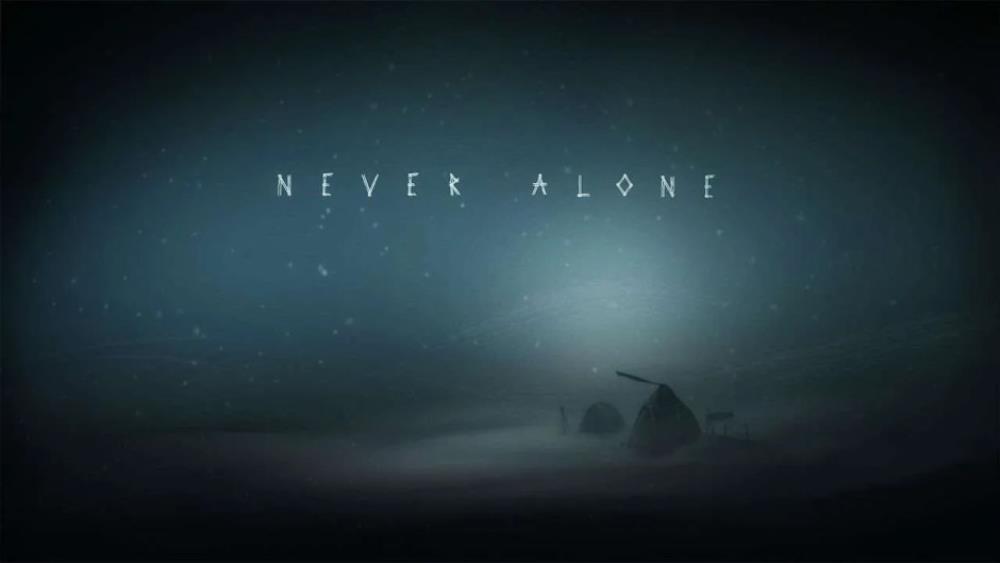
E-Line Media and the Cook Inlet Tribal Council (CITC) announced today that the indie game Never Alone is featured in the Smithsonian Institution’s upcoming Futures Exhibition.
BY JOHN SANTINA: On paper, I shouldn’t have liked Never Alone. It’s a platformer with some light puzzle elements, two factors that would usually find a game on my list of games to avoid. However, after pledging to get organised to beat my game backlog, I noted that Never Alone plus the Foxtales expansion would only take 4-5 hours to complete, so decided to get it over with. I’m so glad that I did.


Very intriguing game. One I could not put down until I was done.
Glad to see it finally get some coverage.

This was a nice short game, good story and lite fun puzzles. Never played the expansion but am sure it is also great.

A Google search revealed this
"Never Alone developer's new game is an educational underwater experience inspired by the Blue Planet series
VG247 · Beyond Blue
Jun 15, 2018

Carlos writes: "For gamers, this year has already brought us enough wallet-wiping adventures to last a life time, but there is always one thing that can make all those expenses feel a little easier – quality free games!
With that in mind, it’s time to dive into the latest Games With Gold titles that we’ll be receiving in December 2018 to see just how good or bad they are, and whilst they may not quite match up to last month’s incredible offerings on first glance, there is still plenty of fun to be had in the run up to Christmas with titles that are sure to surprise those who jump in."

Mercenaries is always fun. A tribute to the bygone days of the brilliant gaming studio Pandemic.
I actually like Dragon Age 2. Isabella is one of my favorite and is a character I wish they would bring back in a new dragon age game


Hmm. An incentive to turn on my Xbox, get that fan to blow out some of the accumulated dust.

Mercenaries certainly is but I don't know anything about the XBO titles. Dragon Age 2 was utter garbage though, a mission statement to how shallow Bioware would be in developing games from that point forward.




Hope everyone enjoyed the review. Please feel free to leave any comments or questions below.
To reiterate on the update at beginning: I noticed some complaints swirling around the web about the game's poor release in regards to bugs, AI, etc. While it certainly had problems, as noted in the review, my experience never seemed as dramatic as it was for others (which is a shame that they had to go through that). For the Xbox One version: be prepared to get a big update (about the size of the game itself) when you try to play it.
The tagline infringes on me. You'll hear from my lawyers.
Until then, a very good review! More excited about getting it on PS Plus now.