In an instant, a large explosion erupts and the resulting mushroom cloud of ominous emerald light opens a gargantuan rift in the sky, later called the Breach, serving as a portal of sorts to the world of demons, the Fade, and the malevolent creatures start falling from the upper atmosphere. It sounds like the potential plot for a new season of Supernatural, but it is in fact the introductory narrative for Dragon Age: Inquisition. The eruption had conveniently interrupted a peace conference between mages and templars, spearheaded by Divine Justinia, the head of the Chantry. The only survivor of the blast is our customizable protagonist, with a mark on their hand matching the power of The Breach and no memory of what happened. It is shown that the mark upon their hand is capable of sealing the rifts that have peppered the world.
After subduing the threat of the Breach, the player character begins to be referred to as the Herald of Andraste, with the devout having believed that the ability to seal the rifts is a gift from the heavens itself. Cassandra and Leliana, former assistants to the Divine, enlist the player character's help together with former templar Commander Cullen and ambassador Josephine, to carry out one of the Divine's last orders: establish the Inquisition, an organization which can act independently to address the crisis, close the Breach and defeat the one who created it.
Dragon Age: Inquisition does something that I go back and forth on, and that is confusing you. When I first started the game, I was more confused than a chameleon in a bag of Skittles. Your character is essentially a suspect to the deaths of countless people, yet is thrown into the fray with an assumed ability to fight demons and given leadership responsibilities. It's rather wishy-washy and we were probably not expected to question it, because in hindsight, it doesn't make any sense, initially. It starts to make sense down the line as more information becomes available and it's almost like Max Payne in a sense, where Portuguese to English translation subtitles weren't available because the game wanted you to be as ignorant as your character. That's how I felt about Inquisition's plot after some thought. Considering that our hero knows virtually nothing until later, why should we? I'll give Bioware the benefit of the doubt and say that that's what they were aiming for.
The narrative for Inquisition is, on the whole, great. While the plot has some unfortunately weak moments - with some details left without emphasis, explanation or...well, sense - it's certainly captivating and generates enough interest to motivate you to finish the enthralling campaign. However, with a game as expansive as Inquisition, its somewhat understandable that a few details may not be as completely refined as they could be. In my opinion, it doesn't take away from the overall experience, so it's really nothing to write home about.
With Dragon Age: Inquisition, once the protagonists establish themselves and begin to get situations under control, you'll find yourself as the spearhead of the Inquisition and tasked with restoring order to Ferelden and Orlais. It isn't immediate, which some people have both praised and complained about, but the build up is truly worthwhile. There's more to killing demons and closing rifts; the land is under political issue in addition to the sprawling presence of demonic lore. The Inquisition is primarily involved in bringing an end to the impending doom brought on by the main antagonist and person responsible for the mayhem, but there's some side plots involved that implicate the idea that with the wrong people in power or with other issues unaddressed, the land might experience something worse than a demon hailstorm...if that's even possible. In the background, there are minor missions to undertake as well as major side objectives such as scouting new regions, all of which require power and influence that can be obtained by giving attention to the side quests that often serve as integral components to the main story. You aren't particularly forced to explore and complete the side missions, but ignoring them completely will halt the primary narrative, due to the Inquisition's lack of power. It's the little things that count.
Exploration and sightseeing are certainly encouraged and with diverse, beautiful landscapes to visit, it was never a dull task. While some of the regions seemed restrictive and even somewhat direct and linear, they all eventually expanded as you traveled throughout and truly gives a sense of progression. It is a little daunting to make minimal progress on foot and not much more on a horse that doesn't seem to go much faster than running, but that's essentially what the game is about. Navigating through the environments at three times the speed of sound might sound nice when you just want to progress through, but at the same time, a lot that is offered will be missed and experiences like this aren't meant to be rushed. The only downside is that at times, it can truly feel overwhelming and tough to maintain focus when there are so many distractions going on around you. Even with a detailed and useful quest map at my disposal, I always found myself allowing wanderlust to set in often before I finally committed to my primary goal. I can't keep track of how many times I traveled to an area for a specific purpose and found myself completing a side quest or gathering herbs on the complete opposite side of the region. Two hours later, my main objective was still incomplete.
One can't be blamed, however, when one considers the grand scale of the landscapes around Ferelden and Orlais. With countless unexplored areas of each region, collectibles, hidden secrets and so forth, there was never a moment where you stumbled upon an area with nothing to do. Main roads are peppered with herbs and metals to collect for crafting, tempting dirt roads leading to a cave or an unclaimed keep or campsite, a house in the distance with people to interact with, it's all very quaint. There's always a side quest or something to stumble upon and it never really felt like it was an afterthought. It felt like everything that was there was meant to be there and not just a random or generic inclusion to fill an empty space. It's addicting and distracting and it's no surprise that it took me over a hundred hours to finally reach the end of the campaign.
With any experience as expansive as Inquisition, there's bound to be a feeling of repetition here and there and this game is not without it. At this point, it has to be expected, but what sets Bioware games apart from others is the detail that goes into the quests. Everything is essentially contextualized to the point where virtually nothing is left without supporting text and that comes by way of the codex. Essentially every quest adds to the smartly written lore in the codex ranging from characters to animals to crafting components and each piece is a truly interesting read. It serves as the supporting documentation to events, people and situations and it allows for a quick refresher understanding on a particular topic. It's easily comparable to a more interesting encyclopedia, really, and it's something I've always adored about the Dragon Age and Mass Effect series; reading through the codex was always a fascinating opportunity for me.
Of course, an authentic roleplaying experience would not be without choice and consequence, and the way Bioware implements the system into their titles is certainly my favorite. It's even more expansive in Inquisition, where even the smallest of actions may impact the experience, like undertaking a search mission for a former Orlesian royalty may add an agent to the Inquisition or helping a farmer on a go here, do that mission may make new horses available. With the implication of even the smallest actions having a consequence or even a reward gives further justification to the exploration and scouring you may distract yourself with, even with a main objective in mind.
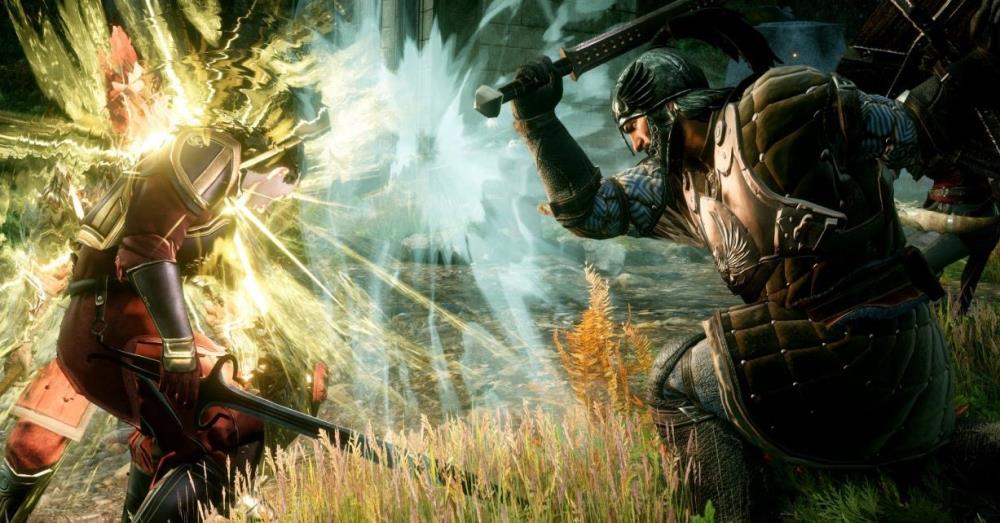
A noteworthy mention for Inquisition is the combat, which certainly managed to step itself up from Dragon Age II. Taking cues from both previous games, Inquisition serves to be a little bit of both while implementing a new overhead view of the battlefield which adds a lovely little tactical advantage to coordinating the characters in your party. It's a nice little mixture of classic and modern roleplaying action that offers two entertaining and effective ways to obliterate enemies and the tactical option is definitely worth a try.
Dragon Age: Inquisition tells a fascinating tale of an unassuming hero rising to power and shaping the future of Ferelden and Orlais. However, it wasn't the main story that interested me the most, but it was the characters in the game themselves. Learning about how Cassandra Pentaghast involved herself with the Chantry, harassing Varric about why he named his crossbow Bianca, finding out about how Commander Cullen crossed paths with Cassandra after the events of the previous game; those stories captured my interest more. My time was more invested in getting to know my character and his compatriots, deciding who to share a relationship with and exploring the dynamic that went further than the campaign itself. As the Inquisitor, there are also enjoyable side-activities that allows the player to decide which advisor should handle which task, viewing the outcome and listening to the banter between party characters. You're also able to sit on the throne at the Inquisition's base of operations and pass judgement on characters having committed crimes against the land and the Inquisition; the commentary itself is hilarious and entertaining enough, never mind being given dictator-like choices.
Dragon Age: Inquisition is, without a doubt, the best roleplaying experience I've had the pleasure of immersing myself in so far. With gorgeous visuals, a pleasing narrative, fantastic combat and truly authentic RPG depth, I think Inquisition has my vote for Game of the Year at this point.
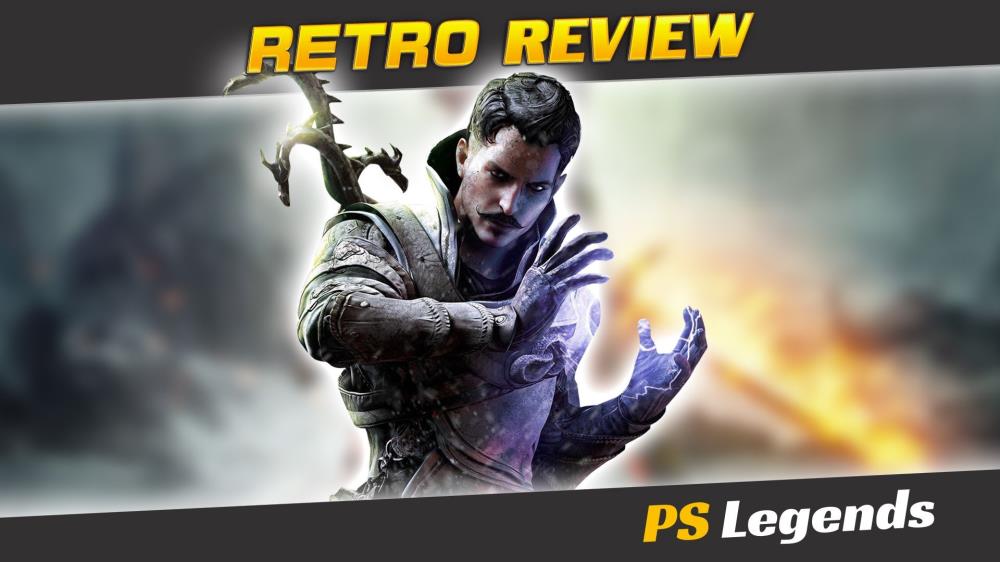
Dragon Age: Inquisition, developed by BioWare, is the third installment in the cherished Dragon Age series. It represents a major evolution from its predecessor, Dragon Age II, incorporating elements that were well-loved in the original Dragon Age: Origins but also introducing new features that stand on their own. While Inquisition improves upon Dragon Age II in many respects, it falls short of the exceptional standards set by Origins.
Delving into a well-loved game or series years after its release, when it already has an enthusiastic and devoted fanbase, can be incredibly difficult. People can be casually mean on the internet without intending to, and that happens a lot when you say you don’t like something they do. Fans of the franchise take their love of the game very seriously. They’re fervent and devoted, which has its charms, but it can also feel like you’re disappointing them when you decide their thing is not your thing.


Cult favorite? It’s well known and sold fairly well and they are making a fourth game . I don’t see it anywhere near cult favorite status . I really enjoyed the first game and the third was pretty good (with failed mmo faults you could notice) but the second game was lazily made garbage .
Loved the first one, second was pretty good. Couldn't even get through the third one. Don't have high hopes for 4, but hey, nowhere to go but up hopefully.
DA: Origins was cool, but I got Mass Effect 2 at the same time and goddayum there was no comparison imo.
With the successful release of Mass Effect Legendary Edition, could BioWare be considering the possibility of a remaster of the Dragon Age games?


Only if it's Dragon Age 2 and Inquisition. Those were amazing but Origins was kinda suck ass.






Nice review, can't agree more with you. DA:I is one of the most Authentic RPG experience I had in the last years.
For me it's a 9.5 games (well, on my "scale" of course) and my only issue with this game is about the online. I mean, it's not bad, but I feel it lacks too much compared to the single player and the chests rewards are pretty dissatisfying.
Anyway, I think it's very important to remember how this game is actually a *real* full game without any content cut and sold as "dlc" (ok there are some silly things like the armored mount, but nothing that detracts from the game).
I was skeptical about this game, but right now is one of my favorite RPG.
The character also are pretty good in my opinion. I mean, right now, except Sera (I can't stand her, sorry), I like almost all of them. So, they did a good job from this point of view.
Btw, this game is really huge.
I'm still sort of iffy on buying this game. The combat just doesn't look that fun to me, although I might have to try it to really judge it.