
The Assassin’s Creed title is a very renowned one that brings the influence of historical importance and stealthy gameplay as you weave your way through the textbooks. The series has been on a bit of a detour from stealth, opting for action and drama, which in a way worked as Assassin’s Creed IV: Black Flag was a stellar entry in the series, but the charm of the original was slightly lost. This time around, Ubisoft sought to change that by revisiting their own history in development and in their homeland of France. Just in time for next-gen, we have a rebirth of the franchise favoring stealth all taking place within one of the most pivotal and bloody points in European history, the French Revolution. But does this game take its perch on top, or falls down a bit short of the haystack?
---
The story revolves around the charismatic troublemaker Arno Dorian. As a child, he was raised by his noble father and enjoyed his carefree life. However, shortly after his fated meeting with Elise de la Serre, his father unfortunately passes due to unknown reasons. Elise’s father, Francois, takes in Arno as a stepson, and the story fast forwards 13 years later, where both Arno and Elise have developed a very intimate relationship and things are looking well. Tragedy strikes again as another close person is killed, and worse yet Arno is framed for it. In prison, Arno runs into Pierre Bellec, a friend of his biological father and better yet, an Assassin. After the Revolution kicks off, Arno and Pierre escape, and Arno vows as an Assassin to hunt down the man responsible for it all.
---
The story has its fair share of clichés and moments you can probably predict, but for the most part the story does well in giving an appropriate amount of drama and mystery, with a healthy dose of plot twists and side characters. The plot also gets extra points for blurring the line between good and evil, which was a recurring problem in Assassin’s Creed, where its first game boasted its ambiguity. The game doesn’t hold your hand and depict only the bad guys as complete dicks, because every character in this game has their flaws as a person. Speaking of which, AAA games have an almost ubiquitous weakness to side characters, and Assassin’s Creed was also a victim. However, Unity differs as these characters are some of the best in the franchise. All of the characters speak with some sense of humor, but also with a sort of authority and assurance, yet a lot of the time they can be perceived as wrong and even some characters’ decisions end up being fatal.
---
The Queen of these characters is Elise, which is without a doubt not only the best love interest in the series, but also the best main character counterpart. She’s not just a piece of ass to look at, nor is she the damsel in distress. In fact, most of the time she’s brash and is almost like a kid in how impatient she is in trying to solve the overlaying mysteries, but her position is understandable. The chemistry between Arno and Elise is perfect, as they have both great romantic drama and good comedy when they cause havoc. It’s very charming and relatable that neither Arno nor Elise are perfect in what they do, and they screw up quite a few times in which they take matters into their own hands.
---
What ends up not being so charming is the modern-day side story to Unity. People were scared that the overarching narrative which got too inflated during the Desmond arc would just cycle back and reflate. However, the modern-day story is shockingly so muddled that it’s hard to see why it was added. The basic idea is that Abstergo has released a home version of the Animus known as the Helix, and the person playing as Arno is contacted by a woman known as Bishop. She debriefs the player on the Assassins vs. Templars debacle, and informs the player that Abstergo is searching for a Sage that lived during Revolutionary France. Sages have a blood connection to the First Civilization, an infamous group throughout the Assassin’s Creed series, and the concept of the Sages was first introduced in AC IV. Abstergo wants these people because they catapult the capabilities of the Animus technology, and they wanna get their hands on the Sages before the Assassins do. But as said before, the modern-day element is so subdued that it feels like more like a footnote to the great main Assassin story. All-in-All, the main story is a tad predictable and the modern-day element is almost a non-issue, but the fantastic main characters and insightful philosophy manages to pull through as a great story.
---
The layout of Unity has been tweaked with to merge both online and single-player more seamlessly, and for the most part it does well. You have your traditional sandbox open world, but this time in massive Revolutionary Paris. There’s no shortage of things to do, as there’re chests to collect, guards to stab, and missions to complete. Main missions are labeled accordingly, but the side missions have been renamed, known as Paris Stories. These side missions have their own narrative, which puts a new spin on the idea of side-missions, but honestly doesn’t change that much to warrant notice. However, Unity also includes RPG elements, as the player will eventually unlock more powerful armor and weaponry. The customization of outfits and arsenal is fantastic, and being able to play with friends as color-coordinated as the Power Rangers is fantastic.
---
However, the true aim of this game, as in its name, is to provide unity between players. Competitive multiplayer done away with, this game opts for cooperative play testing your skills at stealth in various missions. Unfortunately, there are only two types of missions, Brotherhood and Heist, but the real test is where the missions take place. The former, Brotherhood, has you moving across a story-oriented mission, where you are working with a real-world ally in completing an objective. These missions offer a great sense of teamwork as you and your buddies parkour off buildings and slice necks. However, a personal favorite are the Heists, which are more simply explained but layers more intricate in your team operations. The mission is simply get in, take the loot, and get out. How you do it is up to you. The more times you get spotted and the longer you stay in conflict, the less loot you get. This system encourages players to play stealthy and smart, and working with a total stranger, being almost scarily in sync, and making off with the full loot is an exhilarating experience unlike any other.
---
With that said, the gameplay of Unity has been overhauled so much that it’s hard to call it copy-and-pasted, which has been a popular term for yearly franchises. As said before, Ubisoft went back to their roots to return to the blade-in-the-crowd and social stealth mechanics. As such, the way Arno moves, the way he fights, and the way he even tip-toes has been completely changed for the better.
---
Hoping to alleviate some of the earlier games’ difficultly piloting parkour, with the player almost by reflex telling the Assassin to get the hell off that fence post, Arno’s new parkour set is almost like an equation. Normally running lets Arno run and parkour on a single altitude. However, what’s been added is Arno’s ability to quickly parkour upwards and to parkour downwards. Holding the R2 and X buttons, Arno will automatically climb and jump on things that are above him rather than next to him. But the greatest addition is the parkour downwards, which by holding R2 and O, Arno will begin to descend in a blistering pace, almost nullifying the need for a haystack. The ability to control your movement like this is a fantastic addition and fixes most of the problems of literal leaps of faith, hoping the Assassin doesn’t jump into a crowd and die.
---
Old combat has also been thrown out the window in favor of something that actually challenges players. The last few games featured characters that could sneeze and kill 15 guards in the process, leaving almost no reason to sneak around. This time, however, Arno no longer has the automatic kill chain and the player is forced to study his surroundings in order not to get his head cut off. Not even parrying will grant the player the almighty power of insta-kill, which is combat straight from the first game. However, Arno is versatile enough to handle 1 or 2 guards. The problem comes in when a whole legion of guards attacks you realistically, no longer waiting for no reason whatsoever, and you can no longer fight them off, which is exactly what the Assassin’s Creed series needed.
---
Speaking of what the series needed, stealth has also been tweaked. Past games have been rather generous when it came to the Assassin’s arsenal, arming the character to the teeth with tons of weapons which half the population probably used a grand total of twice. Unity strips away useless weapons, and provides the player with the tools that can be used for almost every situation, and are used strategically and sparingly. The reason this is important is that it gets the player to step back and analyze the best scenario to get through without pissing off the country, because the player can no longer fight an army. Also throwing in a new crouch button along with the ability to hug walls with the press of a button, it is much easier to run around without walking in front of trouble. Even the “Last-Seen Position” taken from Ubisoft’s own Splinter Cell can be used rather strategically. It isn’t without its own share of faults though, as Arno will sometimes ignore the face of a wall in front of him and he’ll cover in the middle of a doorway right where the enemy can see him. But as far as stealth goes, it’s the best iteration yet in Assassin’s Creed.
---
Graphics and performance have been a large part of this generation, and here’s where things get a little iffy. Starting with the good, Unity takes full advantage of next-gen capabilities and the game has very admirable and ambitious goals. On-screen NPC’s can reach the multi-thousands, and the general design of Paris is astounding. The city is filled to the brim with details and small graphical touches that bring the city to life. The city changes to reflect the time of day and weather, as there are less people out when it’s dark and rainy as opposed to bright and sunny. The difference in the districts are also very apparent, and the attire of people changes accordingly. Hell, there are NPC’s in the café who actually have a daily routine. There has been a ton of focus put on details like clothing physics, Global Illumination, and even the redness of skin tone. These details would bring the game on a whole new level of gaming, but unfortunately it’s not perfect.
---
On the one hand, Unity boasts extremely huge crowds and a shocking level of detail that the player can get lost in for hours. On the other, Unity also has a laundry list of bugs and glitches that can affect the experience of it all. While most of these glitches are visual, such as an NPC imitating The Exorcist or people flat out walking through walls, the sheer abundance of these glitches are as shocking as the visual fidelity of the game. The game also struggles to keep at a solid 30 frames per second, and there are even areas of the game, like stained glass, that will, without hyperbole, drop the game to about 1 frame for a second or two. Unfortunately there aren’t only visual glitches, as there have been occasions online where my Assassin literally could not attack nor would be attacked. Thankfully these are few and far between, and the bigger problems are alleviated by a reboot. Another strange thing, which no one on this planet except me noticed apparently, is the quality of some sound effects. While the general sound design, like soundtrack and background chatter from NPC's, are without flaw, there are some sound effects, like slitting throats and especially going up fast lifts where the sounds seem bit-crunched. There are also a couple other occasions where the sound quality seems to fluctuate. While it can be understood why the game is like this, with its astounding level of detail and fantastic design, the fact of the matter is that the game is rather unstable at times, and its amazing graphics are marred by technical problems.
---
Assassin’s Creed Unity is a lot of things. A reboot, a reimagining, and in some cases a bit broken. However, at the end of the day, Unity isn’t a game that’s technical problems divert from a beautiful game, but a beautiful game that diverts from its technical problems. The story, while a tad foreseeable, is the best one-off in the series, the design of the layout is fantastic, and the gameplay has been masterfully overhauled to put stealth and strategy at the forefront. The graphic design is fantastic when it comes to Paris itself, but it is of course disarrayed by the game’s technical shortcomings. The game is best summarized as a game whose problems lie most in performance, but is almost perfect on every other front. The game has already done a successful enough job recapturing the great social stealth of the originals, and I look forward to what country I get to learn about next.
_____________________________ _
The best way to experience a unique chapter in AC franchise history.

Give me a proper PS5 port with trophy list, Syndicate too and I'd happily buy them both again
The French Revolution waits for no one.
But now it runs at 60 FPS on PlayStation and Xbox Series X.
Rediscover Assassin’s Creed Unity in breathtaking clarity.
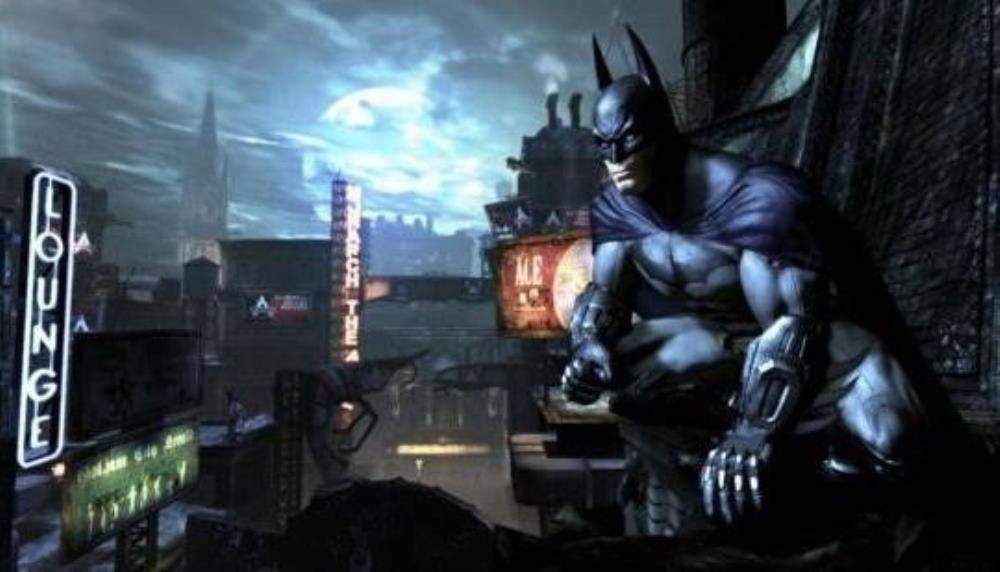
Small video game maps that are packed with things to do are better than huge but empty maps. Here are five small but brilliant maps in games.





This is a good review but it doesnt reflect on the major issue that Ubisoft has. Which is greed, they are so sucked up in making the annual release and forgot to take the time to make this game function better. And not only that, the misuse of microtransactions and chests that cant be opened unless you have an account online in a pointless app. And there major problem, is they lie too much. I really wanted to play Unity because the setting and the scope of this game is really awesome. But i cant look the other way on its flaws. But i am glad that you seem to look the other way when it came to its issues and enjoyed the game. Either way this is a good review friend :).